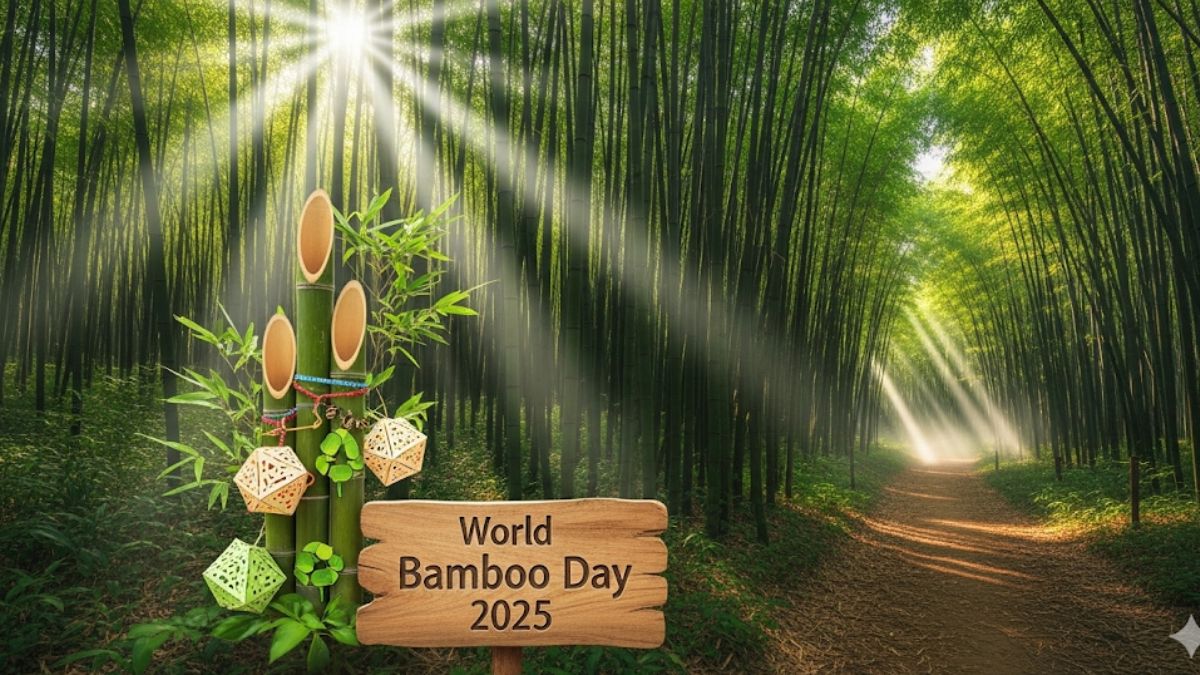
World Bamboo Day 2025 will be observed on 18 September across the globe to promote awareness about bamboo as a sustainable and versatile resource. Often called “green gold”, bamboo is vital for rural livelihoods, environmental protection, and innovation in design and industry. India, as one of the largest bamboo producers, plays a significant role in bamboo promotion through initiatives like the National Bamboo Mission. For aspirants, this day is highly relevant in the context of environment, rural economy, and sustainable development goals (SDGs).
What is World Bamboo Day?
- World Bamboo Day was first celebrated in 2009, during the 8th World Bamboo Congress in Bangkok. The World Bamboo Organization initiated this observance to showcase bamboo’s cultural, economic, and ecological importance.
- Since then, the day has been marked by plantation drives, cultural events, and policy discussions to elevate bamboo’s profile in climate action and economic development.
Theme of World Bamboo Day 2025
- The theme for 2025 is: “Next Generation Bamboo: Solution, Innovation, and Design.”
- This theme emphasizes Bamboo’s modern utility in solving climate and development challenges.
- Youth and entrepreneur engagement in bamboo innovation.
- Integration of tradition and technology in bamboo-based design and products.
The theme encourages cross-sector collaboration to position bamboo as a future-ready material for housing, packaging, furniture, and climate-resilient solutions.
India’s Role in Bamboo Promotion
India has recognized bamboo as a strategic resource for climate action, employment generation, and economic growth. The country has launched the National Bamboo Mission (NBM) to promote large-scale bamboo cultivation, processing, and innovation.
Key Goals of NBM
- Expand bamboo plantations in degraded/agricultural lands.
- Support nurseries, tissue culture labs, and post-harvest infrastructure.
- Facilitate training and marketing support for artisans and farmers.
- Promote product development and industry linkages.
- Shift bamboo from the forestry category to agriculture, making it easier for farmers to cultivate.
Bamboo Production in India
India hosts over 14 million hectares of bamboo area and about 136 species. Bamboo supports sectors like handicrafts, furniture, paper, packaging, and even construction.
Economic and Ecological Importance
- Bamboo grows quickly and improves soil health.
- Helps reduce deforestation and carbon emissions.
- Provides long-term income to farmers and artisans.
- Enables import substitution for timber and plastic.
Key Insight
- The Northeast region holds over two-thirds of India’s bamboo stock, showcasing its cultural and ecological connection with bamboo.
Static Facts
- Date: 18 September 2025
- First Observed :2009, Bangkok (World Bamboo Congress)
- Theme 2025: “Next Generation Bamboo: Solution, Innovation, and Design”
- Organiser :World Bamboo Organization
- India’s Key Scheme :National Bamboo Mission


 Good Friday 2026: Date, History, Meaning...
 World Autism Awareness Day 2026: Underst...
 RBI Foundation Day 2026: History, Functi...