
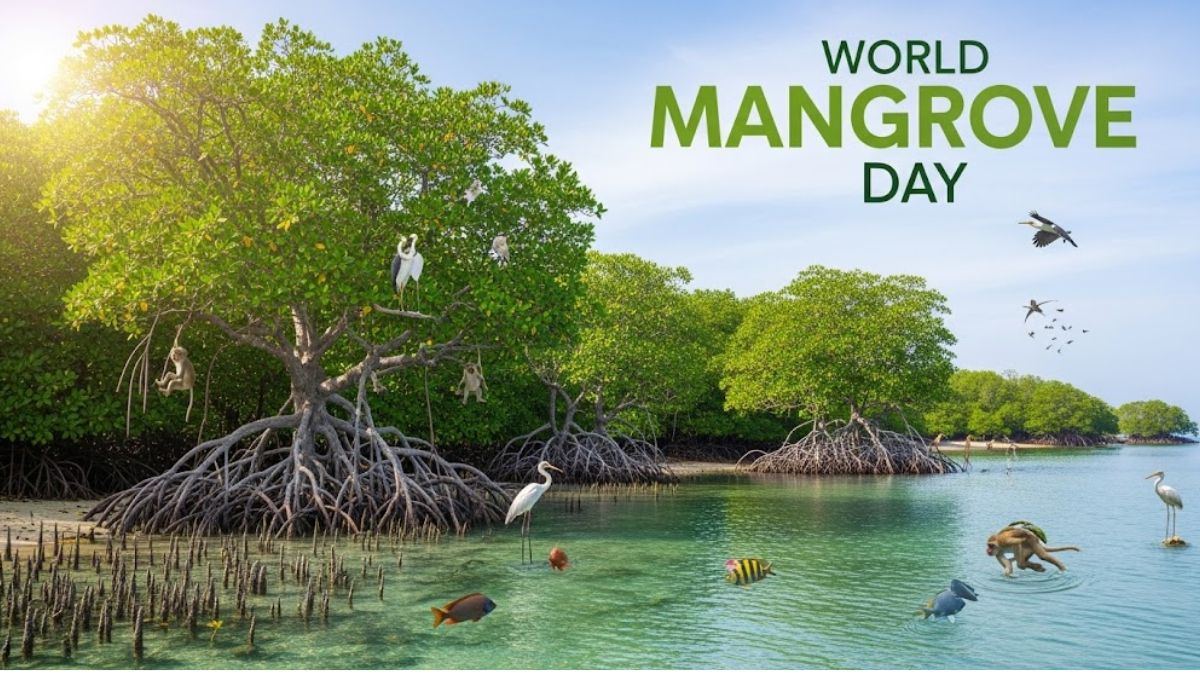
World Mangrove Day, observed every year on July 26, is an important environmental awareness day dedicated to the protection and conservation of mangrove ecosystems. Recognized officially by UNESCO in 2015, this day serves as a reminder of the immense ecological value mangroves offer — from acting as natural shields against coastal disasters to serving as carbon sinks that combat climate change. With almost half of the world’s mangrove forests lost since 1980, the urgency to restore and preserve them has never been greater.
What Are Mangroves?
Mangroves are a specialized group of trees and shrubs that grow in coastal saline or brackish water in tropical and subtropical regions. Their intertwined root systems allow them to survive in environments with high salinity, low oxygen, and regular tidal flooding. Approximately 110 species of mangroves exist globally. These unique adaptations enable mangroves to stabilize shorelines and provide breeding grounds for a wide variety of aquatic organisms.
History and Origin of World Mangrove Day
World Mangrove Day was declared by UNESCO in July 2015 during its General Conference to commemorate Guillermo Cano Isaza, a Colombian environmentalist who died defending mangrove forests. This initiative was born from the recognition of rapid mangrove deforestation, primarily due to aquaculture, urbanization, and logging. The day focuses on raising awareness, encouraging local action, and driving global policies that promote the sustainable use of mangrove ecosystems.
Importance of Mangrove Ecosystems
- Natural Disaster Defense: Mangroves act as natural barriers against tsunamis, storms, and tidal surges, minimizing loss of life and property. A well-known example is a village in Tamil Nadu, India, which remained largely unaffected during the 2004 tsunami thanks to its surrounding mangrove buffer.
- Carbon Sequestration – The ‘Blue Carbon’ Role: Mangrove forests store five times more carbon dioxide per hectare than tropical forests, making them crucial in the fight against climate change.
- Biodiversity Hotspots: Their intricate root systems provide a nursery habitat for juvenile fishes, crabs, shrimps, mollusks, and even endangered species like tigers and crocodiles.
- Livelihood Support: Mangroves offer sustainable resources such as honey, silk, and seafood to local communities. They can be harvested responsibly without degrading the ecosystem.
Threats to Mangrove Forests
Shrimp Farming and Aquaculture
- One of the biggest threats, where mangroves are cleared to build shrimp ponds, causing irreversible damage through chemical use and soil degradation.
Deforestation for Wood and Charcoal
- Mangrove wood is highly valued for fuel and construction, leading to widespread illegal logging.
Urban Expansion and Infrastructure Projects
- Diversion of rivers, road construction, and industrial development have led to major habitat loss, especially as mangroves typically grow along estuaries and river mouths.
Climate Change Impacts
- Rising sea levels and increased salinity can affect the delicate balance required for mangroves to survive.
How to Observe World Mangrove Day
- Plant a Mangrove Sapling: If you live in or visit a coastal area, participate in a community-led plantation drive using native mangrove species.
- Educate and Advocate: Organize awareness sessions, school workshops, or social media campaigns to highlight the importance of mangroves.
- Support Eco-Friendly Livelihoods: Promote sustainable harvesting of mangrove products like honey and fish, and support local businesses that use mangrove-friendly practices.
- Be Climate Conscious: Reduce your own carbon footprint by walking, cycling, or reducing plastic usage to help protect the broader marine environment.
Fascinating Facts About Mangroves
- Ancient Origins: Fossils indicate mangroves existed 75 million years ago.
- Sundarbans – The World’s Largest Mangrove: Located in West Bengal, India, it is a UNESCO World Heritage Site.
- Salt Filtering Mechanism: Mangroves excrete excess salt through leaves or bark, allowing them to survive saline environments.
- Oxygen Producers: Despite harsh conditions, they release oxygen and improve local air quality.
- Coral Allies: Mangroves help prevent coral bleaching by filtering sediment and providing shelter for juvenile corals.


 List of Important Days in April 2026, Na...
 World Health Day 2026: Date, Theme, Sign...
 International Day of Sport for Developme...











