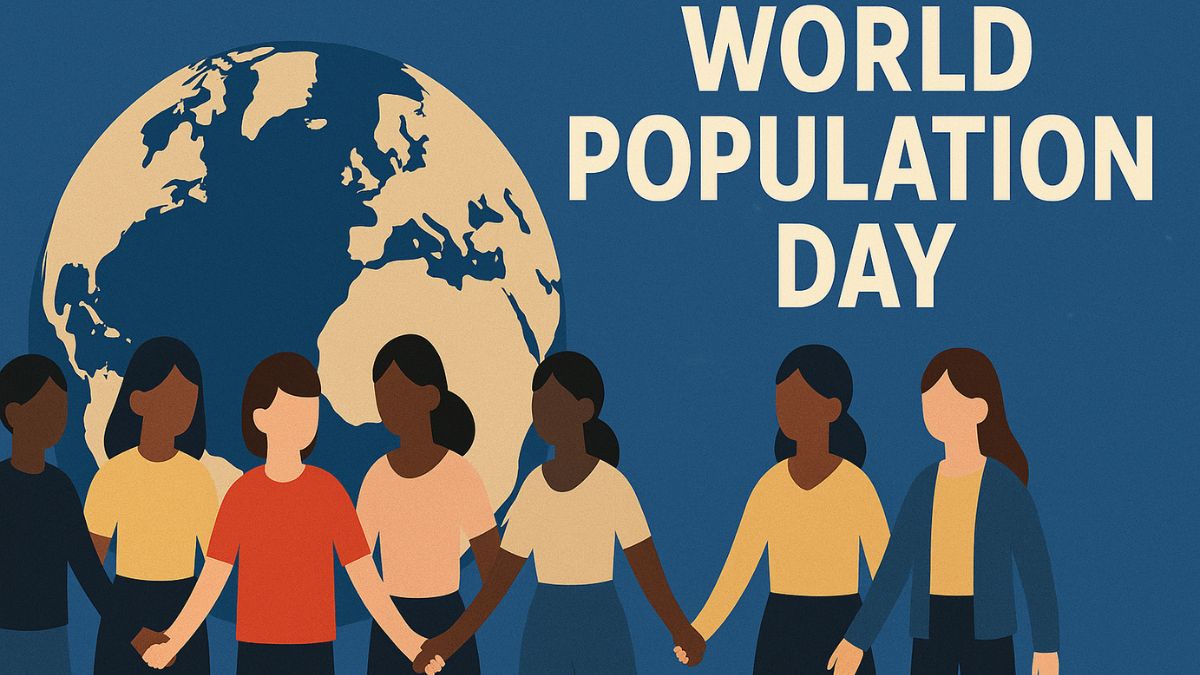
World Population Day, observed annually on July 11, is more than a reminder of the rising global headcount. It is a global platform to raise awareness about the challenges and opportunities of population growth, and how they affect health, environment, development, and human rights. In 2025, as the world’s population crosses 8.1 billion and India becomes the most populous country, the spotlight is on youth empowerment, reproductive rights, and sustainable living. This day, established in 1989 by the United Nations Development Programme (UNDP), was inspired by the milestone of Five Billion Day (July 11, 1987) — marking the point when global population reached 5 billion.
Origin and Historical Background
- Founded by: United Nations Development Programme (UNDP)
- First observed: July 11, 1989
- Inspiration: Five Billion Day on July 11, 1987 — when the world hit the 5 billion population mark
This observance was initiated to draw global attention toward the urgency of population-related challenges and the need for sustainable solutions.
Theme of World Population Day 2025
Theme: “Empowering young people to create the families they want in a fair and hopeful world.”
This year’s theme focuses on the world’s largest-ever generation of youth, advocating for their right to make informed reproductive choices, access to education, healthcare, and opportunities. The message is clear: young people must be at the centre of population-related discussions, as they are key to achieving global goals like gender equality, health, and sustainable development.
Objectives of World Population Day 2025
The key objectives behind this year’s observance are,
- To raise awareness about the impact of population growth on economic, social, and environmental fronts.
- To promote reproductive health and rights, especially among youth and women.
- To push for gender equality, empowering women to make informed family decisions.
- To align with and promote Sustainable Development Goals (SDGs):
- SDG 3 – Good Health and Well-being
- SDG 5 – Gender Equality
Global Population Trends and Data (2025 & Beyond)
- Current global population (2025): Over 8.1 billion
- Projected by 2030: 8.5 billion
- Projected by 2050: 9.7 billion
Key milestones,
- 1 billion in the 1800s
- 7 billion in 2011
- Urbanisation: Since 2007, more people live in urban areas than rural ones. By 2050, 66% of the global population will be urban dwellers.
India: Now the Most Populous Country
- India’s population in 2025: 1.46 billion, surpassing China (1.41 billion)
- This demographic shift places India at the centre of global policy discussions on employment, education, urban planning, and youth development.
- It calls for urgent reforms in reproductive healthcare, infrastructure, job creation, and social services.
Top 10 Most Populous Countries (2025)
| Rank | Country | Population |
| 1 | India | 1,463,865,525 |
| 2 | China | 1,416,096,094 |
| 3 | United States | 347,275,807 |
| 4 | Indonesia | 285,721,236 |
| 5 | Pakistan | 255,219,554 |
| 6 | Nigeria | 237,527,782 |
| 7 | Brazil | 212,812,405 |
| 8 | Bangladesh | 175,686,899 |
| 9 | Russia | 143,997,393 |
| 10 | Ethiopia | 135,472,051 |
Population Density in 2025: Crowding Concerns
High density affects housing, transport, environment, and health infrastructure. Top 5 most densely populated countries/territories,
| Rank | Country/Territory | Density (people/km²)` |
| 1 | Macau | 21,946 |
| 2 | Monaco | 19,171 |
| 3 | Singapore | 8,177 |
| 4 | Hong Kong | 7,044 |
| 5 | Gibraltar | 5,901 |
Population in Indian States: Snapshot from 2011 Census
| Rank | State | Population |
| 1 | Uttar Pradesh | 199.8 million |
| 2 | Maharashtra | 112.4 million |
| 3 | Bihar | 104.1 million |
| 4 | West Bengal | 91.2 million |
| 5 | Madhya Pradesh | 72.6 million |
- Most populous state in 2025: Uttar Pradesh – 241 million
- Least populous state in 2025: Sikkim – approx. 703,000
This disparity calls for region-specific policy formulation and better resource distribution.
Challenges Facing the Youth (2025)
Despite a decline in global fertility, millions still lack reproductive autonomy, especially in developing countries. Challenges include,
- Economic instability
- Healthcare inaccessibility
- Climate anxiety
- Limited education and job opportunities
- Socio-political unrest
According to UNFPA, about 20% of adults fear they cannot have their desired number of children.
Why World Population Day 2025 Matters
This day is a call to,
- Empower the youth with education and choices
- Ensure universal access to reproductive healthcare
- Promote gender equality
- Prepare for future urbanisation and ageing societies
- Plan for sustainable resource management


 International Day of Sport for Developme...
 List of Important Days in April 2026, Na...
 National Maritime Day 2026: Remembering ...