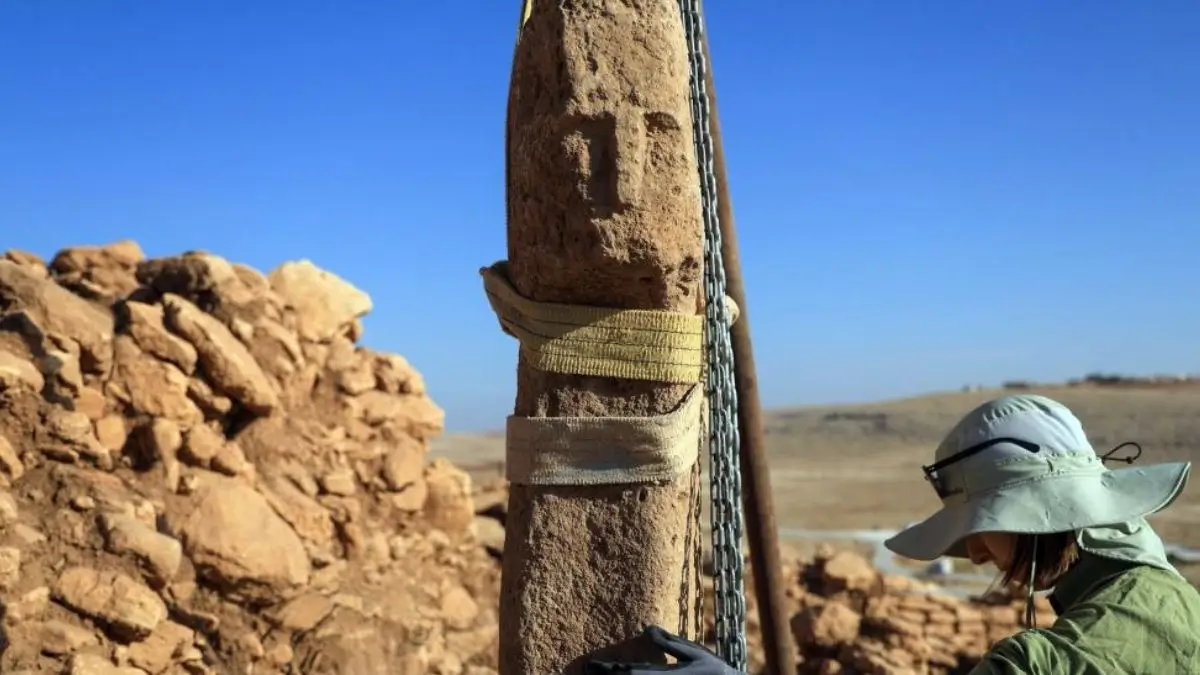
In a groundbreaking discovery, archaeologists in southeastern Türkiye have unearthed a 12,000-year-old T-shaped pillar featuring a carved human face at the Karahantepe archaeological site. This is the first time such a depiction has been found directly on a pillar, adding a critical piece to our understanding of Neolithic symbolism and self-representation. The find was announced in October 2025 and is part of ongoing excavations under the Stone Hills (Taş Tepeler) Project, which investigates the emergence of settled life and spiritual practices in early human societies.
Karahantepe and the Taş Tepeler Project
- Located in Şanlıurfa Province, Karahantepe is one of several sites associated with the Taş Tepeler Project, which includes the more widely known Göbekli Tepe.
- These Neolithic sites are characterized by monumental architecture, particularly T-shaped limestone pillars believed to represent human-like figures.
- Carvings of arms and hands on these pillars previously suggested anthropomorphic symbolism, but no full human face had ever been carved—until now.
What Makes This Discovery Unique
- The newly uncovered pillar features a stylized human face with deeply carved eyes, a broad nose, and sharp facial lines.
- Unlike earlier pillars with symbolic hand reliefs, this face represents a more literal and personalized depiction of a human being.
- This artistic leap offers compelling evidence that Neolithic communities were not only capable of abstract thinking, but also had developed a sense of self-image and identity.
- Experts suggest that this face confirms theories that the T-shaped pillars were intended to represent the human form, with the horizontal “T” bar as the head and the vertical shaft as the body.
Symbolism in the Domestic Sphere
- Interestingly, the pillar was not found in a ritual complex but inside a domestic structure, suggesting that symbolic or spiritual expression was integrated into daily life.
- This challenges earlier assumptions that sacred symbols were confined to ceremonial sites and supports a more holistic understanding of Neolithic culture, where the sacred and the ordinary were deeply intertwined.
Static Facts and Takeaways
- Site Name: Karahantepe, Şanlıurfa Province, southeastern Türkiye
- Date of Discovery: Announced October 2025
- Estimated Age: Approximately 12,000 years old (Pre-Pottery Neolithic period)
- Significance: First known human face carved on a T-shaped pillar
- Associated Project: Taş Tepeler (Stone Hills) Project, includes other Neolithic sites like Göbekli Tepe
- Pillar Style: T-shaped limestone monolith, previously known to have arm/hand carvings only


 India Overtakes China as Top Exporter of...
 IEA to Release Record 400 Million Barrel...
 Gulf of Hormuz vs Strait of Malacca: Whi...