
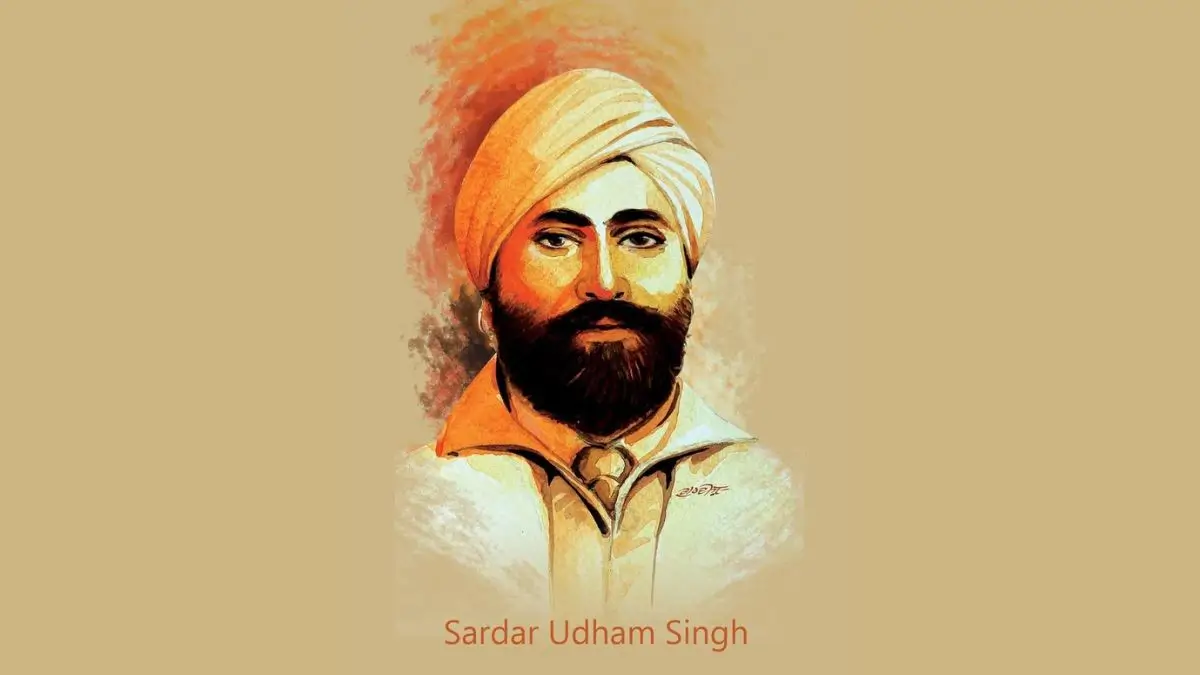
The 126th birth anniversary of Sardar Udham Singh, observed on 26 December 2026, is a solemn reminder of India’s relentless struggle for justice during the colonial era. Remembered as a revolutionary who dedicated his life to avenging the Jallianwala Bagh massacre, Udham Singh occupies a unique place in the history of the Indian National Movement. His life reflects sacrifice, patience, and an unwavering commitment to justice against imperial oppression.
Early Life and Background
Sardar Udham Singh was born on 26 December 1899 in Sunam, located in the Sangrur district of Punjab. Orphaned at an early age he grew up in the Central Khalsa Orphanage in Amritsar, where he was exposed to nationalist ideas and the harsh realities of British rule.
His formative years were marked by deprivation, discipline, and exposure to revolutionary thought. These early experiences played a crucial role in shaping his strong sense of justice and resistance to colonial authority.
Witness to the Jallianwala Bagh Massacre
One of the most defining moments in Udham Singh’s life was his presence during the Jallianwala Bagh massacre on 13 April 1919. On that day, British troops under Reginald Dyer opened fire on thousands of unarmed civilians gathered peacefully in Amritsar.
More than 400 people were killed, and over a thousand were injured. The massacre took place under the administration of Michael O’Dwyer, the then Lieutenant Governor of Punjab. Udham Singh survived the tragedy, but the brutal incident left a permanent imprint on his mind and became the driving force behind his revolutionary path.
Turn Towards Revolutionary Activities
Deeply traumatised by Jallianwala Bagh, Udham Singh resolved to dedicate his life to ending British rule. In 1924, he joined the Ghadar Party, an overseas revolutionary organisation working to mobilise Indians against colonial rule.
During this phase, he travelled extensively and connected with revolutionaries abroad, spreading anti-colonial ideas. His activities brought him under British surveillance, and in 1927, he was arrested for possession of firearms. He was sentenced to five years of imprisonment, a period that further strengthened his resolve rather than weakening it.
Assassination of Michael O’Dwyer
Udham Singh’s most defining act came years later. On 13 March 1940, after waiting patiently for over two decades, he assassinated Michael O’Dwyer during a public meeting at Caxton Hall in London. This act was not impulsive but a carefully planned symbolic gesture to hold accountable one of the principal figures responsible for the Jallianwala Bagh massacre.
During his trial, Udham Singh openly declared that his action was an act of justice, not personal hatred. His fearless statements in court reflected his deep ideological conviction and revolutionary spirit.
Trial, Execution, and Martyrdom
Following the assassination, Udham Singh was arrested, tried, and sentenced to death by the British authorities. He was hanged on 31 July 1940 at Pentonville Prison in London.
His execution transformed him into a martyr of the freedom struggle. He came to be revered as Shaheed-i-Azam Udham Singh, a title reflecting the immense respect accorded to his sacrifice and courage.
Legacy and National Recognition
Udham Singh’s legacy continued to inspire generations even after independence. In 1974, his mortal remains were repatriated to India, a symbolic act of national honour. Memorials, museums, institutions, and colleges have been named after him, especially in Punjab.
His life represents delayed but determined justice, highlighting how revolutionary patience and purpose can challenge even the most powerful regimes. Unlike mass movements, his struggle symbolised individual resistance rooted in moral conviction.
Key Takeaways
- Born: 26 December 1899, Sunam (Punjab)
- Witnessed: Jallianwala Bagh massacre (1919)
- Associated with: Ghadar Party
- Assassinated: Michael O’Dwyer on 13 March 1940 at Caxton Hall, London
- Executed: 31 July 1940 at Pentonville Prison
- Known as Shaheed-i-Azam Udham Singh
Question
Q. Which tragic event deeply influenced Udham Singh’s revolutionary path?
A. Partition of India
B. Non-Cooperation Movement
C. Jallianwala Bagh Massacre
D. Salt March


 World Health Day 2026 - Theme, Date, Sig...
 List of Important Days in April 2026, Na...
 International Day of Sport for Developme...











