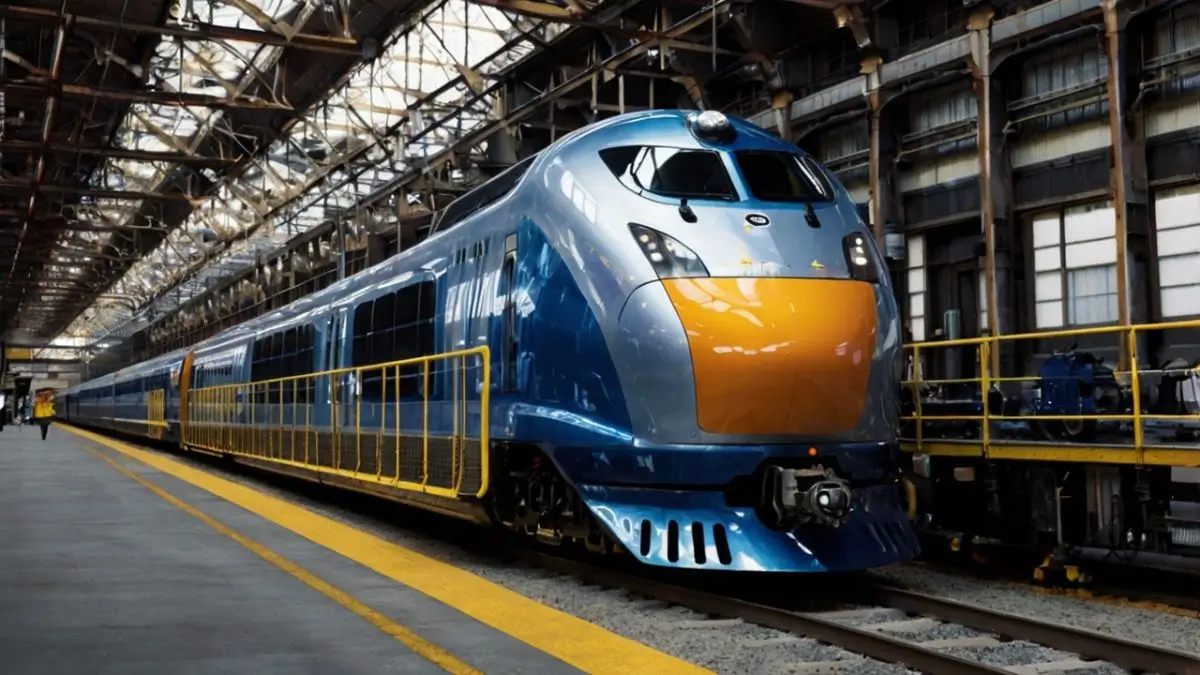
India’s Railway Minister, Ashwini Vaishnaw, recently shared a remarkable achievement in the field of green energy technology during the 18th Pravasi Bharatiya Divas. Indian Railways has developed the world’s most powerful hydrogen fuel-run train engine, setting a new benchmark in global railway innovation. The engine, built with indigenous technology, reflects India’s growing capabilities in green energy and sustainable development.
Key Points
World’s Most Powerful Hydrogen Train Engine
- Ashwini Vaishnaw announced that the hydrogen fuel-run train engine developed by Indian Railways has the highest horsepower output in the world.
- The engine generates 1,200 horsepower, surpassing the 500-600 horsepower engines developed by other countries.
Hydrogen-Powered train Trial
- The first trial run of the hydrogen-powered train is expected to take place soon on the Jind-Sonipat route in Haryana.
- The engine manufacturing is complete, and system integration is currently underway.
Indigenous Technology and Self-Reliance
- The engine was developed using Indian expertise, marking a significant step towards technological self-sufficiency.
- India has emerged as a leader in developing sustainable transport solutions using green energy.
Potential for Broader Applications
- Vaishnaw highlighted that the hydrogen-powered technology can be adapted for use in other transport sectors, such as trucks and tugboats.
- The development of this technology provides an opportunity for further innovation in various fields.
A Vision for the Future
- Prime Minister Narendra Modi, speaking earlier at the event, expressed his aspiration that one day India will manufacture fully indigenous trains, allowing Indian passengers to ride trains made entirely in India.
| Summary/Static | Details |
| Why in the news? | India’s Hydrogen Train Engine Sets a Power Benchmark |
| Train Engine Power | The hydrogen fuel-run engine developed by India produces 1,200 horsepower, the highest in the world. |
| Trial Run Location | The first trial run will take place in Haryana, on the Jind-Sonipat route. |
| Technology | The engine was developed using indigenous technology, showcasing India’s capacity for technological innovation. |
| Global Comparison | Only four countries have hydrogen-powered trains, with their engines producing 500-600 horsepower, much lower than India’s 1,200 horsepower output. |
| Future Applications | The hydrogen-powered engine technology may be adapted for use in trucks, tugboats, and other transport sectors. |
| Technological Self-Sufficiency | While India’s achievements are promising, the country still has a long way to go in achieving full technological self-sufficiency. |
| Prime Minister’s Vision | PM Modi expressed his vision for completely Indian-made trains, a significant step towards self-reliance in railway manufacturing. |








 Immigration and Foreigners Act 2025: Can...
 President Murmu Accepts L. Murugan’s R...
 India’s Ramsar Sites Reach 103: Sukhna...