India is hosting the World Heritage Committee Meeting for the first time. It takes place from 21 to 31 July 2024, at Bharat Mandapam in New Delhi. The World Heritage Committee meets annually and is responsible for managing all matters on World Heritage and deciding on sites to be inscribed on the World Heritage list.
46th session of the World Heritage Committee
The 46th session of the World Heritage Committee in 2024 will examine 27 nominations from around the world, including 19 Cultural, 4 Natural, 2 Mixed sites and 2 Significant modifications to the boundaries. Out of which, India’s Moidams, The Mound (Burial System of the Ahom Dynasty) is set to be examined under the category of Cultural Property.
Migrated from China
The Tai-Ahom clan, migrating from China, established their capital in various parts of the Brahmaputra River Valley from the 12th to the 18th century CE. One of the most revered sites among them was Choraideo, where the Tai-Ahoms established their first capital under Chau-lung Siu-ka-pha at the foothills of the Patkai hills. This sacred site, known as Che-rai-doi or Che-tam-doi, was consecrated with rituals that reflected the deep spiritual beliefs of the Tai-Ahoms.
Its significance
Over centuries, Choraideo retained its significance as a burial ground where the departed souls of the Tai-Ahom royals transcended into the afterlife.
Historical Context
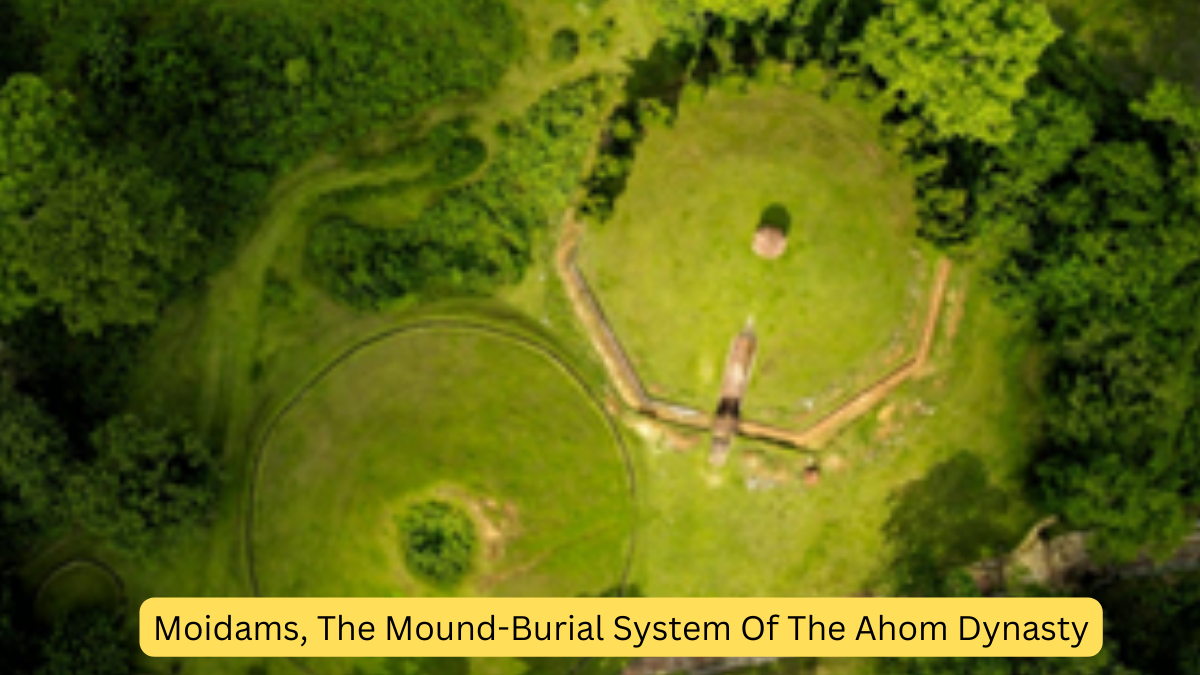
The Tai-Ahom people believed their kings were divine, leading to the establishment of a unique funerary tradition: the construction of Moidams, or vaulted mounds, for royal burials. This tradition spanned 600 years, marked by the use of various materials and architectural techniques evolving over time. Initially using wood, and later stone and burnt bricks, the construction of Moidams was a meticulous process detailed in the Changrung Phukan, a canonical text of the Ahoms.
Architectural Features
Moidams are characterized by vaulted chambers, often double-storied, accessed through arched passages. The chambers housed centrally raised platforms where the deceased were laid to rest along with their royal insignia, weapons, and personal belongings. The construction of these mounds involved layers of bricks, earth, and vegetation, transforming the landscape into undulating hillocks reminiscent of celestial mountains.
Cultural Significance
The continuity of the Moidam tradition at Choraideo underscores its Outstanding Universal Value under UNESCO criteria. This funerary landscape not only reflects Tai-Ahom beliefs about life, death, and the afterlife but also served as a testament to their cultural identity amidst shifts towards Buddhism and Hinduism among the population. The concentration of Moidams at Choraideo distinguishes it as the largest and most significant cluster, preserving the grand royal burial practices unique to the Tai-Ahoms.
Conservation Efforts
Despite challenges such as vandalism by treasure seekers in the early 20th century, concerted efforts by the Archaeological Survey of India and the Assam State Department of Archaeology have restored and preserved the integrity of Choraideo. Protected under national and state laws, the site continues to be managed to safeguard its structural and cultural authenticity.
Comparisons with Similar Properties
The Moidams of Choraideo can be compared to royal tombs in ancient China and the pyramids of Egyptian pharaohs, illustrating universal themes of honoring and preserving royal lineage through monumental architecture. Within the broader Tai-Ahom cultural region spanning parts of Southeast Asia and Northeast India, Choraideo stands out for its scale, concentration, and spiritual significance.
Symbol of Tai-Ahom heritage
Choraideo at the foothills of the Patkai range remains a profound symbol of Tai-Ahom heritage, encapsulating their beliefs, rituals, and architectural prowess. As a landscape shaped by centuries of royal burials, it continues to inspire awe and reverence, offering insights into the cultural evolution and spiritual worldview of the Tai-Ahoms.








 Greece Approves Social Media Ban for Chi...
 France Confirms First Human Case of Sham...
 Nigeria Reports Imported Case of Ebola B...