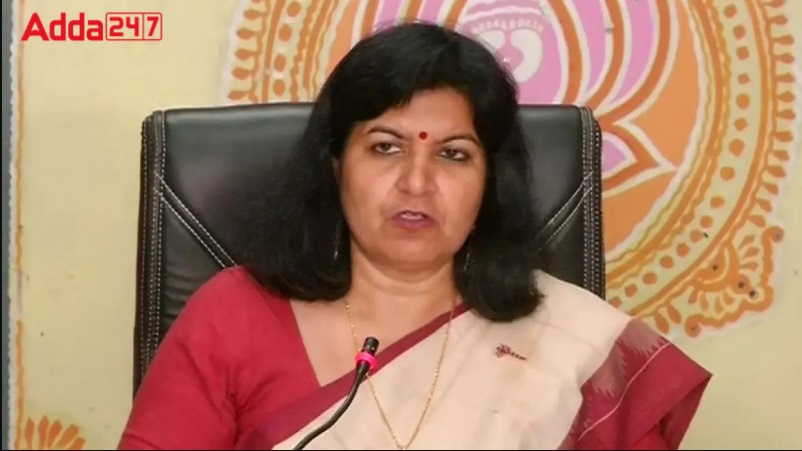
Lok Sabha member from Bhubaneswar, Aparajita Sarangi has been elected as a member to the executive committee of the Inter-Parliamentary Union (IPU). The Parliamentarian from Odisha bagged 12 out of the total of 18 available votes in the election to the post held at Kigali, Rwanda. Sarangi will represent India at the 15-member executive committee of the union.
Notably, this will be the first time in 20 years, that India will have her representative in the international committee.
Bank Maha Pack includes Live Batches, Test Series, Video Lectures & eBooks
The Indian Parliamentary Delegation is being led by Harivansh, Deputy Chairperson in Rajya Sabha. Aparajita Sarangi, Harivansh and Sasmit Patra attended a meeting called by the Governing Council of the Inter-Parliamentary Union following her nomination. The 145th Inter-Parliamentary Union Assembly is being held currently in Kigali, Rwanda.
About the Inter-Parliamentary Union:
Set up in 1887, the global organization of national parliaments has a total of 178 members. IPU empowers parliaments and parliamentarians to promote peace, democracy, and sustainable development through diplomacy.
Important takeaways for all competitive exams:
- Inter-Parliamentary Union Founded: 1889;
- Inter-Parliamentary Union Headquarters: Geneva, Switzerland;
- Inter-Parliamentary Union President: Saber Hossain Chowdhury;
- Inter-Parliamentary Union Secretary General: Martin Chungong.










 7th National Formulary of India 2026 Lau...
 Government Dissolves Digital Communicati...
 11th Ayurveda Day 2026: Theme, Significa...