
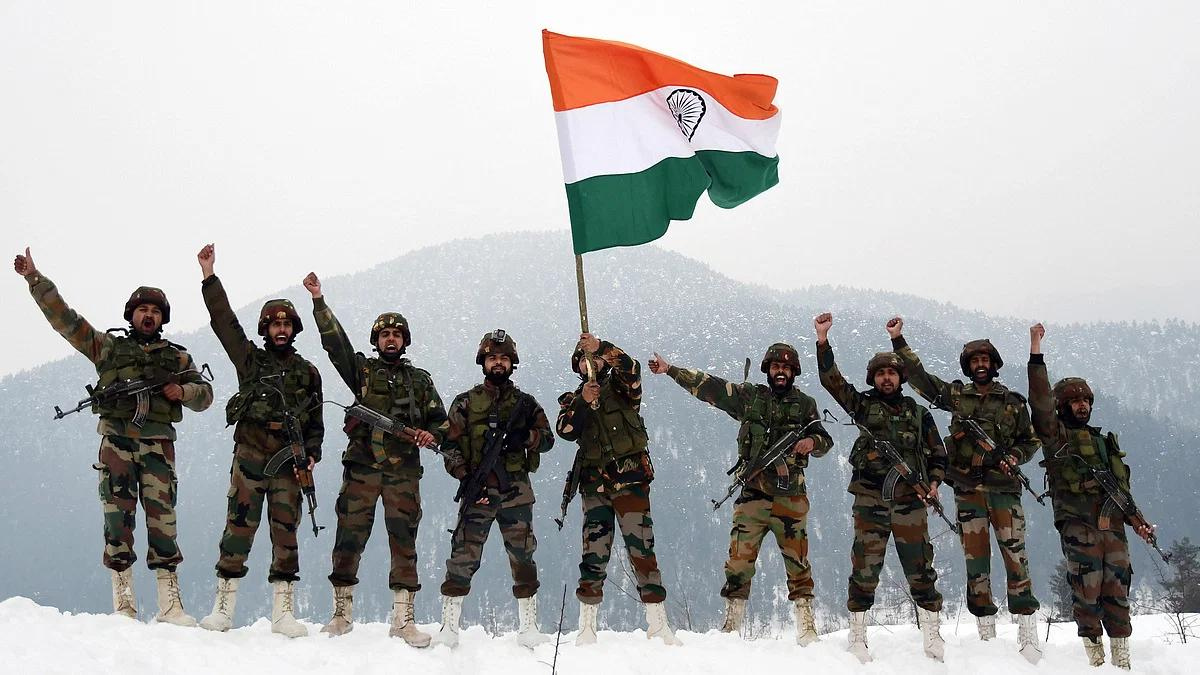
In a significant step towards modernization and operational efficiency, the Indian Army has declared 2024 as the “Year of Technology Absorption.” This move underscores the Army’s commitment to leveraging technology as a catalyst for transformative change, enhancing operational and logistic capabilities through in-house expertise, and working in collaboration with the domestic defence industry.
Objectives and Focus Areas
Leveraging Technology for Transformation: The primary objective of this initiative is to use technology as a driving force for transformative change, focusing on operational and logistic requirements and collaborating with the domestic defence industry for project development.
Cyberspace Capabilities Enhancement: The Indian Army has embarked on a mission to boost its cyber capabilities. Personnel are being trained to effectively use technology and exploit the cyber domain through institutionalized, procedural, and technological measures.
Project SAMBHAV: A notable aspect of this initiative is Project SAMBHAV, an end-to-end secure, network-agnostic mobile ecosystem that operates on state-of-the-art 5G technology. It is designed to provide secure communication with instant connectivity on the move.
Infrastructure Connectivity: The Army has identified 355 posts where it has requested 4G connectivity from the telecom ministry. The focus is also on infrastructure improvements at forward airfields, villages, helipads, and underground storage facilities.
Restructuring Units: The Army is restructuring various units, including artillery, electronic warfare, and electronic intelligence units. There is also a move to replace animals in transport units with drones, aiming to optimize strength by significant numbers by 2027.
Human Resource Initiatives: A transformative human resource initiative aims to provide productive employment for over 62,000 retiring soldiers annually, as well as empower the skilling and employment of veterans.
Background and Rationale
The decision to observe 2024 as the Year of Technology Absorption follows the 2023 declaration of the “Year of Transformation.” This previous phase saw the reorientation of arms, the induction of fresh human resources through Agniveers, the downsizing of certain verticals, and technological infusion.
Significance and Impact
This initiative is crucial for the Indian Army in several ways:
Modernization: It aligns with the broader objective of modernizing the Army and enhancing its operational readiness.
Indigenization: The emphasis on collaborating with the domestic defence industry aligns with the broader goal of indigenization in defence technology.
Security and Preparedness: Enhancing cyber capabilities and infrastructure connectivity strengthens the Army’s ability to respond to contemporary threats and challenges.
Human Resource Management: The focus on human resource initiatives showcases the Army’s commitment to the welfare and effective utilization of its personnel.
Important Questions Related to Exams
Q1. What has the Indian Army declared 2024 as?
a) Year of Transformation
b) Year of Modernization
c) Year of Technology Absorption
d) Year of Indigenization
Q2. What is the primary objective of the “Year of Technology Absorption” initiative?
a) Enhancing cultural activities
b) Leveraging technology for transformative change
c) Expanding geographical boundaries
d) Increasing military personnel
Q3. What is Project SAMBHAV focused on?
a) Infrastructure improvements
b) Human resource management
c) Cyber capabilities enhancement
d) Artillery restructuring
Q4. How does Project SAMBHAV operate?
a) Using 4G technology
b) Through institutionalized measures only
c) On a network-agnostic mobile ecosystem
d) With animal transport units
Q5. What is the significance of restructuring units in the Indian Army’s plan?
a) Increasing the use of animals
b) Downsizing certain verticals
c) Expanding traditional units
d) Ignoring technological infusion
Q6. Which technology is Project SAMBHAV based on?
a) 3G
b) 4G
c) 5G
d) 2G
Kindly share your responses in the comment section.









 SIMBEX-2026: 33rd India-Singapore Mariti...
 IBSAMAR 2026: 9th India-Brazil-South Afr...
 India-Australia Joint Military Exercise ...










