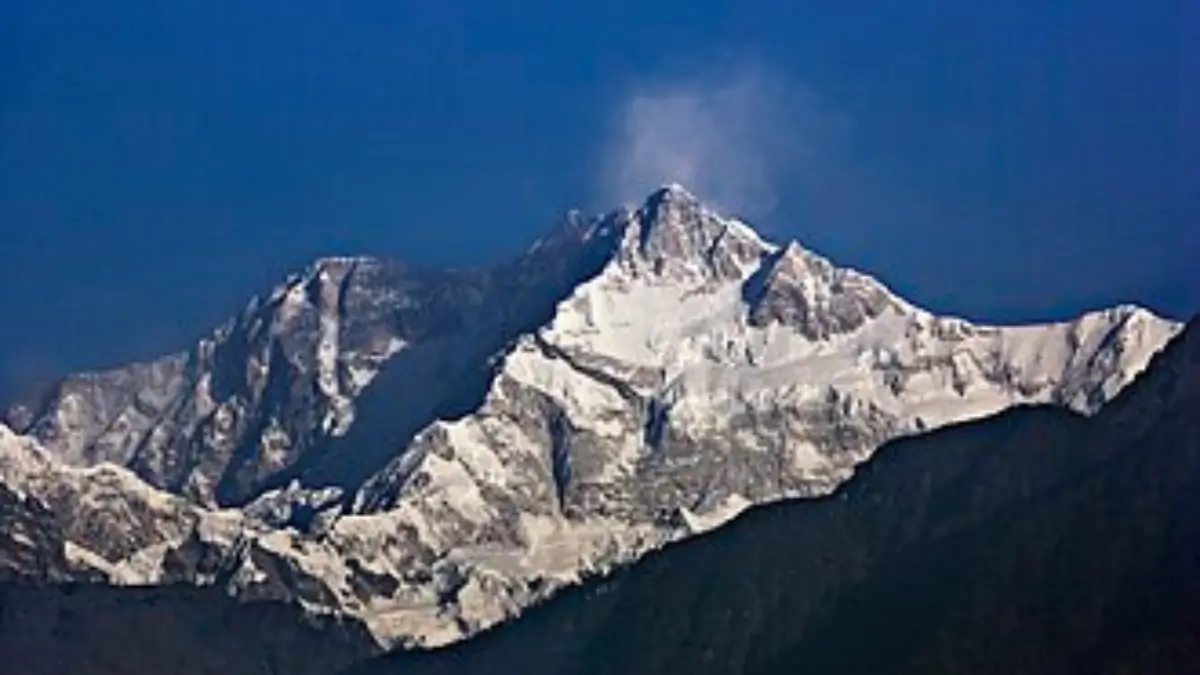
Mountains have always been a source of wonder and inspiration. Some peaks are admired not just for their height, but also for their unique beauty, mystical charm, and cultural importance. They attract travelers, pilgrims, and nature lovers alike. Many of these mountains are surrounded by fascinating stories, legends, and traditions that make them famous and respected across regions, drawing people from far and wide.
Golden Mountain of India
The mountain called the Golden Mountain of India is Kanchenjunga. It is the third-highest mountain in the world, standing tall at 8,586 meters (28,169 feet). Kanchenjunga sits on the border between Sikkim (India) and Nepal, forming part of the mighty Himalayas.
Its golden glow at sunrise and sunset is what gave it the nickname. As the sunlight touches its snow-covered peaks, the mountain shines with a bright, golden hue, making it look like it is carved from gold.
Other Names of Kanchenjunga
Kanchenjunga is not only known as the Golden Mountain. Over time, it has earned several other nicknames:
- The Five Treasures of Snow – Symbolising gold, silver, gems, grain, and holy scriptures.
- The Sleeping Buddha – Because its peaks resemble a resting Buddha.
- Sewa Lungma – A local name in the surrounding regions.
Geography and Formation
Kanchenjunga is considered a “young” mountain in geological terms. It was formed about 50 million years ago during the collision of the Indian and Eurasian tectonic plates. The mountain features five distinct peaks, representing the five treasures, and hosts the Zemu Glacier, the largest glacier in the eastern Himalayas.
Flora and Fauna Around Kanchenjunga
Kanchenjunga is surrounded by lush forests and rare wildlife. The Kanchenjunga Biosphere Reserve, a UNESCO World Heritage site, protects its unique biodiversity. Some notable species include:
- Animals: Red panda, snow leopard, Himalayan black bear, musk deer.
- Plants: Rhododendrons, orchids, Himalayan blue poppy, and dense oak forests.
- Butterflies: Over 600 species, one of the highest densities in the world.
The region also contains ancient cloud forests that have remained untouched for thousands of years.
Interesting Facts About Kanchenjunga
- The Himalayas, including Kanchenjunga, are still rising by about 5 mm per year due to tectonic activity.
- The mountain’s name, Kanchenjunga, means “Five Treasures of Snow.”
- The summit has only one-third of the oxygen found at sea level, making climbing very challenging.
- Statistically, descending Kanchenjunga is more dangerous than climbing it due to avalanches and changing weather.
- The area is home to over 400 orchid species and medicinal plants like the Himalayan blue poppy.
Best Places to View Kanchenjunga
Kanchenjunga can be admired from several beautiful locations:
- Tiger Hill, Darjeeling – Famous for its sunrise views.
- Sandakphu – Offers a panoramic view of the Himalayan peaks.
- Pelling, Sikkim – Ideal for capturing the golden glow of Kanchenjunga at sunset.
Global Golden Mountain
Interestingly, there is also a Golden Mountain outside India: the Altai Mountains in Central Asia. Its name comes from the Turkic-Mongolian word “altan”, meaning gold. The Altai Mountains are rich in minerals and span across Russia, China, Mongolia, and Kazakhstan. Unlike Kanchenjunga, its golden name comes from its valuable resources rather than sunlight.








 World’s Best Performing Banks 2026: HD...
 Which Country is the Largest Uranium Pro...
 SEMICON India 2026: Theme, Date, Venue, ...