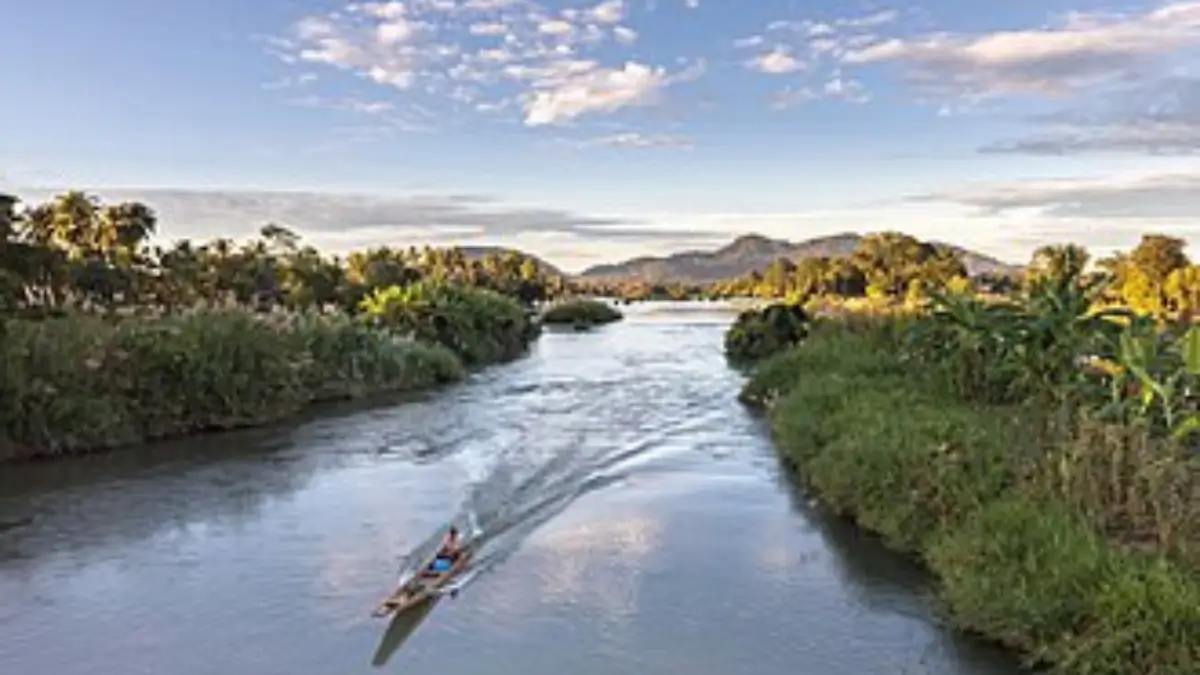
Did you know that in India there is a river so wide and deep that people compare it to a sea route between two lands? Because of its vast stretch, crossing it once felt like a major journey rather than a simple boat ride.
In earlier times, travelers needed special boats and careful planning to move from one side to the other. Strong currents and changing tides made the journey exciting and sometimes challenging. This is why people started giving it a very unique nickname.
The river also connects cultures, trade routes, and communities. Many towns grew along its banks as it became an important path for transport and communication.
Just like the famous water passage between England and Europe, this Indian river separates regions while also bringing them closer together. The comparison comes from both its size and its historical importance.
Today bridges and modern transport make crossing easier, but the name still reminds us of the days when nature decided the pace of travel.
Which River is known as the English Channel of India?
The Mahe River, locally known as Mayyazhipuzha, is called the “English Channel of India.”
The name comes from the time when the river separated British-controlled land and French-controlled Mahé in southern India. Just like the English Channel divides England and France in Europe, this river divided two foreign powers in India.
Location of the River
The Mahe River flows in the southern state of Kerala and the Union Territory enclave of Mahé (Puducherry).
It passes mainly through:
- Wayanad district (origin area)
- Kozhikode district
- Kannur district
- Mahé town
Finally, it meets the Arabian Sea near the coastal settlement of Mahé.
Check This: How Many Times has Australia been Eliminated from ICC Tournaments?
Origin and Course
The river begins in the Western Ghats hills of Wayanad. Its total length is only about 54 kilometres, so it is considered a short river.
From the hills it travels westward through forests, villages, and towns before reaching the sea. Even though small, its path was historically very important.
Why was it Compared to the English Channel?
Here are some reasons why the Mahi River known as the English Channel of India:
1. Border Between Two Empires
During the 1700s and 1800Js, India was not ruled by a single government. Different parts were under different European countries.
- The British ruled the Malabar region (Kozhikode and Kannur)
- The French ruled the small town of Mahé
The Mahe River flowed exactly between them. Crossing the river meant entering another country’s rule — different laws, taxes, and culture.
2. A Political and Military Boundary
Both sides watched the river carefully.
- Soldiers guarded crossings
- Trade goods were checked
- Movement of people was monitored
So, the river acted like an international border rather than just a natural stream.
3. Similarity With Europe
In Europe, the English Channel separates England and France. In India, the Mahe River separated British and French territories.
Because the situation looked similar, people started calling it the English Channel of India.
Historical Timeline
| Year | Event | Meaning |
| 1724 | French settlement in Mahé | River became a boundary |
| 1763 | Treaty recognised French control | Border became official |
| 1814 | French rule restored after wars | Boundary continued |
| 1954 | French left India | River lost political importance |
For over 200 years, the river functioned like an international dividing line.
Natural Features of the Mahe River
Even though famous for history, the river also supports nature.
- Mangrove forests near the mouth
- Fish and bird species
- Tidal water near the sea
- Fertile soil along banks
Today it is peaceful and mainly used by local communities.
Importance Today
The Mahe River is no longer a political border. India is united, and Mahé is part of the country. However, the name still survives as a reminder of colonial times.
It teaches how even a small river can shape history and culture.







 Weekly Current Affairs One Liners (5th t...
 Who Is Navi Pillay? Nobel Peace Prize 20...
 Vande Bharat vs Amrit Bharat Express: Ke...