N Chandrasekaran Reappointed as Tata Sons Chairman

N Chandrasekaran has been given the position of chairman of Tata Sons again for a period of five years, retracting from his earlier decision of not seeking an extension of his term. This has come into effect after the Tata Sons board’s approval on September 17, 2026, following their request to him to change his mind regarding the same. This situation arises amidst disagreements between the Tata Sons board and the Tata Trusts who own more than 66% of the holding company. Noel Tata, the chairman of the Tata Trusts, opposed the reappointment of Chandrasekaran and has raised questions about its legitimacy.

Chandrasekaran to Lead Tata Sons for Another Five Years

In a statement, Tata Sons clarified that Chandrasekaran decided to revisit his previous decision upon a request made by the board of directors. The board unanimously decided to reappoint him for five more years in office. Currently, Chandrasekaran has been the Chairman of Tata Sons since 2017 when he was first reappointed in 2022. His tenure is expected to elapse in February 2027.

The recent development follows months of speculation about his successor. Back in August, he informed the board that he will not put up his name for consideration for reappointment at the end of his current term. Consequently, Tata Trusts have been working on forming a selection committee to choose his replacement.

Why Noel Tata Disagreed With the Decision

As the chairman of Tata Trusts, Noel Tata decided not to vote in favor of the reappointment. Tata Trusts has maintained that the resolution passed by the board of directors amounts to a “legal nullity” as it does not have the approval of Trust nominees as stipulated in the articles of association.

Another Problem for the Listing of Tata Sons

The internal struggle has come at a time when Tata Sons is facing a very big regulatory challenge. According to reports from Reuters, the Reserve Bank of India declined Tata Sons’ petition for giving up their license as an NBFC. In other words, the regulator is putting further pressure on the company in terms of regulation of the upper layer NBFCs. The problem of listing Tata Sons has always been a matter of controversy among the members of the Tata family.

What will Happen Next?

The immediate concern would still be centered on the issue of whether the chairman can get reappointed and the succession plan of Tata Sons in line with the RBI’s regulations. The succession plan was initiated by Tata Trusts after the declaration by Chandrasekaran in August.

Who is Sethuraman Panchanathan? Chennai-Born Scientist Wins 2026 Bueche Award

Computer scientist and engineer Sethuraman Panchanathan has been conferred the 2026 Arthur M. Bueche Award of the U.S. National Academy of Engineering (NAE). He is the first Indian-American and Arizonan to receive the prestigious award after more than four decades of its inception. The citation is given for his contributions to science, engineering, technological innovation and policy. Panchanathan was earlier the 15th director of the NSF and currently works as University Professor of Technology and Innovation at Arizona State University.

What is Arthur M. Bueche Award?

Arthur M. Bueche Award is bestowed upon engineers contributing to science and technology policy, development and collaboration of industry, government and universities of the United States.

The NAE has bestowed the award on Panchanathan for his efforts in fostering basic science, technology and policy, translational research and opportunity expansion throughout the United States.

Who Is Sethuraman Panchanathan?

Panchanathan was born on 24th June 1961 in Chennai. Panchanathan’s academic career has been pursued both in India and in Canada, where he did his doctorate.

As per the Government of India’s official Padma Shri award citation, he got a degree of BSc in Physics from the University of Madras in 1981, BE in Electronics and Communication Engineering from IISc in 1984, an MTech in Electrical Engineering from IIT Madras in 1986, and a PhD in Electrical and Computer Engineering from the University of Ottawa in 1989.

Panchanathan’s scientific inclinations surfaced in him when he went along with his father to the American Center in Chennai in 1969 to see the rocks brought from the moon through the Apollo 11 space mission.

His Research and Academic Career

Panchanathan’s research works have been involved in human-centered multimedia computing, haptic interface technologies, ubiquitous computing, machine learning and design of media processors.

In Arizona State University, Panchanathan had established and headed the Center for Cognitive Ubiquitous Computing that had worked on technologies and devices for helping people with disabilities. Panchanathan has published more than 500 research papers and has mentored over 150 graduate students, postdoctoral fellows, engineers and scientists.

Prior to joining NSF, he was executive vice president of Knowledge Enterprise and chief research and innovation officer at ASU.

Panchanathan at NSF Director

He was the 15th NSF director from June 2020 to April 2025. He was nominated in 2019 and was unanimously confirmed by the United States Senate on June 18, 2020.

During his tenure, NSF has set up the Directorate for Technology, Innovation and Partnerships (TIP) in 2022, being the first directorate created at NSF after 30 years.

PM Modi Inaugurates SEMICON India 2026 in New Delhi

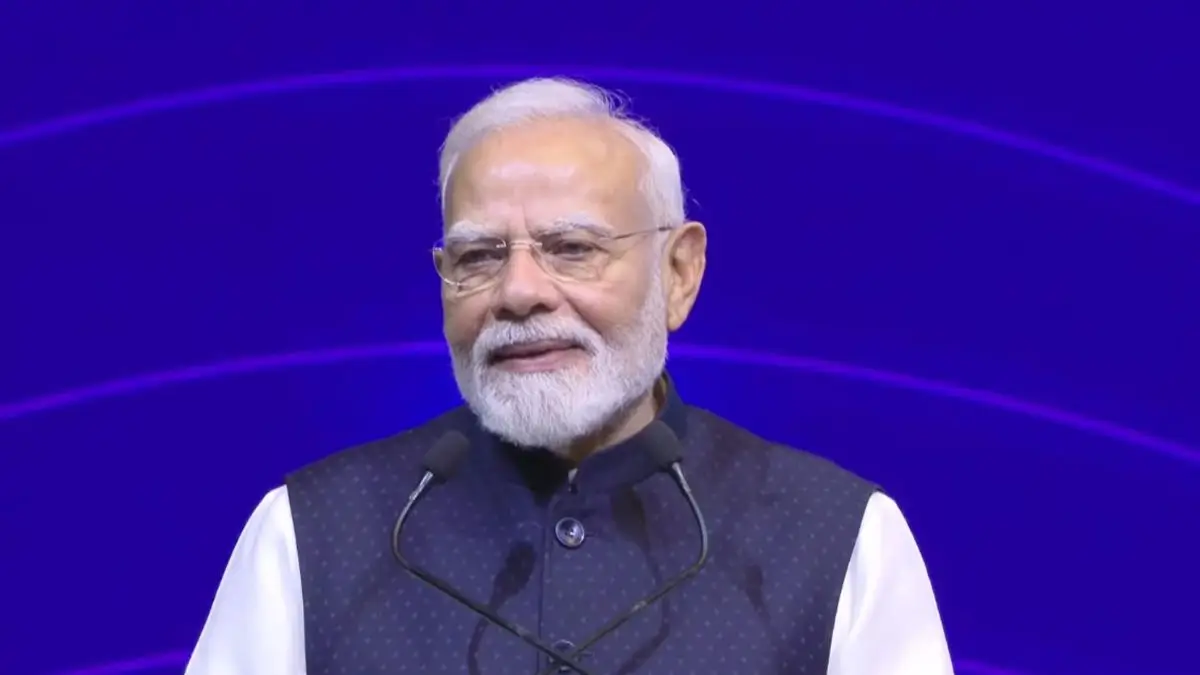
Honorable Prime Minister of India Narendra Modi inaugurated SEMICON India 2026, the fifth edition of the event, at Yashobhoomi in New Delhi, India, on 17th September, heralding the start of a three-day event centered on the semiconductor and electronics ecosystem of India. The event will be held from 17th to 19th September and will see the gathering of semiconductor companies, policymakers, investors, research institutions, startups, academia and students. The event, which is organized by India Semiconductor Mission (ISM), Ministry of Electronics and Information Technology (MeitY) and SEMI, has been given the theme “Silicon to Systems: Building the Ecosystem.”

SEMICON India 2026: Theme and Focus Areas

SEMICON India 2026 focuses on building capabilities in the entire value chain for semiconductors including materials, manufacturing, chip design, packaging, electronics and systems.

The three-day program involves technical sessions, panel discussions, country roundtable discussions and industry interactions on semiconductor manufacturing, AI, digital transformation, supply chain, materials, sustainability, product design, startups, innovation and talent/skilling.

Participation at Global and Industry Levels

The event will be attended by global semiconductor and electronics firms, policy makers, investors and other technology stakeholders. It will include country and state pavilions, start-up pavilion, student programs and work force development programs.

A notable feature of this year’s event will be the ‘Sand to Silicon to Systems’ Value Chain Experience, showcasing different stages of the semiconductor value chain.

How has India’s Electronic Manufacturing Sector Evolved?

India’s electronic manufacturing sector has seen much growth over the last decade.

According to government figures, the production of electronics grew from ₹1.9 lakh crore in 2014-15 to ₹12 lakh crore in 2024-25.

Exports of electronics grew from about ₹38,000 crore to ₹3.3 lakh crore in the period.

Mobile phone production increased from ₹18,000 crore to ₹5.45 lakh crore, and mobile phone exports from ₹1,500 crore to ₹2 lakh crore.

Import penetration in domestic consumption of mobile phones dropped sharply from 75% in 2014-15 to 0.02% in 2024-25, according to the cited government figures.

Semicon India Programme

The Semicon India Programme was launched in the year 2022 to develop a comprehensive ecosystem of semiconductors in India. The scope of the programme includes designing, manufacturing, assembling, testing, packaging, and making modules of the semiconductor chips.

The Semicon India Programme is a major component of the strategy of India to enhance domestic electronics manufacturing and decrease its vulnerabilities in the supply chain of semiconductors.

Semicon 2.0: The government has also given approval to Semicon 2.0 which is the next stage of the semiconductor programme of India with an overall budget outlay of ₹1,27,500 crore.

Where Does India Rank In Global Gender Gap Index 2026? All You Need To Know

The Global Gender Gap Index 2026 by the World Economic Forum (WEF) ranks India at the 131st position out of 145 economies, achieving a score of 64.5% in terms of gender parity. India has maintained the same position as it held in 2025, but there has been marginal improvement in its score. This index, first published in 2006, evaluates gender parity in terms of economic participation, education, health and political empowerment. The General Studies aspirants must consider this report relevant to India’s standing on gender equality and other socio-economic issues pertaining to women’s participation.

What Is the Global Gender Gap Index?

The Global Gender Gap Index (GGGI) is a WEF annual initiative that assesses the gender gap in the following four key areas,

  1. Economic Participation and Opportunity
  2. Educational Attainment
  3. Health and Survival
  4. Political Empowerment

Instead of considering only the level of development, the index considers gender parity to be its key area of assessment. The Global Gender Gap Report 2026 is the 20th edition of the GGGI and includes 145 economies.

India’s Performance in Gender Gap Index 2026

India’s overall parity score stood at 64.5%, which placed it in the 131st place.

Dimension India’s Score
Economic Participation & Opportunity 41.2%
Educational Attainment 96.6%
Health & Survival 95.6%
Political Empowerment 24.5%
Overall Score 64.5%

Economic Participation and Opportunity

Despite some progress made over the past decade, economic participation still remains the area where there is the biggest gender gap in India. The parity between labour-force participation rates was 44.1%, while that between professional and technical workers – 49.9%.

The latter has improved dramatically since 2006, when it stood at only 26.6%. Nevertheless, parity between the shares of women in the ranks of legislators, senior officials and managers was rather poor at 13.1%.

Education and Health

India managed to record 96.6% parity in terms of education attainment; however, it was still 0.5 percentage points less compared to the previous year.

The parity between women and men in the area of health and survival rates was 95.6%.

Political Empowerment

The political empowerment indicator in India is 24.5%, and the country ranked 67th out of 146 countries in terms of the same indicator globally.

Among political indicators, parliamentary representation indicator is 16.1%, and ministerial representation is 5.9%. The head-of-state indicator stands at 40.7%.

Top and Bottom Countries Based on Global Gender Gap Index 2026

The top country was Iceland, which had an index value of 0.930, followed by Finland (0.872) and Norway (0.857). Fourth was Namibia, whereas the fifth position was taken by the UK.

Countries ranking last include Chad, which is ranked 145th with an index value of 0.578, followed by Iran (144th) and Pakistan (143rd).

Among major economies of the world, the US was ranked 47th, China was ranked 96th, and Japan was ranked 117th, whereas India ranked 131st.

According to WEF, 69.2% of the global gender gap has already been closed. Assuming the same rate of progress, global gender parity will be achieved in 120 years.

Top-10 Countries In Global Gender Gap Index 2026

Rank Economy Gender Gap Score Score Change Rank Change
1 Iceland 0.930 +0.005
2 Finland 0.872 -0.006
3 Norway 0.857 -0.006
4 Namibia 0.845 +0.034 +4
5 United Kingdom 0.842 +0.004 -1
6 New Zealand 0.828 +0.001 -1
7 Sweden 0.823 +0.006 -1
8 Australia 0.819 +0.027 +5
9 Germany 0.817 +0.013
10 Ireland 0.814 +0.006

Bottom Last Countries In Global Gender Gap Index 2026

Rank Economy Gender Gap Score Score Change Rank Change
141 Chad 0.578 +0.007 +1
142 Iran 0.585 +0.002 +1
143 Pakistan 0.595 +0.028 +5
144 Democratic Republic of the Congo 0.595  -0.006 +1
145 Algeria 0.618 +0.004

Academic Freedom Index 2026: India in Severely Restricted Category

India has been placed in the “severely restricted” category in the 2026 Free to Think report by Scholars at Risk, which is an international organization that monitors attacks on the higher education. This report documented cases of suppression of academic freedom, university administration, research, teaching, or campus expression. India was placed in the category of “severely restricted” along with Hong Kong, Indonesia, Pakistan, the West Bank, and Ukraine.

Free to Think 2026 Report Highlights

Free to Think 2026 report documented 382 attacks on higher education communities in 59 countries and territories worldwide between July 1, 2025, and June 30, 2026.

In addition, the report evaluated information from the Academic Freedom Index (AFI) on the level of academic freedom in 179 countries. Over the last decade, the level of academic freedom has declined in 50 countries and improved in nine countries. According to the index, India’s score decreased from 0.38 in 2022 to 0.14 in 2025.

The report classified countries and regions into groups based on levels of restrictions to academic freedom.

Group Countries/Territories
Severely restricted India, Hong Kong, Indonesia, Pakistan, West Bank, Ukraine
Completely restricted Afghanistan, China, Iran, Russia, Türkiye, Syria, Venezuela, Zimbabwe, Gaza

Note: The report provides additional information on the situation in each country and region, noting that the group’s level of restriction should not be used to compare AFI scores.

What Did the Report Say About India?

The report noted that the central government had implemented policies to govern higher education, including university administration, appointments, and curricula. The report also highlighted restrictions to campus discourse in Indian higher education institutions, including dismissals, cancellations, and limitations on student expression.

The report also referenced the University Grants Commission (UGC) and recent changes to higher education laws and regulations, including the removal of the 10 percent cap on faculty appointments in non-permanent, contractual positions and the proposed modification to eligibility criteria for the post of vice-chancellers.

These are just the findings and conclusions of the Scholars at Risk and the AFI.

AFI Scores For Different Countries/Territories

The report listed the AFI scores for different countries and regions. The AFI score for India is 0.14.

Country/Territory  AFI Score
India 0.14
China 0.10
Venezuela 0.12
Palestine/Gaza 0.06
Qatar 0.07
Türkiye 0.18
Afghanistan 0.17
Iran 0.08
Saudi Arabia 0.13
Belarus 0.07
North Korea 0.06
Myanmar 0.04

The report noted that group assignment was not necessarily based on a comparison of countries’ AFI scores. The report also noted that changes in academic freedom over time were also taken into account in determining the placement.

Instances of Restriction of Faculty Members and Students

There were a number of instances which involved faculty members of India.

In one of the instances, Snehashish Bhattacharya, professor at South Asian University, was fired in 2025. There was a link of this case with a 2022 letter signed by Bhattacharya and 14 other professors regarding how the university managed student protests.

The second instance is about Lora Santhakumar, assistant professor at SRM Institute of Science and Technology in Tamil Nadu. In this instance, it is stated that she was sacked in 2025 due to her social media posts against the calls for war when India-Pakistan relations worsened.

It is also reported that those students who participated in the protests were under pressure from the university management, police, and their rival student groups.

Government, University, and Academic Freedom

The report pointed to the connection between the policy of the government and institutional autonomy as a key concern in India. It mentioned that the issues relating to research, teaching, publication, academic conference, and university administration have become matters of contention.

Additionally, the report mentioned a March 11, 2026, Supreme Court order relating to three academics who were associated with NCERT with respect to Class 8 social sciences textbook. The report read that the court order prevents the scholars from receiving any government funding for developing the curriculum.

Why Does Academic Freedom Matters?

Academic freedom allows teaching, learning, research, publication, discussion, and debates to take place without interference.

Teaching and learning are core functions of higher education institutions, and academic freedom promotes intellectual independence and diversity within institutions. It is therefore of great importance to higher education.

However, academic freedom can sometimes be limited by universities, government, campuses, or other factors.

India Electric Mobility Index 2025: Delhi Tops NITI Aayog Rankings

India Electric Mobility Index (IEMI) 2025, launched by the NITI Aayog in partnership with the WRI India, has ranked Delhi as the leader in India’s transition towards electric mobility. Delhi has been awarded with total 84 points out of 100, followed by Maharashtra with 78 and Karnataka with 73. This second edition evaluates all 36 states and union territories based on the adoption of electric vehicles, readiness of charging infrastructure, and research and innovation.

IEMI 2025 demonstrates overall progress as well; it indicates that the median score has increased from 36 in 2024 to 40 in 2025.

Top Performers in India Electric Mobility Index 2025

Five states/union territories are ranked as Top Performers in the overall IEMI 2025.

Rank State/UT Score
1 Delhi 84
2 Maharashtra 78
3 Karnataka 73
4 Chandigarh 71
5 Goa 65

Delhi and Maharashtra have maintained their top two positions respectively, whereas Karnataka has taken the third spot. Maharashtra and Karnataka are the only two large states which fall under the category of Top Performers.

Among hilly and northeastern states, Manipur has topped the list with 46 points.

What is the India Electric Mobility Index?

The India Electric Mobility Index (IEMI) is an index that tries to evaluate the efficiency of state and UT governments in promoting electric mobility. The IEMI, jointly developed by NITI Aayog and WRI India, evaluates 36 regions through the analysis of 16 indicators under three major themes.

Theme Weightage What is Measured?
Transport Electrification 50% Progress in the electric vehicle adoption
Charging Readiness 30% Charging infrastructure and enabling conditions
Research & Innovation 20% Electric vehicle startups and innovation ecosystem

Half of the score for each region is based on the observation of the outcome, while the rest captures the policy and other enabling conditions.

India’s Electric Mobility Scorecard in 2025

In the 2025 edition, there is progress across the country. The best score rises from 77 to 84, while the national median score goes up from 36 to 40.

Madhya Pradesh registers the highest rise in rank, rising from 23 to 7. There is a rise of 10 ranks each in Goa and Puducherry, while Bihar registers eight places up.

Ranking, however, may not be compared directly in some cases due to the introduction of peer groupings, additional data points, and new normalization datasets.

Index Highlights EV Adoption and Charging Infrastructure

One of the major highlights of the index is that EV adoption and charging infrastructure development do not necessarily proceed concurrently.

For instance, while the transport electrification score of Haryana was only 19, its charging readiness score was 91. Uttar Pradesh had the inverse case with transport electrification score of 58 and charging readiness score of 36.

Transport electrification saw the highest scores among only three regions including Delhi, Chandigarh and Maharashtra, while 14 regions fell into the Aspirants category.

Charging readiness resulted in better scores. The top scorer in this category was Karnataka with 97, followed by Goa with 92, and Maharashtra and Haryana with 91 each and Delhi with 88. At the same time, more than two-thirds of the states/UTs remained under the Frontrunner mark.

Research and Innovation in Electric Mobility

In the area of research and innovation, larger geographical variation was observed. The top scores among large states were:

State Innovation Score
Maharashtra 85
Karnataka 82
Tamil Nadu 77
Haryana 74
Telangana 71
Madhya Pradesh 65

Clusters of industrial, technological and startups in Maharashtra, Karnataka and Tamil Nadu are the reasons behind their high innovation scores.

Policies for Electric Mobility in Various States

The index also looks at the policies and enablers for adopting EVs. As per the information provided about 2025, out of 36 states and UTs, there are policies of EV in 26.

The overall extension of EV policies shows that the scope of policy-making is more inclined towards the implementation of the policies, development of charging network, power supply, fleet adoption and research and development.

What is the Significance of the IEMI?

IEMI acts as an indicator by which we can compare different aspects of India’s transition towards electric mobility keeping in mind that the situation in states will be different geographically and economically.

Urban areas can provide for a dense charging network as well as fleet adoption, but in hilly, northeastern and island areas, the emphasis needs to be more on shared mobility, corridor charging, power supply and vehicles segments that suit the region.

Michael Kremer Appointed World Bank Group Chief Economist

World Bank President Ajay Banga has named Michael Kremer, a Nobel Prize-winning economist, as World Bank Group Chief Economist and Senior Vice President for Development Economics, the bank announced on September 16, 2026. This comes at a time when some of the developmental challenges include job creation, access to healthcare and education, private investments, and technology. Kremer is known for using economic research to solve real-world issues and has done a lot of work on poverty, education, healthcare, agriculture, and innovation in the developing world.

Michael Kremer’s New Position at the World Bank

In his new position as Chief Economist and Senior Vice President for Development Economics, Kremer will assist in bridging the gap between research, evidence and development outcomes within the World Bank Group.

The organization seeks to leverage research and data to develop policies, investments, collaborations and scalable solutions in both the public and private sectors.

According to Banga, Kremer’s expertise in developing and evaluating effective development programs will play a crucial role in addressing some of the challenges faced by the World Bank, including creating job opportunities for the increasing youth population.

How and Why Michael Kremer Won the Nobel Prize

Michael Kremer won the Nobel Prize in Economics along with Abhijit Banerjee and Esther Duflo in 2019 for using experimentation to tackle poverty around the world.

This work contributed to establishing the methodology of randomized controlled trials (RCTs) as a way to evaluate development programs. Using RCTs allows researchers to see what works and how to expand the success.

Kremer’s Contributions to Health, Education, and Agriculture

Kremer has done research in many areas in development economics, including economic growth, technology changes, education, health, water, finance, and agriculture.

One contribution that he is known for is the work that he did in Advance Market Commitments (AMCs) for vaccines. In collaboration with Rachel Glennerster, he played an instrumental role in developing this concept, and his work led to $1.5 billion AMC for pneumococcal vaccines through the collaboration of Gavi and the World Bank Group.

As per the World Bank, vaccines acquired through this program have been delivered to 60 developing nations.

His research in deworming has had impact on government programs in Africa and South Asia, and since 2014, more than 2 billion treatments have been administered to children.

Innovation and Technology Research Focus

Recent research activities by Kremer include the use of digital agriculture and AI-driven agriculture weather prediction. It is noted that according to the World Bank, the research has impacted over 50 million people through government programs implemented in Africa and South Asia.

Also, Kremer co-founded Precision Development, an organization that uses digital technologies to enhance the productivity and income of smallholder farmers.

Further, Development Innovation Ventures, an organization that Kremer co-founded, has invested in over 300 innovations and impacted over 200 million people.

PM Modi Turns 76: 5 Numbers That Capture India’s Economic Transformation

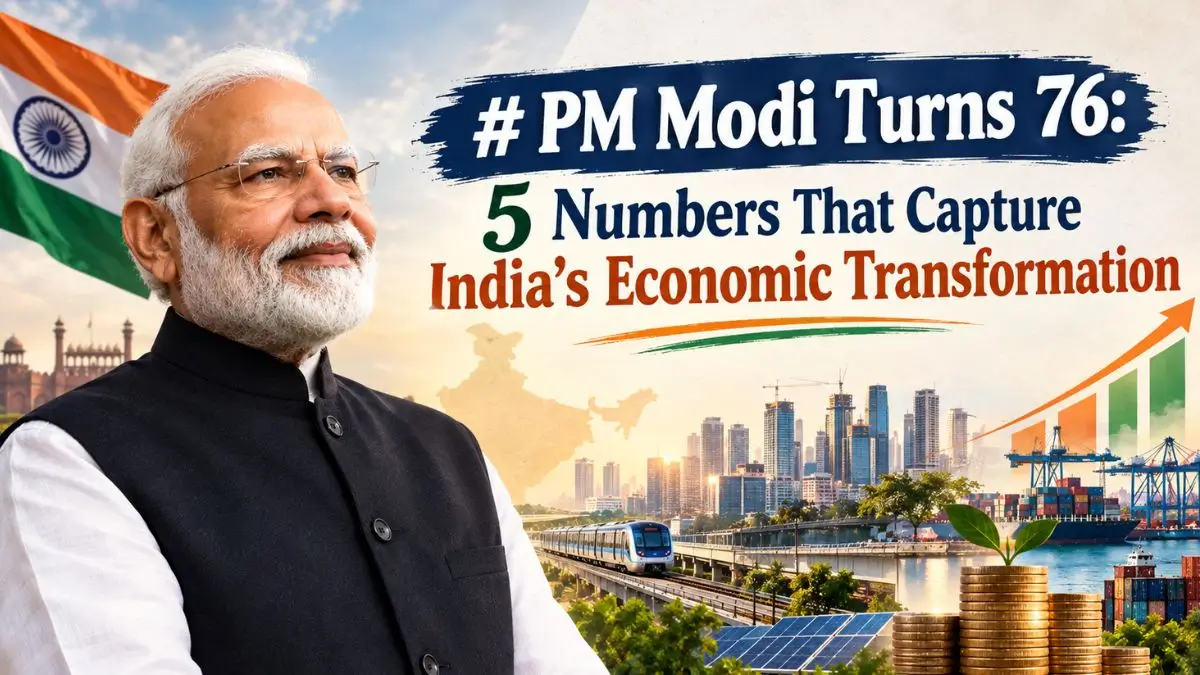
Indian Prime Minister Narendra Modi will complete 76 years of age on September 17, 2026, after ruling the country for more than 12 years as Prime Minister since assuming power in May 2014. During this time, India’s economy and infrastructure have seen several changes in various sectors including growth, foreign exchange, financial inclusion, roads, and entrepreneurship.

Five numbers from the most recently published statistics can highlight the extent of these changes.

Here Are 5 Numbers Which Capture India’s Economic Transformation

1. 7.8%: India’s Latest GDP Growth Rate

In the April-June quarter of FY27, India has witnessed 7.8% growth in its GDP on a real basis. It has been helped by manufacturing and service sectors.

In fact, the real Gross Value Added (GVA) has risen by 8.2%, while investments are up by 11.9%. The growth in household consumption has been 7.1%, whereas exports are up by 12% in the quarter under review.

This latest quarterly growth has come amidst the continuing uncertainties in global trade and geopolitics. India has also witnessed 7.7% real GDP growth in FY2025–26.

2. $785.7 Billion: Highest Ever Foreign Exchange Reserves

The foreign exchange reserves of India stood at a high of $785.7 billion in the week ending on September 4, 2026, as per data published by the Reserve Bank of India.

There was an increase of almost $120 billion in the foreign exchange reserves for 10 successive weeks and India was also seen as the fourth largest in terms of foreign exchange reserves in the world.

Foreign exchange reserves can serve as a cushion against external economic shocks.

3. 59.21 Crore: Jan Dhan Accounts

Pradhan Mantri Jan Dhan Yojana (PMJDY) was launched in August 2014 and increased access to banking.

The total number of PMJDY accounts has been 59.21 crore till September 2, 2026, as per data released by Moneycontrol. The deposits in these accounts have been ₹3.17 lakh crore and 41.39 crore RuPay debit cards have been issued under the scheme.

Among women, there were 32.98 crore accounts, while rural and semi-urban beneficiaries made up 46.03 crore.

4. 1,46,572 km: National Highway Network

The national highway network of India has grown over the past decade.

The network was of length 1,46,572 km in contrast to 91,287 km in FY2014, according to the figures mentioned in the report.

According to the figures from the Economic Survey data used in Moneycontrol, the average annual highway constructions have also grown from 4,174 km in 2004-14 to 9,704 km in 2014-25.

The growth in the highway network has also seen an emphasis on expressways, logistics, and infrastructure integration.

5. 2.47 Lakh: Recognized Startups

The startup ecosystem of India has expanded quite a bit since the advent of Startup India in 2016.

The number of DPIIT-recognized startups has risen from mere 502 in 2016 to more than 2.47 lakh in August 2026, according to the figures from the government cited in the report.

As per the government, India is the world’s third-largest startup ecosystem. Recent changes have also raised the threshold for startups from ₹100 crore to ₹200 crore, and ₹300 crore for DeepTech startups.

India’s Economic Growth Through Five Figures

  • Growth in real GDP, Q1: FY27 7.8%
  • Foreign exchange reserves: $785.7 billion
  • Jan Dhan account holders: 59.21 crore
  • National highway network: 1,46,572 km
  • Recognized startups (DPIIT): 2.47 lakh+

Significance of These Figures

Collectively, all the above figures represent five different aspects of economic growth in India which include growth, financial stability, financial inclusion, physical infrastructure, and entrepreneurship.

This also shows that economic progress cannot be gauged only by looking at GDP growth figures because growth in bank account numbers, highways, and recognized startups also represents economic change.

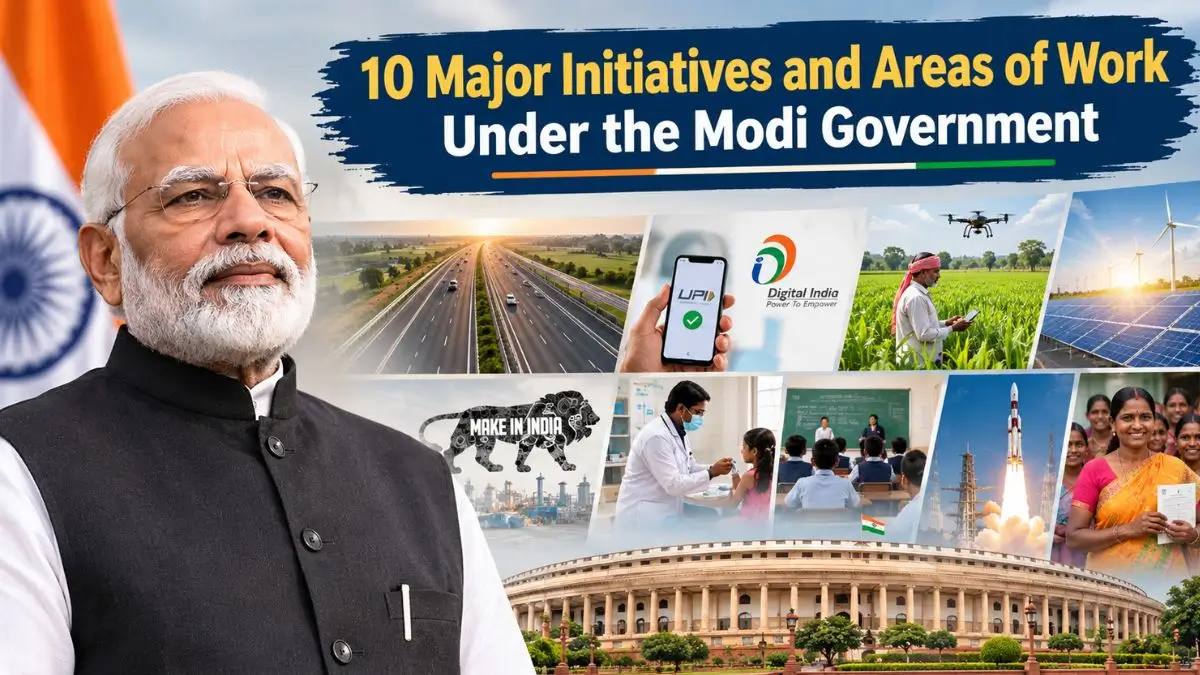
PM Modi Turns 76: 10 Major Initiatives and Areas of Work Under the Modi Government

Prime Minister Narendra Modi became Prime Minister on 26 May 2014, while his third consecutive tenure started on 9 June 2024. The various governments led by Prime Minister Modi since 2014 have started various programs in relation to financial inclusion, sanitation, drinking water, health care, manufacturing, agriculture, infrastructure, digital and rural development.

As Prime Minister Narendra Modi celebrates his 76th birthday on 17 September 2026, here is a factual account of 10 major spheres related to the policies and programs of the government.

Important Dates under Modi-led Government

Date Important Event
17 September 1950 Birth of Narendra Modi
26 May 2014 Oath-taking as Prime Minister for the first time
28 August 2014 Launch of PM Jan Dhan Yojana
25 September 2014 Launch of Make in India
2 October 2014 Launch of Swachh Bharat Mission
11 October 2014 Launch of Saansad Adarsh Gram Yojana
22 January 2015 Launch of Beti Bachao Beti Padhao
August 2019 Launch of Jal Jeevan Mission
9 June 2024 Start of third consecutive term as Prime Minister
10 June 2026 Hit Jawaharlal Nehru’s record for continuous tenure as an elected Prime Minister

Union cabinet officially announced June 10, 2026, as the day when Modi overtook Nehru’s record of continuous tenure of 4,398 days as an elected Prime Minister.

Here are 10 Important Initiative Under PM Modi Led Government

1. Financial Inclusion Using Jan Dhan Yojana

Pradhan Mantri Jan Dhan Yojana (PMJDY) has been initiated from August 28, 2014, for increased access to banking services.

PMJDY has also gained importance in the Jan Dhan-Aadhaar-Mobile (JAM) ecosystem, and is used for Direct Benefit Transfer, insurance, pension and other financial services.

On August 19, 2026, there were 59.09 crore PMJDY accounts. Out of these, 55.7% of the accounts belonged to females, while 77.8% of the accounts were located in rural and semi-urban regions.

2. Sanitation Using Swachh Bharat Mission

Swachh Bharat Mission has been introduced on October 2, 2014, emphasizing sanitation and toilets construction.

The rural scheme later on broadened its scope to include ODF Plus, that is solid and liquid waste management. Rural sanitation became an important public policy program.

3. Rural Drinking Water under Jal Jeevan Mission

Jal Jeevan Mission (JJM) has been implemented in August 2019, and its mission is to ensure household tap water connections in rural households.

JJM’s Har Ghar Jal model ensures the provision of sufficient drinking water through household connections.

As per the information of the Ministry of Jal Shakti, the percentage of rural tap water coverage went up from 16.71% in August 2019 to 82.09% by July 2026, with around 15.89 crore rural households having connections to functional tap water connections.

4. Expanding Healthcare under Ayushman Bharat

Expansion of healthcare services has been another area of significant policy intervention, especially under Ayushman Bharat PM-JAY, Ayushman Arogya Mandirs, and other health programs.

Ayushman Bharat provides health cover up to ₹5 lakh per family per year to eligible families. The scheme was also enhanced in 2024 and made applicable to senior citizens of age 70 years and above without considering their social or economic conditions.

As per 30th June 2026, PM-JAY has sanctioned 12.69 crore hospital admissions worth ₹1.92 lakh crore.

The government also stated that as of August 2026 there were more than 1.86 lakh Ayushman Arogya Mandirs operational.

5. Manufacturing and Entrepreneurship

The Make in India programme was unveiled on September 25, 2014. This campaign sought to improve manufacturing, investment and industrial development.

The wider policy framework has also comprised programmes like the Startup India initiative, Stand-Up India and PLI schemes for select industries.

Such programs have been aimed at enhancing manufacturing capability, entrepreneurship, investments and domestic manufacturing.

6. Agriculture and Irrigation

Agriculture has received government support through different schemes related to irrigation, soil fertility, organic farming and agricultural sector support programs.

Pradhan Mantri Krishi Sinchai Yojana (PMKSY) aims at irrigational efficiency using the “Per Drop More Crop” principle.

Some of these other programs are the Soil Health Card Scheme and Paramparagat Krishi Vikas Yojana that emphasizes organic farming.

7. Infrastructure Development and Connectivity

Infrastructure development has included development of roads, railway lines, airports, metros, and other modes of transportation networks.

The government has also encouraged integrated infrastructure development under PM Gati Shakti. Electrification of the Indian railways, development of expressways, connectivity to airports, and launch of Vande Bharat trains have been some major initiatives undertaken during this period.

Infrastructure development continues to be tied to the government’s focus on logistics, connectivity and economic activities.

8. Digital India and Digital Payments

Initiatives like the Digital India program have used technology to enhance the efficiency of public services and financial transactions.

Projects like Aadhar, direct benefit transfer and Unified Payment Interface (UPI) have become integral parts of the country’s digital infrastructure.

According to data released by the government in August 2026, UPI had processed 24,509 million transactions in the month of August 2026, while 59 crore Jan Dhan accounts provided a solid base for the digital financial transactions.

9. Women & Girl Child Welfare

A number of schemes have been implemented by the government for women, girls and their economic empowerment.

The Beti Bachao Beti Padhao scheme, launched on 22nd January, 2015 has addressed various problems related to girl children such as decreasing sex ratio and education of girls.

Other schemes include Pradhan Mantri Ujjwala Yojana, providing LPG connections to eligible families and other programs relating to self-help group and entrepreneurship of women, including Lakhpati Didi.

10. Rural Development and Basic Services

The rural development schemes included housing, roadways, electricity, water, sanitation and connectivity through digital means.

The Saansad Adarsh Gram Yojana, launched on 11th October, 2014 provides assistance to Members of Parliament in developing their selected villages.

The PM Awas Yojana-Gramin has helped in building houses of eligible rural families while other rural schemes have been related to roads, basic services and connectivity.

QS Global Full-Time MBA Rankings 2027: IIMs in Top 100

According to QS Global Full-Time MBA Rankings 2027, India’s premier management institutes have a mixed bag of results with the IIM Bangalore, IIM Ahmedabad and IIM Calcutta maintaining their position as one of the best full-time MBA courses in the world, despite all three losing ground from their positions in last year’s rankings. IIM Bangalore continued to lead India in terms of ranking by being placed 64= whereas IIM Ahmedabad was placed joint 70th and IIM Calcutta placed 95th globally.

On the other hand, the number of Indian institutes appearing in the QS MBA Ranking List has increased tremendously, with total of 19 Indian institutes appearing in the QS MBA Ranking 2027 List.

Ranking of IIMs in QS MBA 2027

Ranking of IIM Bangalore has fallen by 12 places from 52nd position in 2026 to 64th position in 2027. Similarly, IIM Ahmedabad has also dropped 12 places to be ranked joint 70th. The most significant drop is of IIM Calcutta which has fallen 31 places to be ranked 95th in 2027.

Indian Institute QS MBA 2027 QS MBA 2026
IIM Bangalore 64 52
IIM Ahmedabad 70 58
IIM Calcutta 95 64

IIM Bangalore

IIM Bangalore continued to hold its position as the best MBA provider in India for the fourth consecutive year. This institution ranked 29th in the world and second in Asia on the Employability indicator. The Thought Leadership indicator of IIM Bangalore improved slightly to 51st in the world rankings.

IIM Bangalore and IIM Ahmedabad occupied the eighth and ninth positions, respectively, as the highest-ranked MBA providers in Asia.

IIM Ahmedabad

IIM Ahmedabad placed joint 70th in the world. It still ranks within the top 40 institutions in the world for employability and within the top 100 for Thought Leadership.

It is also the only Indian institution in the global top 100 in Entrepreneurship & Alumni Outcomes, ranking 84th.

IIM Calcutta

The position of IIM Calcutta fell to 95th from 64th in the last ranking but still maintained its position within the world’s top 100 full-time MBA programs.

India in the QS MBA Ranking Growth

There were 19 Indian universities included in the QS ranking for 2027, whereas in 2022 there were only seven, and in 2020 – five. Five Indian universities participated in the QS ranking for the first time.

The O.P. Jindal Global University was the highest ranked among Indian new entrants and ranked in the 171–180 range. Also, the Jaipuria Institute of Management, the CHRIST (Deemed to be University), the Manav Rachna International Institute of Research and Studies, and the Vikrant University Gwalior joined in the 301+ range.

A total number of 28 Indian institutions appears in the MBA and specialized Business Master’s rankings, which makes India the fourth most prominent country among participants after the United States, United Kingdom, and France.

QS MBA Ranking Criteria

The QS Global Full-Time MBA Rankings measure 420+ MBA programs in 65 countries and territories according to 5 key criteria.

Indicator Weight
Employability 40%
Value for Money 20%
Alumni Outcomes 15%
Thought Leadership 15%
Diversity 10%

According to QS, Indian business schools competed with international schools more actively especially in Return on Investment, Entrepreneurship & Alumni Outcomes and Diversity areas. On the other hand, 10 Indian participants improved their performance on the Thought Leadership indicator.

QS Global MBA Rankings 2027: Top 10

Four out of the top ten spots are occupied by schools from the USA; while UK and France both made it in to the list as well.

Rank Business School Country
1 MIT Sloan United States of America
2 Harvard Business School United States of America
3 Stanford Graduate School of Business United States of America
4 Penn (Wharton) United States of America
5 Cambridge Judge United Kingdom
6 HEC Paris France
7 Oxford Saïd United Kingdom
8 INSEAD France
9 London Business School United Kingdom
10 Chicago Booth United States of America

MIT Sloan has secured the first spot for the first time in its history, also risen from the third place. Harvard Business School maintained second place; Stanford rose from fourth to third place, while Penn Wharton fell down to fourth, losing the top spot it held in 2026.

Indian Institutes in Specialised Business Master’s Rankings

Indian institutes were represented in the special Business Master’s ranking in terms of management, business analytics, finance, marketing and supply chain management.

IIM Bangalore was ranked 31st in Master’s in Management and 60th in Business Analytics. IIM Ahmedabad was ranked 46th in Management, and IIM Calcutta was ranked 57th in Management and 96th in Business Analytics.

The Woxsen School of Business was the top Indian institute for the Diversity indicator, ranking 1st in Asia and 33rd globally.

_12.1
September 2026
M T W T F S S
 123456
78910111213
14151617181920
21222324252627
282930