
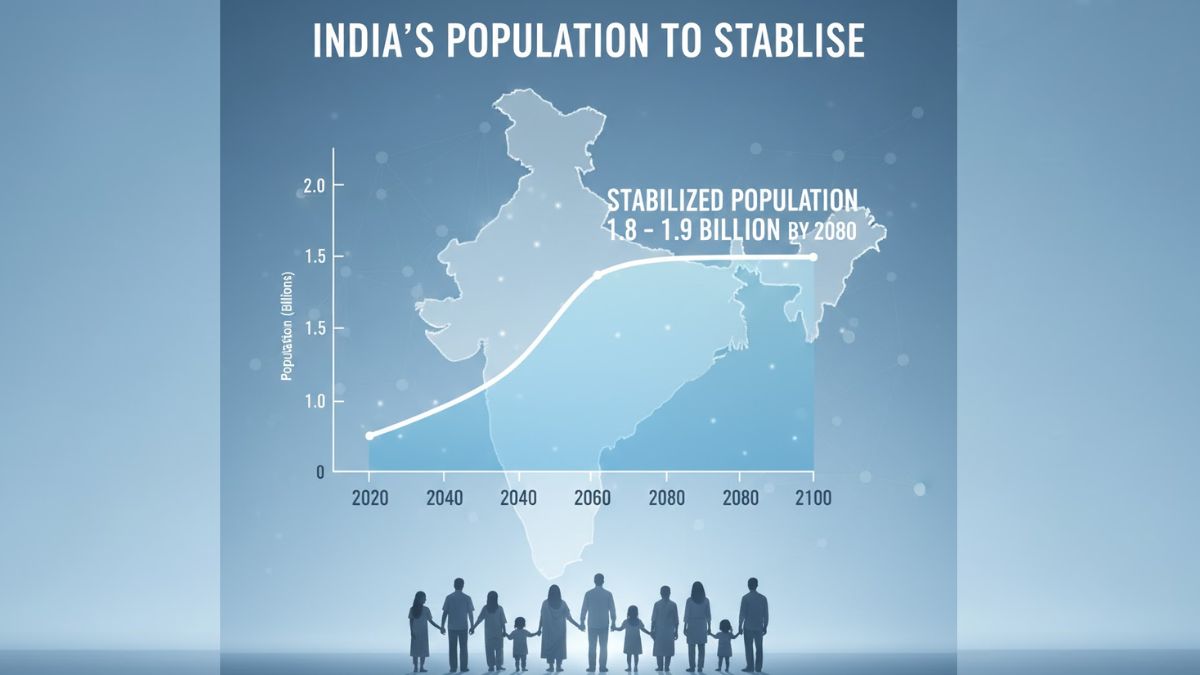
India is undergoing a significant demographic transition that is set to reshape its population future. With the total fertility rate (TFR) dropping to 1.9 from 3.5 in 2000, experts now forecast that the country’s population will stabilise between 1.8 and 1.9 billion by the year 2080. This shift marks a pivotal moment in India’s development story, highlighting how education, economic progress, and reproductive awareness are transforming the nation’s demographic trajectory.
Falling Fertility Rates Drive the Shift
India’s TFR — the average number of children per woman — has seen a dramatic decline from 3.5 in 2000 to just 1.9 today. A TFR below the replacement level of 2.1 suggests that the population will gradually stabilise, rather than continue to grow indefinitely. This trend is now consistent across various regions and demographic segments of the country.
Key Factors Behind the Population Stabilisation
1. Female Literacy and Education
As more women receive education and become literate, they gain greater autonomy in family planning and delay marriage, resulting in smaller family sizes.
2. Wider Access to Contraceptives and Healthcare
With improved healthcare infrastructure and access to modern contraceptives, couples are now able to better control when and how many children they want.
3. Later Marriages and Career Aspirations
More individuals, especially women, are prioritising career development before marriage, leading to fewer and later pregnancies.
4. Economic Growth and Development
Economic development has led to lifestyle changes and increased awareness about the financial and personal responsibilities of raising children, contributing to lower birth rates.
Regional Examples of Demographic Change
- Kerala reached replacement-level fertility as early as 1989 and currently reports a TFR of 1.5.
- West Bengal’s TFR has fallen to 1.3, one of the lowest in the country, showing rapid progress in urban and rural demographic transition.
Emerging Challenges
While population stabilisation offers economic and environmental benefits, it also brings new challenges,
- Ageing Population: With fewer births and longer lifespans, the population of elderly citizens is growing, increasing the need for elder care and social support systems.
- Workforce Sustainability: A smaller young population may lead to labour shortages in the long term.
- Migration and Urbanisation: Youth migration from rural areas for jobs may leave behind an ageing population in villages, stressing local economies.
Key Takeaways
- India’s total fertility rate (TFR) has dropped from 3.5 (2000) to 1.9 (2025).
- Projected population peak: Between 1.8 and 1.9 billion by 2080.
- Female literacy and delayed marriages are key drivers of the fertility decline.
- Kerala and West Bengal are leading with some of the lowest TFRs in the country.
- Challenges include elderly care, workforce sustainability, and migration imbalances.
- Population stabilisation signals a demographic transformation and new opportunities for develo


 India Withdraws Its Plan to Host COP33 S...
 IIM Rohtak Wins BIMTECH's 'Hermes' Dialo...
 Gurgaon Tops the List of India's Most Po...











