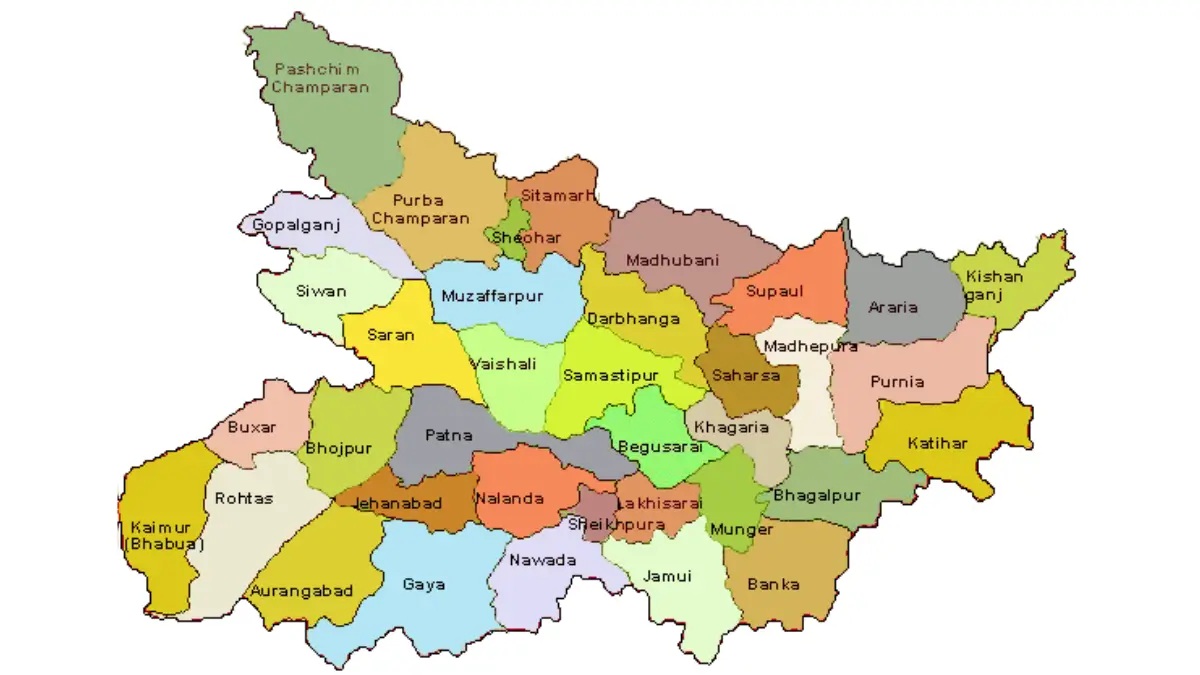
Bihar, located in eastern India, is a state known for its ancient history, rich traditions, and vibrant culture. To ensure smooth governance and balanced development, Bihar is divided into several administrative divisions and districts. These divisions not only help manage the state efficiently but also reflect its cultural and regional diversity.
Overview of Bihar’s Administrative Structure
Bihar’s administration is organized into multiple levels to ensure that government services reach every corner of the state.
As of 2025, Bihar has:
- 9 Administrative Divisions
- 38 Districts
Each division covers several districts, and each district is further divided into smaller units for efficient local governance.
Administrative Levels of Bihar
- State Level – The highest governing authority, led by the state government.
- Division – A group of districts managed by a Divisional Commissioner.
- District – The main administrative unit headed by a District Magistrate (DM).
- Sub-Division – A section within a district, responsible for local administration.
- Block – The key unit for rural development activities.
- Panchayat – The smallest local governing body at the village level.
This structure ensures efficient coordination, public service delivery, and regional development.
Bihar’s Divisions and Districts
Bihar is divided into 9 administrative divisions and 38 districts for smooth governance and development. Each division includes several districts with its own cultural and historical identity. For example, Patna, the capital, is Bihar’s largest city, while Gaya, Bhagalpur, and Darbhanga are known for their religious and cultural importance.
Largest and Smallest Districts
- Largest District (by area): West Champaran – 5,229 km²
- Smallest District (by area): Sheohar – 443 km²
Despite its small size, Sheohar plays an important role in agriculture and local trade.
Economic and Cultural Importance of Divisions
Each division in Bihar contributes uniquely to the state’s economy and culture.
Agriculture: Bihar is one of India’s top producers of rice, wheat, and maize.
- Handloom & Crafts: Districts like Bhagalpur and Madhubani are known for silk weaving and Madhubani paintings.
- Tourism: Gaya, Rajgir, Vaishali, and Nalanda attract pilgrims and history lovers.
- Festivals: Traditional events such as Chhath Puja, Sonepur Mela, and Bihar Diwas highlight the state’s cultural unity.
With Special Economic Zones (SEZs) and growing industrial corridors, Bihar is steadily moving toward economic modernization while preserving its traditions.


 Weekly Current Affairs One Liners (09th ...
 Health Ministry Grants Lifetime Validity...
 José Antonio Kast Rist Takes Oath as the...