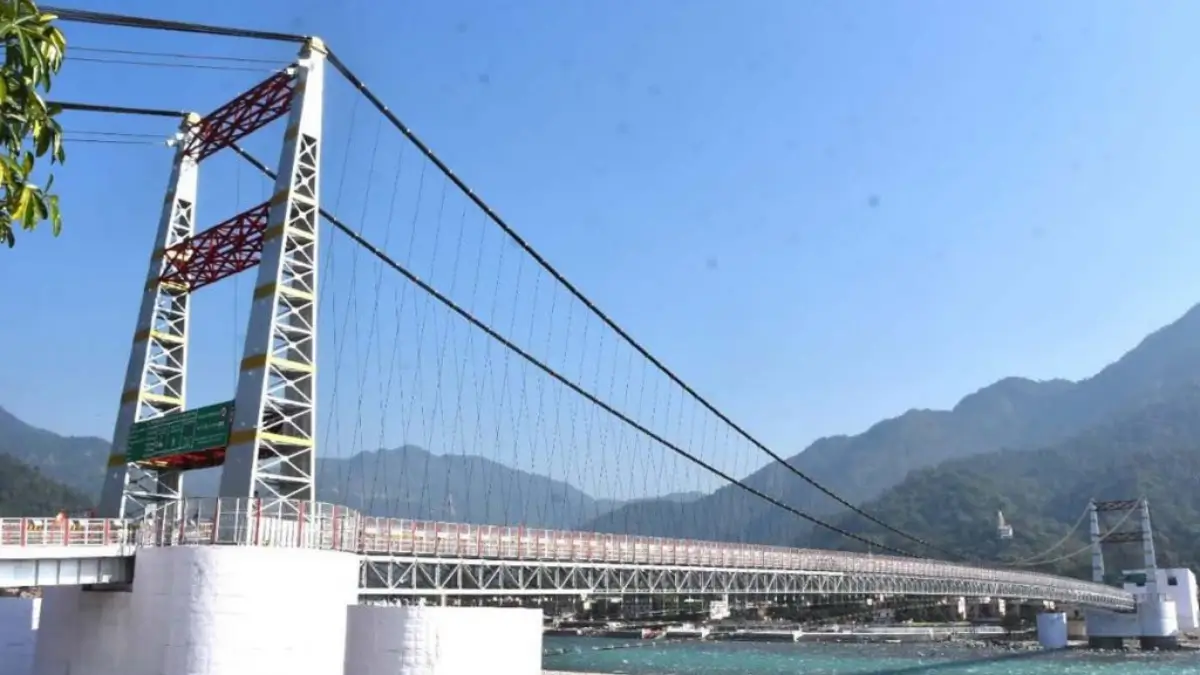
Rishikesh, one of India’s most famous spiritual and tourist destinations, is about to get a new architectural landmark. The Bajrang Setu, a modern suspension bridge over the Ganga River, is almost ready and expected to open by December 2025. This bridge will serve as a replacement for the iconic Laxman Jhula, which was closed for safety reasons in 2019 after serving visitors for nearly a century.
Replacing the Lakshman Jhula
The Laxman Jhula, built in 1929, was a symbol of Rishikesh and a major attraction for pilgrims and tourists. However, over the years, it became unsafe due to wear and tear and heavy use beyond its capacity.
To maintain safe connectivity across the Ganga, the government planned a new bridge downstream. A detailed project report (DPR) was prepared in 2020, and the actual construction began in 2022.
Features and Design of Bajrang Setu
The Bajrang Setu is designed as a modern suspension bridge, combining strength, safety, and visual appeal.
Key Details:
- Length: 132 meters
- Width: 8 meters
- Total Cost: ₹60 crore
- Location: Downstream of the old Laxman Jhula
The bridge will have a 5-meter-wide steel deck for two-wheelers and 1.5-meter-wide glass walkways on both sides for pedestrians. The transparent glass paths, 66 mm thick, will give visitors a stunning view of the Ganga River flowing beneath their feet.
Construction Progress
According to Praveen Karnwal, Executive Engineer of the Public Works Department (PWD), around 90% of the construction has already been completed. Only the installation of glass panels on the pedestrian walkways remains.
The project is expected to be fully completed by December 2025 and handed over to the district administration early next year. Once opened, it will become a new symbol of modern infrastructure in Rishikesh.
Safety and Durability
The Bajrang Setu has been designed using high-quality materials and modern engineering standards to ensure long-term durability. It can safely handle a large volume of pedestrians and two-wheelers, reducing the pressure on older structures like Ram Jhula.
With strong suspension cables and earthquake-resistant design, the bridge promises safety, stability, and sustainability for years to come.
Boost to Tourism and Local Economy
Local residents and tourism experts believe that Bajrang Setu will become a major tourist attraction. Its glass walkways and modern architecture are expected to draw visitors from across India and abroad.
The bridge will not only ease traffic movement but also create new business opportunities for local vendors, cafes, and tour operators. Its scenic beauty and unique design will further enhance Rishikesh’s charm as the “Gateway to the Himalayas.”
Environmental and Cultural Importance
Like Laxman Jhula, the Bajrang Setu also holds spiritual significance. It will connect the same banks of the Ganga that have been central to Hindu mythology and pilgrimage for centuries. At the same time, the bridge has been built with an emphasis on environmental protection, ensuring that construction causes minimal harm to the sacred river.


 How many Nuclear Power Plants in India? ...
 List of Important Days in April 2026, Na...
 Do you Know Which is the Most Spoken Lan...