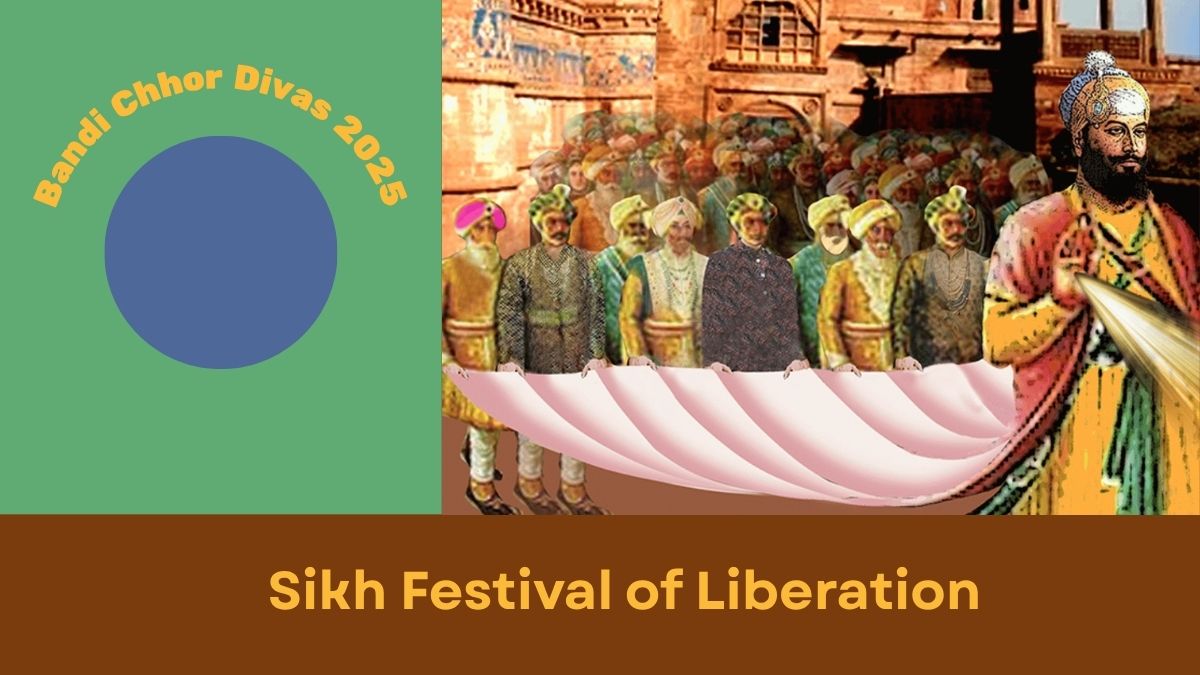
On Tuesday, October 21, 2025, Sikhs around the world will celebrate Bandi Chhor Divas, a sacred festival that coincides with Diwali but carries a distinct spiritual and historical meaning. While Diwali celebrates the return of Lord Rama or the enlightenment of Mahavira for others, for Sikhs it commemorates the heroic release of Guru Hargobind Sahib Ji from Gwalior Fort, along with 52 Rajput princes he helped liberate. The phrase “Bandi Chhor Divas” translates to “Day of Liberation”, marking an enduring story of freedom, justice, and selflessness. It is a celebration that not only honours the past but continues to inspire present-day reflections on collective liberation and compassionate leadership.
The History: Guru Hargobind Sahib Ji and the 52 Princes
The origins of this festival go back to the year 1619, during the reign of Mughal Emperor Jahangir. The sixth Sikh Guru, Guru Hargobind Sahib Ji, was unjustly imprisoned in Gwalior Fort, allegedly for political reasons, alongside 52 Hindu princes.
During his captivity, the emperor came to respect the Guru for his wisdom and spiritual strength. It is believed that Guru Ji even prayed for Jahangir’s recovery during an illness, strengthening their bond. Eventually, Jahangir agreed to release him, but Guru Hargobind Sahib Ji refused to leave unless the 52 fellow prisoners were freed as well.
Jahangir agreed, on the condition that only those who could walk out holding onto the Guru’s robe would be allowed to leave. Guru Ji cleverly had a special robe made with 52 tassels, one for each prince. Holding onto the tassels, the princes walked out alongside him, giving birth to the legend of Bandi Chhor Divas.
Diwali Connection: Why Sikhs Celebrate on the Same Day
When Guru Hargobind Sahib Ji returned to Amritsar, his arrival coincided with the Hindu festival of Diwali. The city welcomed him with rows of oil lamps, especially around the Harmandir Sahib (Golden Temple). Since then, Sikhs have observed this day as one of celebration and reflection, lighting lamps not just to dispel darkness, but to mark the spiritual light of liberation.
Bandi Chhor Divas is thus deeply connected with Diwali’s themes of return, victory, and light, but carries its own distinct message grounded in freedom, shared dignity, and justice.
How Sikhs Celebrate Bandi Chhor Divas
Across India and the global Sikh diaspora, the day is marked with vibrant yet spiritual observances,
- Gurdwaras are beautifully decorated with diyas (oil lamps), candles, and lights.
- Shabad kirtan (devotional singing), ardas (prayers), and vichaar (reflection) are held.
- The sacred tradition of langar (community kitchen) feeds all, reaffirming the values of equality and seva (selfless service).
- In Amritsar, the Golden Temple glows as thousands of lamps reflect in its waters and fireworks light up the sky.
Beyond spectacle, families also engage in home prayers, storytelling (sakhi), and seva at local gurdwaras. For many, lighting a single extra lamp for those still seeking freedom is a powerful personal ritual.
The Deeper Meaning Today
Bandi Chhor Divas is not only about an event in 1619. It resonates deeply with contemporary struggles for justice, encouraging individuals to think beyond personal liberation and stand up for the rights of others. It reminds us that true leadership uplifts all, and that freedom is incomplete if it leaves others behind.
The day also reinforces key Sikh principles,
- Miri-Piri (temporal and spiritual authority)
- Compassionate courage
- Sacrifice for collective good
In a world still grappling with inequality and injustice, Bandi Chhor Divas offers a spiritual lens to reflect on freedom with responsibility, and celebration with conscience.


 RBI Foundation Day 2026: History, Functi...
 List of Important Days in April 2026, Na...
 Utkal Divas 2026 Odisha: Formation Day H...