
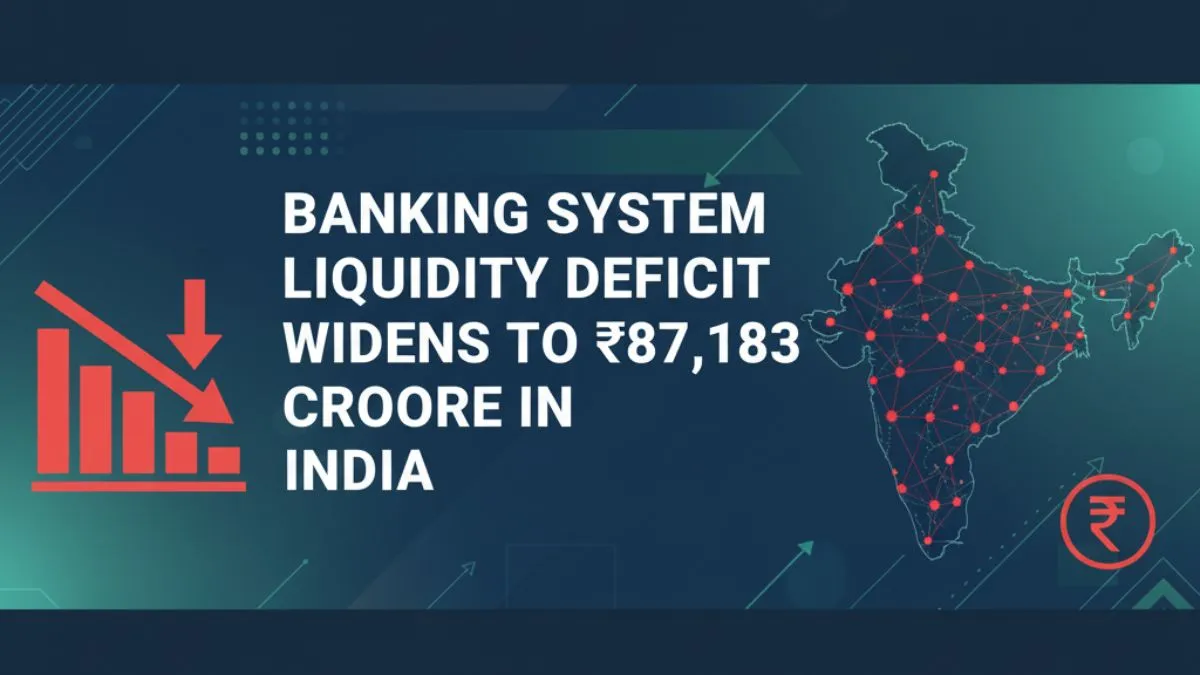
The Indian banking system’s liquidity situation has taken a sharp turn, slipping into a deficit of ₹87,183 crore on September 23, up significantly from ₹31,987 crore just a day earlier. This marks a notable shift from the liquidity surplus that the system enjoyed since March-end 2025. The sudden strain is primarily driven by advance tax payments and Goods and Services Tax (GST) outflows, which began tightening liquidity from September 16. These outflows have sucked out substantial amounts from the system, affecting banks’ ability to meet short-term fund requirements.
RBI Steps in with Overnight Liquidity Support
- To address the worsening liquidity crunch, the Reserve Bank of India (RBI) conducted an overnight Variable Rate Repo (VRR) auction on September 24, offering up to ₹1.50 lakh crore to banks.
- In response, banks submitted bids worth ₹48,980 crore, all of which were accepted by the RBI at a weighted average rate of 5.51%.
- This move was aimed at easing short-term liquidity stress and ensuring smooth functioning of the interbank market.
- Additionally, the central bank has scheduled another overnight VRR auction on September 25, aiming to inject ₹1.25 lakh crore into the banking system.
Understanding the Liquidity Deficit
A liquidity deficit means that banks are borrowing more from the RBI than they are parking with it. This situation often arises due to,
- Advance tax outflows: Corporates remit quarterly tax payments, reducing their deposits in banks.
- GST collections: Businesses remit taxes to the government, again draining funds from the system.
- Seasonal demand for currency in circulation during festivals or government spending cycles.
This recent swing into deficit reflects a temporary but significant tightening in the financial system, necessitating timely intervention from the RBI.
Implications for the Financial System
This deepening liquidity shortfall has several important implications,
- Short-term borrowing costs could rise if liquidity remains tight.
- Banks may reduce lending activities or increase deposit rates to attract funds.
- RBI may need to continue open market operations (OMOs) or conduct more VRR auctions to maintain stability.
However, since this squeeze is largely calendar-driven, stemming from tax deadlines, it’s expected to be temporary. RBI’s prompt actions suggest it is prepared to manage the transition without derailing broader financial stability.
Key Takeaways
- Liquidity deficit as of Sept 23: ₹87,183 crore
- Trigger: Advance tax and GST outflows
- RBI Action: ₹1.50 lakh crore VRR auction on Sept 24
- Accepted Bids: ₹48,980 crore at 5.51%
- Next VRR Auction: ₹1.25 lakh crore on Sept 25


 BoB Launches AI-based 'bob SAMVAD' Platf...
 RBI MPC Meeting 2026, Kept Repo Rates Un...
 Vinay Tonse Takes Charge as MD & CEO...











