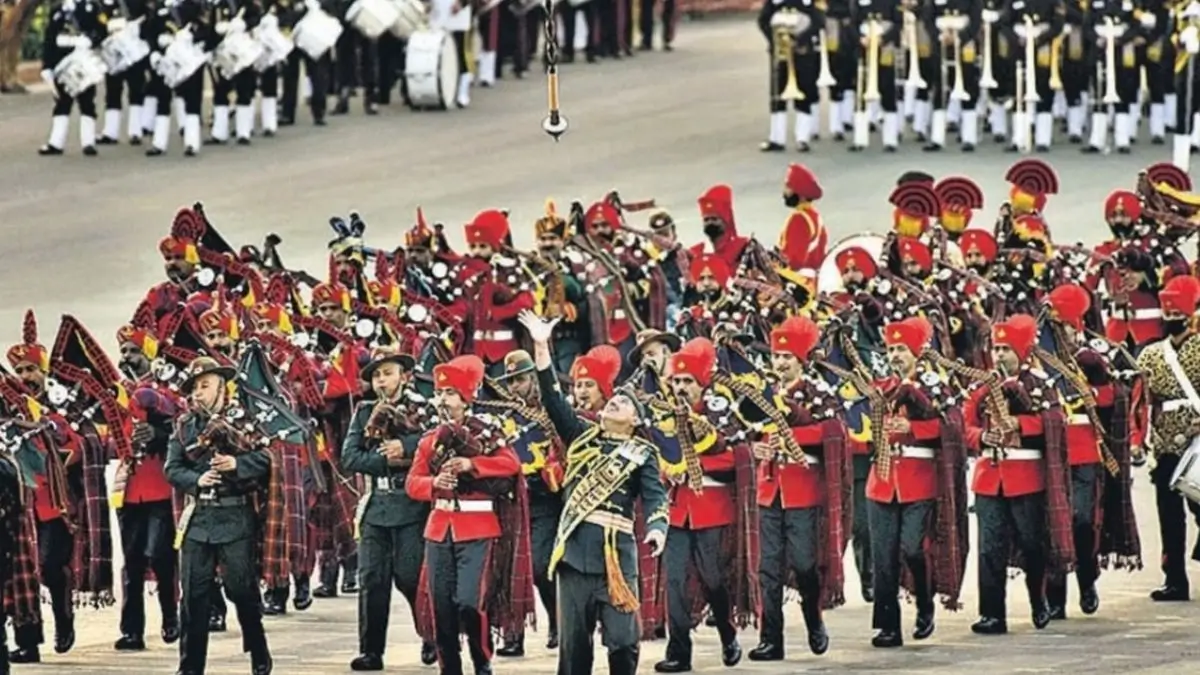
The Beating Retreat Ceremony is a grand military tradition that marks the formal conclusion of the Republic Day celebrations in India. Held at Vijay Chowk, New Delhi, the ceremony is known for its soulful band performances and ceremonial discipline. It symbolises the armed forces’ respect for tradition, unity, and peaceful withdrawal after ceremonial duties, making it an important cultural and military event.
What Is the Beating Retreat Ceremony?
- The Beating Retreat is a military ceremony that signals the end of formal military engagements for the day.
- In modern India, it represents the conclusion of Republic Day events.
- The ceremony primarily consists of musical performances by massed bands of the Indian Armed Forces.
- As the sun sets, the bands play patriotic and traditional tunes, creating a solemn yet celebratory atmosphere that reflects discipline, tradition, and national pride.
Origins of the Beating Retreat Tradition
- Historically, the Beating Retreat traces its roots to European military traditions, especially in 17th-century England.
- During the reign of King James II, troops were ordered to beat drums, lower flags, and parade at sunset to signal the end of the day’s combat.
- This practice was earlier known as “watch setting”, performed after firing a single round from the evening gun.
- The ritual ensured that soldiers ceased fighting, sheathed their weapons, and returned safely to their camps.
Beating Retreat in the Indian Context
- In India, the ceremony was introduced in the early 1950s, soon after Independence.
- According to the Union Ministry of Culture, the ceremony was indigenously developed by Major Roberts of the Indian Army.
- He adapted the traditional retreat concept into a unique Indian display featuring massed military bands.
- Since then, it has become an integral part of India’s Republic Day celebrations, blending global military tradition with Indian cultural identity.
Venue and Organization)
- The ceremony is held at Vijay Chowk, located between Rashtrapati Bhavan and India Gate.
- This iconic location adds grandeur and symbolic value, as Vijay Chowk is associated with national ceremonies and state functions.
- The illuminated backdrop, combined with synchronised band performances, creates a visually striking and emotionally resonant experience.
Musical Performances and Symbolism
- The highlight of the Beating Retreat Ceremony is the performance by military bands from the Army, Navy, and Air Force. The music symbolises coordination, discipline, and harmony among the armed forces.
- The ceremony ends with the iconic tune “Abide with Me” (traditionally played, though repertoire may evolve), followed by the lowering of flags, signifying the peaceful conclusion of ceremonial duties.
Cultural and National Significance
- The Beating Retreat Ceremony holds deep symbolic importance.
- It reflects the armed forces’ discipline and respect for peace after duty.
- It also reinforces India’s military heritage and connects citizens with age-old traditions of honour and order.
- For the public, it serves as a moment of reflection, pride, and closure to the Republic Day celebrations.
Question
Q. The Beating Retreat Ceremony in India marks the conclusion of which national event?
A. Independence Day
B. Republic Day celebrations
C. Army Day
D. Constitution Day


 India Census 2027 Digital: Phase 1 Start...
 PM Modi Inaugurates Samrat Samprati Muse...
 Waste Segregation Made Mandatory: India’...