
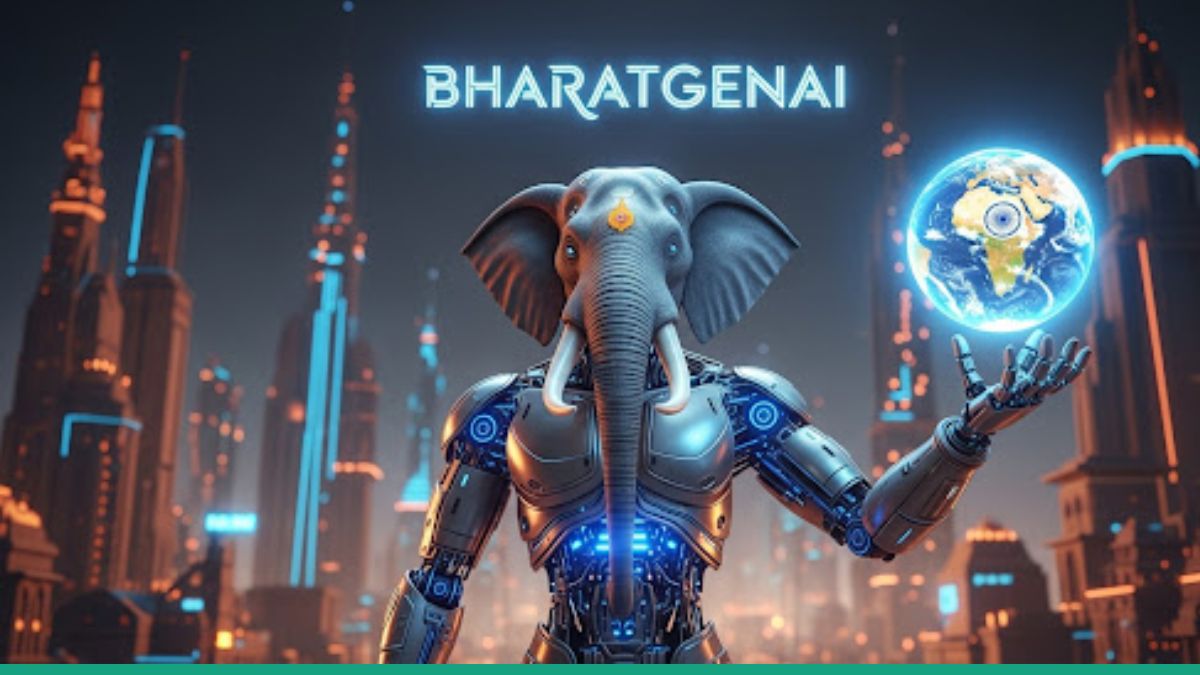
In a significant step toward bridging the digital divide, the Indian government has announced that the BharatGen AI platform will support all 22 languages listed in the Eighth Schedule of the Constitution by June 2026. This initiative, revealed by Union Minister Dr. Jitendra Singh in Parliament, is part of the larger mission to make artificial intelligence (AI) tools more accessible and inclusive across India’s diverse linguistic landscape.
What Is BharatGen AI?
BharatGen is an ambitious national platform operating under the Department of Science and Technology (DST). It forms a part of the National Mission on Interdisciplinary Cyber-Physical Systems (NM-ICPS). The goal is simple but transformative: to build AI ecosystems that are language-inclusive—enabling people to interact with cutting-edge technology in their mother tongue.
While many global AI models focus on English and a few other widely spoken languages, BharatGen is designed for India, by India. It emphasizes homegrown datasets, regional language support, and AI models that understand local cultural nuances.
Why the Eighth Schedule Languages Matter
The Eighth Schedule of the Indian Constitution currently recognizes 22 official languages, including Hindi, Bengali, Tamil, Telugu, Marathi, Gujarati, Kannada, Malayalam, and Urdu, among others. However, despite being constitutionally recognized, many of these languages have limited digital presence.
Supporting these languages through BharatGen AI means,
Voice assistants, translation tools, and chatbots can function natively in regional languages.
- Educational resources can be developed in mother tongues.
- Citizens in rural and remote areas can access government schemes, agricultural advice, healthcare information, and more—without needing to understand English or Hindi.
What Does This Mean for Users?
By June 2026, users across India will be able to,
- Interact with AI-powered services in their native language.
- Access government portals, educational content, and public resources more easily.
- Participate in the digital economy, regardless of linguistic background.
For example, a farmer in Tamil Nadu can ask AI for crop information in Tamil, while a student in West Bengal can use an AI tutor in Bengali.
Challenges and Opportunities
While the goal is promising, developing reliable AI models in 22 different languages is a major technical challenge. It requires,
- Extensive language datasets, which are still lacking for many Indian languages.
- Expert linguists and AI developers to build and test models.
- Continuous community feedback to improve accuracy and usability.
However, this challenge also presents a unique opportunity. India could become a global leader in multilingual AI, setting an example for other multilingual nations on how to deploy inclusive digital technologies at scale.


 NASA's Artemis II Mission Begins: First ...
 India's First Quantum Computer to be Lau...
 India Strengthens Marine Research with B...











