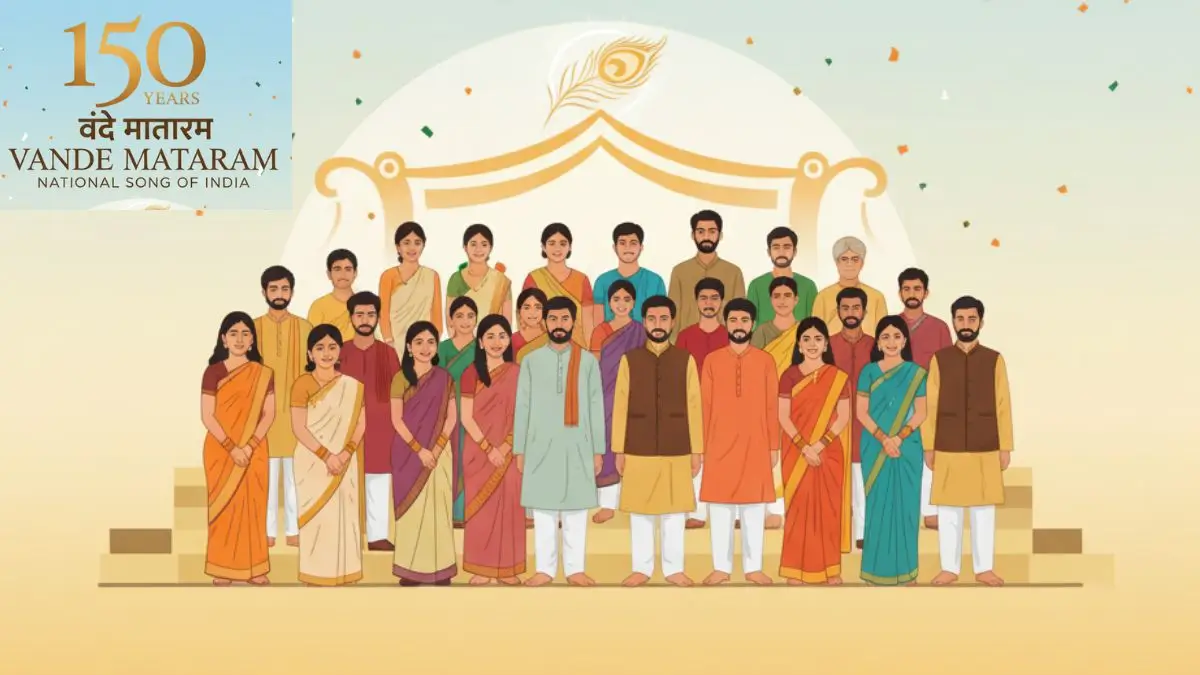
The Union Cabinet has approved a nationwide celebration to commemorate 150 years of the national song “Vande Mataram”. This decision highlights the song’s profound significance in India’s independence movement and its enduring status in India’s cultural heritage.
Origins & Historical Journey
Composition and Publication
- “Vande Mataram” was composed in Sanskrit by Bankim Chandra Chatterjee and was first published in his novel Anandamath in 1882.
Rise as a National Symbol
- The first prominent public rendition occurred during the 1896 Indian National Congress session, when Rabindranath Tagore rendered it, bringing the song into the national spotlight.
- Over time, it became a rallying cry for Indian patriots and freedom fighters during the anti‑colonial struggle.
Legal & Symbolic Status
- Although India has a national anthem, Jana Gana Mana, the Constituent Assembly accorded “Vande Mataram” the status of national song.
- It holds equal symbolic status with the anthem, though the Indian Constitution explicitly mandates respect only for the national anthem, not the national song.
- This distinction reflects a sensitive balance in India’s plural society, where the national song is honored for its emotional and historical significance but not enforced by law in the same manner as the anthem.
Significance & Symbolism
- Freedom Movement Emblem: During colonial rule, “Vande Mataram” was a uniting chant among freedom fighters, inspiring many movements, protests, and nationalist literature.
- Cultural Unity: The song speaks of the motherland in reverent, poetic terms, invoking civilizational sentiment beyond linguistic or regional lines.
- Selective Usage: Only the first two stanzas are usually used publicly, because some of the later verses carry strong religious imagery which have been considered divisive in a multi‑religious society.
- State Responses: In some regions, including Assam, there has historically been debate or resistance regarding adoption of “Vande Mataram” as the sole anthem, leading to alternative regional songs or state anthems in local use.
What the 150th Celebration Entails
- The Cabinet decision aims to organize countrywide events, educational programmes, and public commemorations across states and Union Territories.
- The government also emphasizes the song’s role in India’s freedom struggle as a reason for its elevated celebration status.
Important Takeaways
- 150th Year Commemoration: India will celebrate the sesquicentennial of “Vande Mataram”
- Composer: Bankim Chandra Chatterjee
- First Publication: Anandamath (1882)
- First Public Rendition: By Rabindranath Tagore, at 1896 INC session
- Status: National song, equal symbolic status with national anthem
- Legal Context: Respect mandated for national anthem (Article 51A(a)), not for national song
- Historical Role: Rallying cry during India’s anti‑colonial movement
- Cultural Sensitivity: Only early stanzas generally used in public recitals due to religious imagery in later verses


 India's First Digital Census 2027 Begins...
 PM Modi Launches Kaynes Semiconductor Pl...
 India Census 2027 Digital: Phase 1 Start...