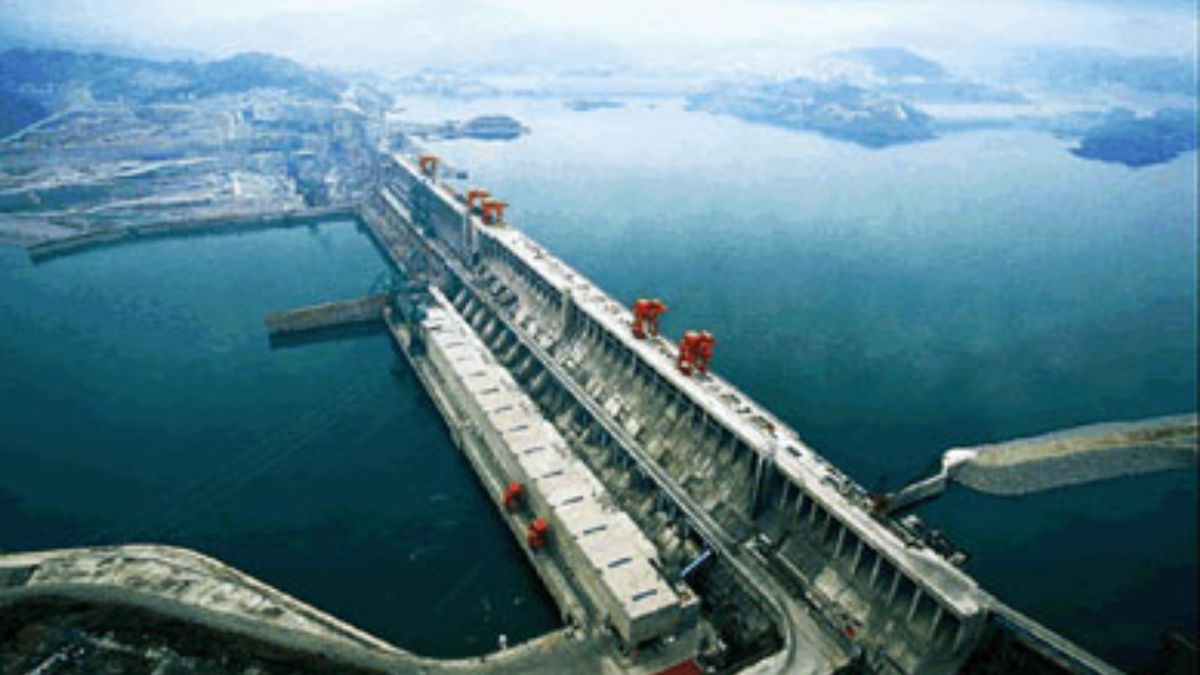
China has initiated the construction of the world’s largest hydropower dam on the Yarlung Tsangpo River in the Tibet Autonomous Region, raising environmental and geopolitical concerns, particularly in India and Bangladesh, which lie downstream.
Background
The dam, known as the Motuo Hydropower Station, is located in the Yarlung Tsangpo canyon, considered the world’s deepest and longest land canyon. Chinese Premier Li Qiang recently presided over the project’s launch. The river originates in Tibet and flows into Arunachal Pradesh and Assam in India as the Siang and Brahmaputra, eventually entering Bangladesh as the Jamuna.
Significance
This mega project, costing around 1.2 trillion yuan (USD 167 billion), aims to surpass China’s Three Gorges Dam in generating clean energy. Once operational, it is expected to produce three times more electricity than the Three Gorges project. It supports China’s strategy of “xidiandongsong” or “sending western electricity eastward”.
Objectives and Features
- Energy Generation: Build five cascading hydropower stations using water diverted through 20 km-long tunnels.
- River Engineering: Includes “straightening” sections of the river to maximize hydropower potential.
- National Grid Use: Most power will be transmitted outside Tibet to meet China’s eastern demand, though some will cater to local use.
Geopolitical and Environmental Concerns
- India’s Concern: Fears of reduced river flow, sudden water releases, or even use as a “water bomb” in conflict scenarios.
- Bangladesh’s Concern: Requested transparency over water flow and dam operations.
- Tibetan Protests: Past resistance against similar projects was met with crackdowns, including arrests and injuries.
- Seismic Risk: The region is earthquake-prone, increasing the risk of dam failure.
- Biodiversity Loss: The flooding of ecologically rich valleys may threaten local flora and fauna.


 Newcastle Disease Spread in Europe 2026:...
 Mongolia Gets New Prime Minister Amid Po...
 Myanmar Military Chief Min Aung Hlaing B...