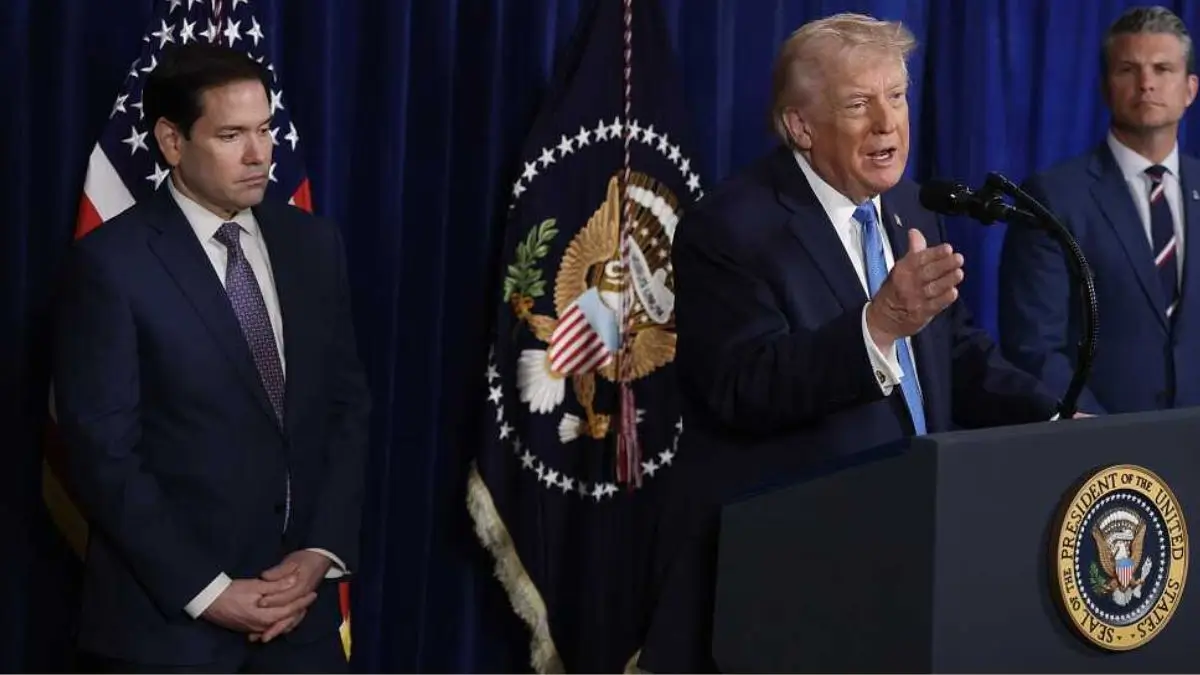
The Monroe Doctrine, a nearly 200 year old foreign policy principle of the United States, returned to global headlines after being cited by President Donald Trump to justify a military operation in Venezuela. The reference has sparked intense debate over sovereignty, intervention and the relevance of historical doctrines in modern geopolitics.
Why in the News?
Donald Trump invoked the Monroe Doctrine to justify a US military operation in Venezuela, following the capture of President Nicolas Maduro. Trump described the action as consistent with long-standing US policy in the Western Hemisphere.
What Is the Monroe Doctrine?
The Monroe Doctrine was announced in 1823 by US President James Monroe. It declared that European powers should not interfere in the political affairs of countries in the Western Hemisphere. In return, the US pledged not to involve itself in European conflicts. Initially, the doctrine aimed to protect newly independent Latin American nations from European colonization.
Evolution of the Doctrine Over Time
Although originally defensive, the Monroe Doctrine gradually evolved into a tool for US regional dominance. In the 20th century, it was expanded through interpretations like the Roosevelt Corollary, which justified US intervention in Latin American countries to maintain stability. Over time, the doctrine came to symbolize America’s claim to influence and intervene in the Americas.
Why Did Trump Invoke the Monroe Doctrine?
President Trump cited the doctrine to argue that external or hostile forces should not control governments in the Western Hemisphere. By referencing it, he framed the Venezuela operation as part of America’s historical responsibility to shape regional security. Trump even remarked that the doctrine had been “superseded” and jokingly referred to it as the “Donroe Doctrine”, signalling a more aggressive interpretation.
Controversy and Global Reactions
Trump’s invocation has drawn criticism from international observers and Latin American countries, who argue that the Monroe Doctrine represents imperialism and violation of sovereignty. Critics say using a 19th-century doctrine to justify modern military action undermines international law and democratic norms. Supporters, however, claim it ensures regional stability and counters hostile influences.
Monroe Doctrine in Modern Context
Though never formally repealed, the Monroe Doctrine has been applied selectively in modern US foreign policy. It remains a key concept in international relations, often cited in discussions on US Latin America relations, Cold War interventions, and contemporary geopolitical rivalry involving global powers in the Americas.
Key Summary At Glance
| Aspect | Details |
| Why in News? | Trump invoked Monroe Doctrine |
| Doctrine Introduced | 1823 |
| Introduced By | US President James Monroe |
| Core Principle | No foreign interference in Western Hemisphere |
| Country Involved | Venezuela |
| Modern Debate | Sovereignty vs intervention |
Question
Q. The Monroe Doctrine primarily relates to which geographical region?
A. Asia-Pacific
B. Europe
C. Western Hemisphere
D. Middle East


 President Murmu Addresses Global Confere...
 Cricketers Javon Searles, Griffith and R...
 Which Country is the Largest Producer of...