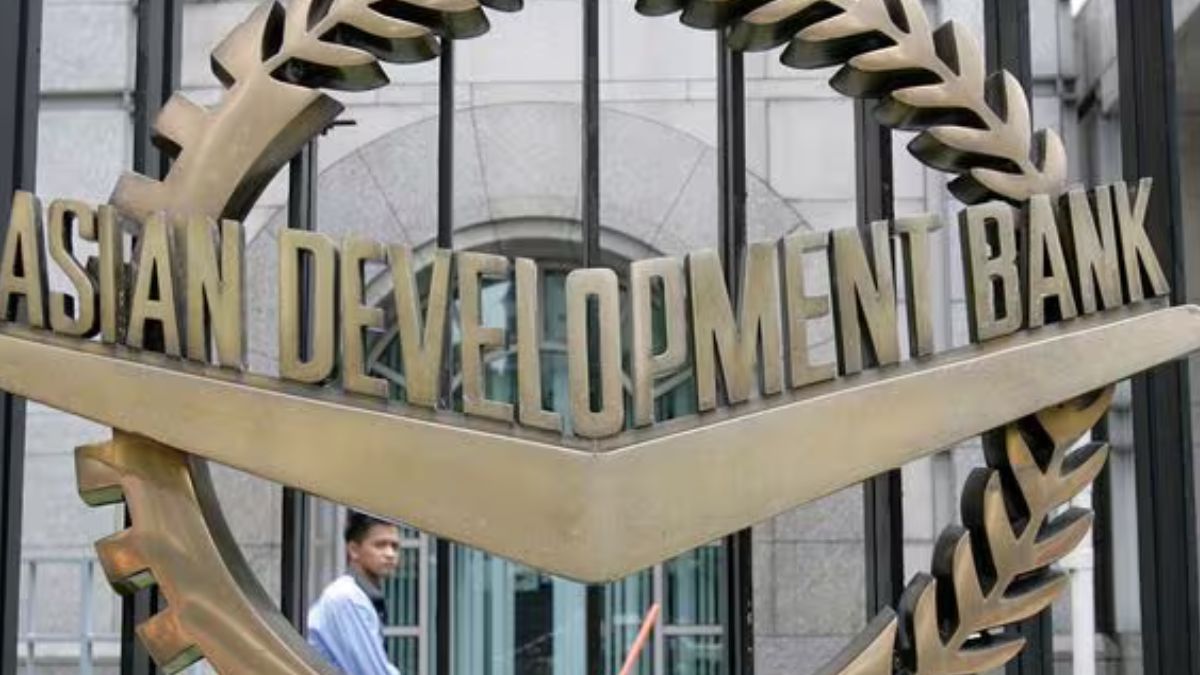
The Asian Development Bank (ADB) has projected that India’s GDP will grow at 6.5% in 2025 and 6.7% in 2026, reinforcing its status as the fastest-growing major economy in the world. The forecast is driven by strong domestic demand, a normal monsoon, and anticipated monetary easing. Additionally, inflation is expected to remain within the RBI’s target range, thanks to easing food prices.
Background: ADB and Asian Economic Outlook
The Asian Development Bank (ADB) releases the Asian Development Outlook (ADO) multiple times a year to provide macroeconomic forecasts for Asia-Pacific countries. The July 2025 edition presents a mixed picture India remains a strong performer. The broader developing Asia-Pacific region sees lowered forecasts due to weak exports, global trade tensions, and sluggish demand. The region’s growth projection for 2025 has been revised down to 4.7% (from 4.9%) and for 2026 to 4.6%.
Significance of India’s Growth Projection
- Confirms India’s leadership in global economic growth.
- Signals resilience despite global uncertainties and trade disruptions.
- Offers a positive outlook for employment, investment, and private consumption.
- Reinforces confidence among domestic and foreign investors.
Key Drivers of Growth
- Strong Domestic Demand: Led by consumption and investment.
- Normal Monsoon: Boosts agricultural output and rural spending.
- Monetary Easing: Likely policy rate cuts may support credit growth.
- Low Inflation
- Headline inflation forecast: 3.8% in 2025 and 4.0% in 2026
June CPI at 2.1%, lowest in over 6 years due to negative food inflation.
Comparison with Other Economies
- China’s growth forecast is stable at 4.7% in 2025 and 4.3% in 2026.
- Southeast Asia: Hit hardest, revised down to 4.2% in 2025 and 4.3% in 2026.
- India’s growth remains higher than all other major Asian economies, maintaining its regional leadership.
Challenges and Global Risks
- Rising US tariffs and trade tensions.
- Possible geopolitical conflicts that may disrupt supply chains.
- China’s property market slowdown.
- Volatility in energy prices.
- Despite these risks, ADB’s Chief Economist Albert Park advises the region to focus on economic fundamentals, open trade, and regional cooperation to sustain momentum.


 India's Major Ports Handle Record 915.17...
 Moody's Cuts India's FY27 Growth Forecas...
 A Smarter Tax System: AI-Powered 'Kar Sa...