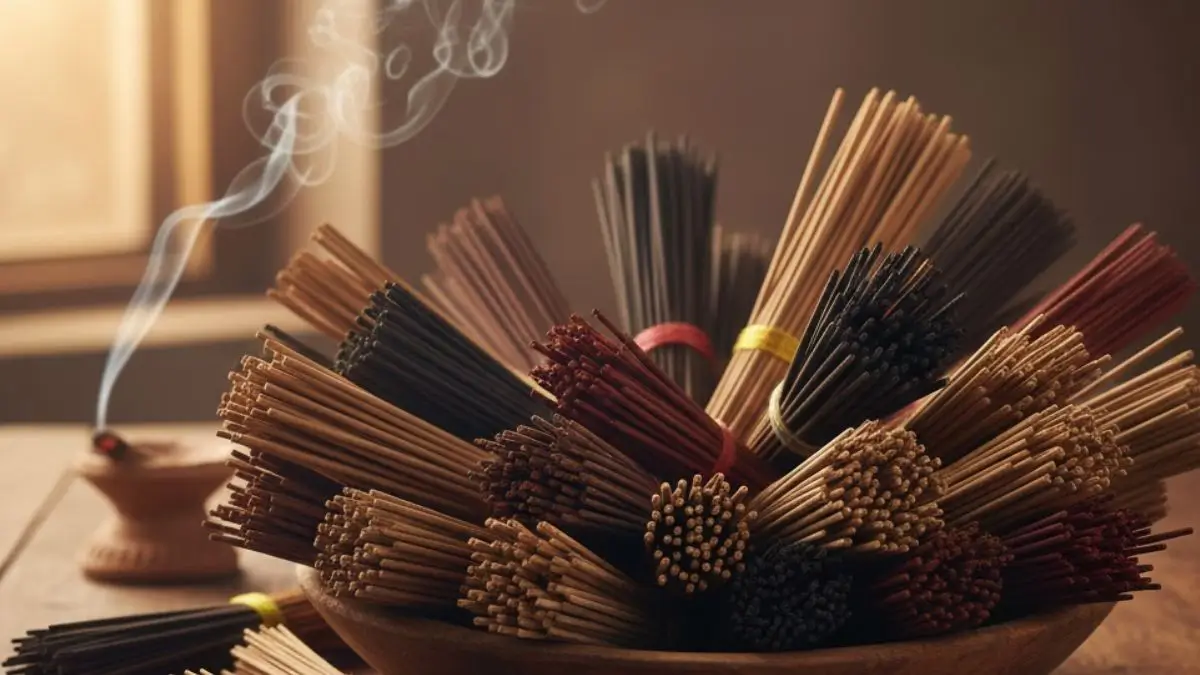
To strengthen consumer safety and product quality the Bureau of Indian Standards (BIS) has notified India’s first ever standard for agarbattis (incense sticks). Announced on National Consumer Day 2025 the new standard IS 19412:2025. Which lays down comprehensive norms covering raw materials, burning performance, fragrance quality, and chemical safety, while explicitly banning several harmful substances. The decision is significant for India which is the world’s largest producer and exporter of agarbattis and marks a major step towards safer household products and ethical manufacturing.
What is IS 19412:2025?
IS 19412:2025 is the first Indian Standard specifically formulated for agarbattis.
It provides a structured regulatory framework to ensure that incense sticks sold in the market are safe for human health, environmentally responsible, and consistent in quality.
The standard focuses on four core areas,
- Quality of raw materials
- Burning characteristics and ash behavior
- Fragrance performance and stability
- Chemical safety and toxicity control
This move brings agarbattis widely used in Indian households for religious, cultural, and aromatic purposes under a formal quality and safety regime for the first time.
Ban on Harmful Chemicals
One of the most critical aspects of the new standard is the prohibition of specific hazardous chemicals that may adversely affect human health, indoor air quality and the environment.
Prohibited Insecticidal Chemicals
The standard bans the use of several insecticidal compounds, including,
- Alethrin
- Permethrin
- Cypermethrin
- Deltamethrin
- Fipronil
These substances are commonly associated with neurotoxicity and respiratory risks and are restricted or banned in several countries.
Restricted Synthetic Fragrance Substances
Certain synthetic fragrance intermediates have also been prohibited, such as,
- Benzyl cyanide
- Ethyl acrylate
- Diphenylamine
These chemicals are known to have potential toxic, allergenic, or environmental impacts, especially when released through combustion in enclosed spaces.
Announcement on National Consumer Day 2025
- The notification of IS 19412:2025 was announced by Pralhad Joshi, the Union Minister for Consumer Affairs, Food and Public Distribution, on the occasion of National Consumer Day 2025.
- The announcement aligns with the broader objective of consumer empowerment, ensuring that everyday household products meet scientifically defined safety and quality benchmarks.
Why the Standard Matters
Agarbattis are burned daily in millions of homes, temples, and workplaces. Until now, the sector largely operated without uniform national safety norms, despite the potential risks associated with prolonged exposure to smoke and chemicals.
The new BIS standard aims to,
- Protect consumer health, especially respiratory health
- Improve indoor air quality
- Encourage eco-friendly and ethical manufacturing
- Reduce environmental pollution
- Build trust in Indian-made agarbatti products
Key Takeaways
- BIS notified India’s first agarbatti standard IS 19412:2025.
- Announced on National Consumer Day 2025.
- Bans harmful insecticides like alethrin, permethrin, cypermethrin, deltamethrin, and fipronil.
- Restricts synthetic fragrance chemicals such as benzyl cyanide and ethyl acrylate.
- Aims to improve consumer safety, indoor air quality and environmental protection.
- India is the world’s largest producer and exporter of agarbattis.
Question
Q. Which of the following synthetic fragrance substances is prohibited?
A. Alethrin
B. Fipronil
C. Benzyl cyanide
D. Cypermethrin


 Supreme Court Rules on SC Status: Conver...
 Lok Sabha Passes Transgender Amendment B...
 Indian Railways New Ticket Cancellation ...