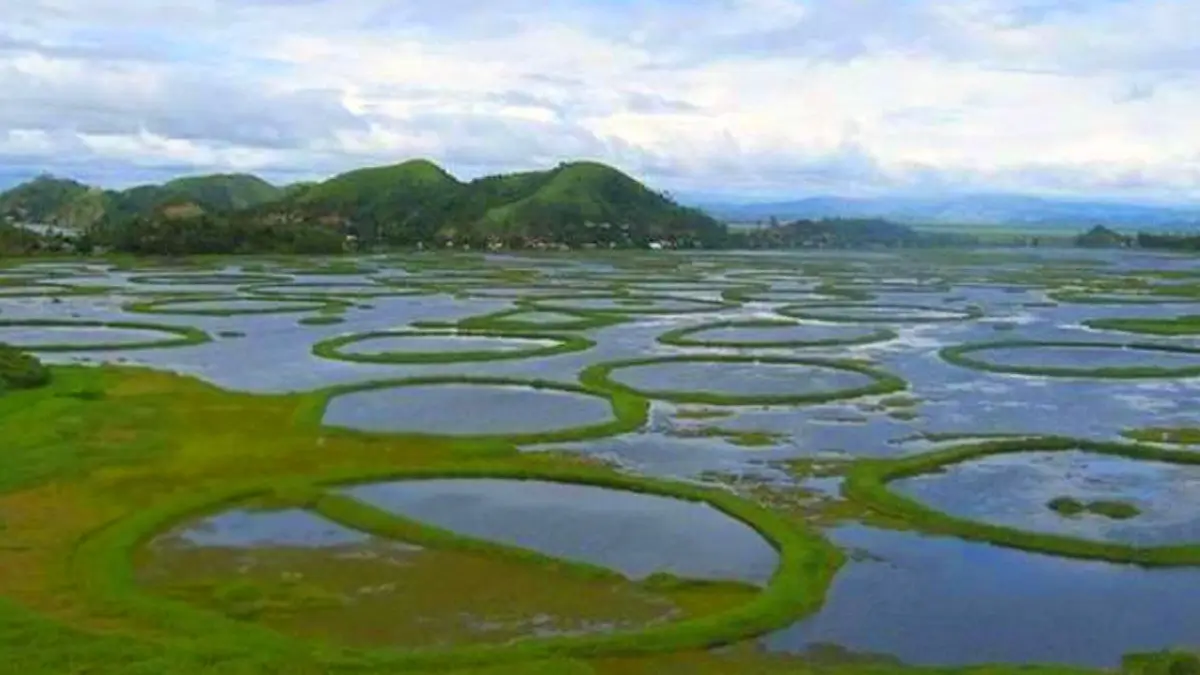
Around the world, there are many beautiful national parks known for their mountains, forests, and wildlife. But there is one park that stands out from all others because it doesn’t rest on solid ground — it actually floats on water! This incredible place is a natural wonder, home to rare animals and a truly unique ecosystem found nowhere else on Earth.
Floating National Park in the World
The Keibul Lamjao National Park, located in Manipur, India, is the only floating national park in the world. It lies on Loktak Lake, the largest freshwater lake in northeast India. The park floats on masses of vegetation called phumdis, which create a unique ecosystem. It is also the natural habitat of the endangered Sangai deer, famously known as the Dancing Deer of Manipur.
Location and Overview of Keibul Lamjao National Park
The Keibul Lamjao National Park is situated in the Bishnupur district of Manipur, in northeastern India. Spread over an area of nearly 40 square kilometers, the park lies within the famous Loktak Lake, which is also the largest freshwater lake in the region.
What makes this park special is that it actually floats on the lake — thanks to thick layers of floating vegetation and organic matter known as phumdis. These natural mats move gently with the water and support a unique ecosystem.
What makes it a Floating Park?
Keibul Lamjao is often called the “Jewel of Manipur” because of its magical floating surface. The phumdis — a mix of decomposed plants, soil, and organic material — are strong enough to hold trees and even animals.
As the water level changes, these floating mats rise and fall, allowing life above and below the surface to thrive. This rare phenomenon makes the park one of the most unique ecosystems in the world.
Home of the Dancing Deer – The Sangai
The pride of Keibul Lamjao is the Sangai deer (Cervus eldi eldi), also known as the Dancing Deer of Manipur. It is one of the world’s most endangered species and is found only in this park.
The deer is called “dancing” because of its graceful walk on the soft, floating phumdis. The Sangai holds deep cultural importance in Manipur — it is the state animal and a symbol of hope and resilience.
Rich Biodiversity and Natural Beauty
The floating park is not just home to the Sangai but also to a wide variety of other species. You can spot hog deer, wild boar, otters, and many migratory birds that visit the lake each year.
The mixture of land and water habitats creates a stunning view — especially during sunrise and sunset — making it a favorite spot for nature lovers, photographers, and researchers.
Conservation and Global Recognition
To protect the rare Sangai deer and its habitat, Keibul Lamjao was declared a wildlife sanctuary in 1966 and later a national park in 1977.
The park is now part of the Keibul Lamjao Conservation Area and is listed in UNESCO’s tentative list of World Heritage Sites. Conservation programs focus on preserving the phumdis, preventing pollution, and promoting eco-friendly tourism.
Local communities and the Manipur government work together to maintain this natural wonder while spreading awareness about its global importance.
Significance of Keibul Lamjao National Park?
Keibul Lamjao is more than just a tourist attraction — it’s a living example of how nature adapts and thrives. It helps maintain the ecological balance of Loktak Lake, supports local livelihoods, and provides a safe haven for rare species.
By protecting this floating paradise, we are not just saving a unique ecosystem but also preserving India’s natural heritage for future generations.


 How many Nuclear Power Plants in India? ...
 List of Important Days in April 2026, Na...
 Do you Know Which is the Most Spoken Lan...