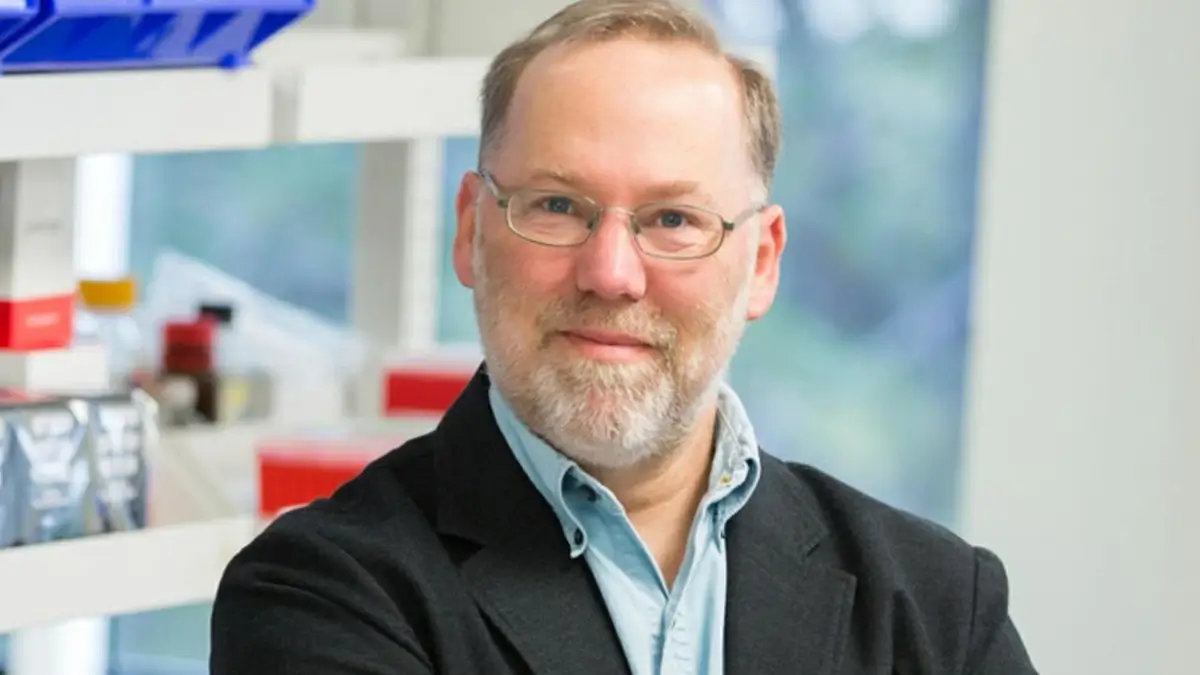
Frederick Jay Ramsdell, an American immunologist, is one of the leading figures in modern immune system research. In 2025, he was jointly awarded the Nobel Prize in Physiology or Medicine along with Mary Elizabeth Brunkow and Shimon Sakaguchi for their groundbreaking discoveries in peripheral immune tolerance — the body’s ability to prevent the immune system from attacking its own tissues.
His work on identifying the FOXP3 gene, which regulates immune cells called regulatory T cells (Tregs), has played a major role in understanding and treating autoimmune diseases.
Early Life and Education of Frederick Jay Ramsdell
Frederick Jay Ramsdell was born on December 4, 1960, in Elmhurst, Illinois, USA. From an early age, he showed a keen interest in biology and medical science.
He earned his Bachelor of Science degree in Biochemistry and Cell Biology from the University of California, San Diego, in 1983. That same year, he began his Ph.D. studies at the University of California, Los Angeles (UCLA), focusing on microbiology and immunology under the mentorship of Sidney Golub, a well-known immunologist.
Ramsdell completed his Doctor of Philosophy (Ph.D.) in 1987, marking the beginning of a career dedicated to uncovering the secrets of immune regulation.
Professional Career of Frederick Jay Ramsdell
After completing his doctorate, Ramsdell began his scientific journey as a fellow at the National Institutes of Health (NIH), where he deepened his understanding of immune cell behavior.
He later joined Immunex, a biopharmaceutical company, where his research focused on T cell activation, immune tolerance, and gene discovery. His work there strengthened the foundation for what would later become his Nobel-winning research.
In 1994, Ramsdell joined Darwin Molecular, a biotechnology firm in Bothell, Washington, where he collaborated with Mary Elizabeth Brunkow. Together, they started an immunology research program that investigated genetic mutations affecting the immune system.
Darwin Molecular was later acquired by Chiroscience in 1996, and eventually merged with Celltech, where Ramsdell and Brunkow continued their groundbreaking studies. They both left the company in 2004.
Future Leadership Roles
In 2004, Ramsdell joined ZymoGenetics, leading research on novel proteins that regulate immune cell activity. His focus remained on finding biological solutions for autoimmune and inflammatory diseases.
By 2008, he was working with Novo Nordisk, where he helped establish the company’s Inflammation Research Center in Seattle and became the head of the Immunobiology Group.
Later, he served as Vice President at aTyr Pharma in San Diego and then became the Chief Scientific Officer at the Parker Institute for Cancer Immunotherapy in San Francisco.
Co-Founder of Sonoma Biotherapeutics
In 2019, Ramsdell co-founded Sonoma Biotherapeutics in San Francisco along with Jeffrey Bluestone, Qizhi Tang, and Alexander Rudensky. The company focuses on cell therapy research to develop new treatments for autoimmune diseases using regulatory T cells (Tregs).
As of 2025, Ramsdell serves as the Chair of the Scientific Advisory Board at Sonoma Biotherapeutics.
Discovery of FOXPS
In the 1990s, while working at Celltech in Bothell, Ramsdell and Brunkow studied a mouse strain known as scurfy, which suffered from a severe autoimmune disorder. Their goal was to identify the genetic mutation responsible for this condition.
After years of detailed research, they discovered a small two-base-pair insertion in a previously unknown gene, which they named FOXP3. This gene was found to play a crucial role in controlling immune responses by regulating regulatory T cells (Tregs).
In 2001, working with scientists Hans D. Ochs and Robert Wildin, Ramsdell and Brunkow showed that mutations in the human FOXP3 gene cause IPEX syndrome, a rare but deadly autoimmune disease in children. This discovery linked mouse and human immune tolerance mechanisms, marking a major milestone in immunology.
Honors and Recognition
- 2017: Ramsdell, along with Shimon Sakaguchi and Alexander Rudensky, received the Crafoord Prize in Polyarthritis for their discoveries on regulatory T cells and their role in autoimmune diseases like arthritis.
- 2025: He was jointly awarded the Nobel Prize in Physiology or Medicine with Mary Brunkow and Shimon Sakaguchi for their discoveries on FOXP3+ Treg cells and their function in peripheral immune tolerance.
Interestingly, when the Nobel Prize announcement was made, Ramsdell was hiking off-grid in Idaho and was initially unreachable. He later shared with the BBC that his wife broke the news after receiving hundreds of congratulatory messages — to which he humorously responded, “I did not!”, before realizing it was true.
Legacy and Impact
Frederick Jay Ramsdell’s contributions have reshaped our understanding of autoimmunity and immune regulation. His discovery of the FOXP3 gene has led to new insights into immune tolerance, and his leadership in biotechnology continues to influence immunotherapy research worldwide.
His journey from a curious student to a Nobel laureate highlights how dedication and scientific curiosity can lead to discoveries that transform medicine and improve lives.


 Weekly Current Affairs One Liners (30th ...
 Who is known as the Father of Mobile Pho...
 Which is the Highest Airport in the Worl...