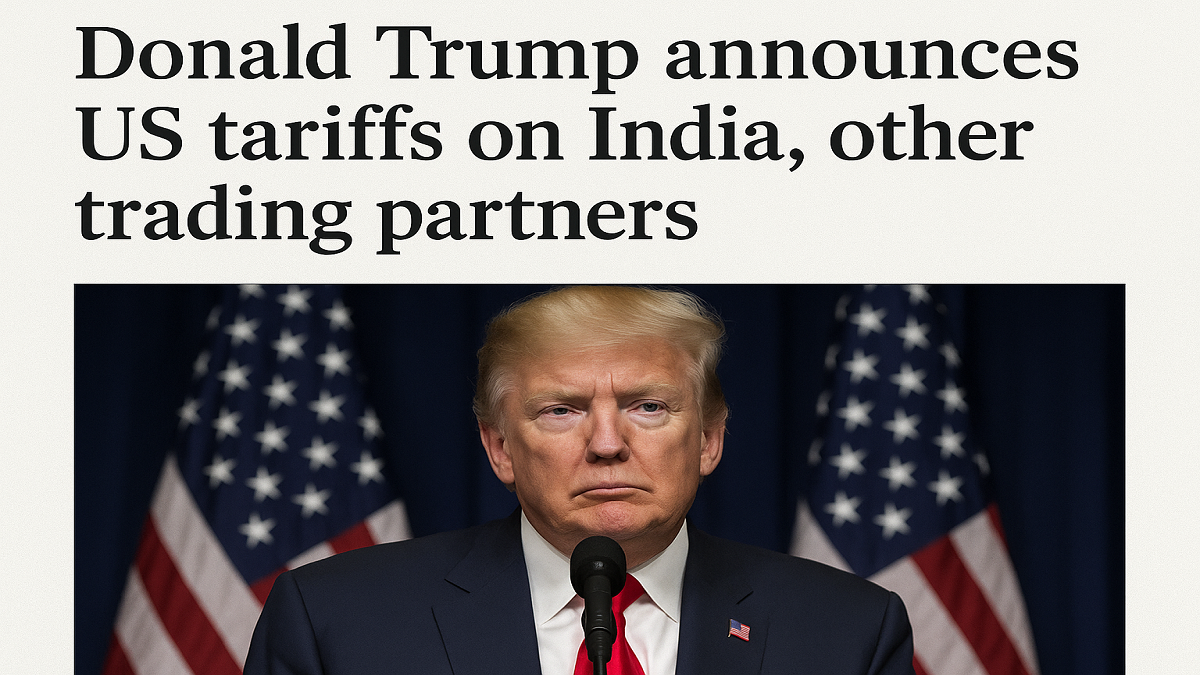
In a significant move that could reshape global trade dynamics, US President Donald Trump has signed an executive order introducing new tariffs on imports from a wide range of trading partners — including India. These tariffs, ranging from 10% to 41%, will come into effect on August 7, 2025.
The move marks the latest step in Trump’s “reciprocal tariffs” strategy, which seeks to match or counter the trade barriers other nations impose on US exports.
What Are Reciprocal Tariffs?
Reciprocal tariffs are duties imposed by the United States to match the tariffs that other countries place on American goods.
- Goal: Ensure “fair” trade by balancing tariff rates.
- Impact: Could increase prices of imported goods in the US, disrupt supply chains, and strain international trade relations.
Key Details of the Executive Order
- Effective Date: August 7, 2025
- Tariff Range: 10% to 41%, depending on the country.
- Number of Countries Affected: 68 nations plus the 27-member European Union.
- Default Tariff Rate: 10% for countries not specifically listed.
A senior White House official said the short delay before implementation is meant to give customs and border authorities time to update systems for the new rules.
Impact on India
India, one of the US’s major trading partners, will face a 25% tariff on its exports to the US.
This could affect:
- Textiles and garments
- Pharmaceutical products
- Automotive components
- IT hardware and electronics
Indian exporters may see reduced competitiveness in the US market, while US importers may face higher costs.
European Union Tariff Rules
Trump’s order treats the European Union differently:
- Goods with a Column 1 Duty Rate higher than 15% will not face extra tariffs.
- Goods with a duty rate below 15% will be charged a tariff equal to 15% minus the Column 1 Duty Rate.
Full List of Countries and Tariff Rates
Below is a summary of the tariff rates imposed on key nations:
| Country | Tariff Rate |
|---|---|
| India | 25% |
| Afghanistan | 15% |
| Algeria | 30% |
| Bangladesh | 20% |
| Brazil | 10% |
| Brunei | 25% |
| Cambodia | 19% |
| Iraq | 35% |
| Japan | 15% |
| Kazakhstan | 25% |
| Laos | 40% |
| Malaysia | 19% |
| Myanmar (Burma) | 40% |
| Pakistan | 19% |
| Philippines | 19% |
| Serbia | 35% |
| South Africa | 30% |
| Sri Lanka | 20% |
| Switzerland | 39% |
| Syria | 41% |
| Taiwan | 20% |
| Thailand | 19% |
| United Kingdom | 10% |
| Vietnam | 20% |
| … and many more |
Global Economic Implications
The new tariffs could have far-reaching consequences:
- Price Increases: US consumers may see higher prices for imported goods.
- Export Slowdowns: Affected countries may experience reduced exports to the US.
- Trade Tensions: Likely to escalate disputes at the World Trade Organization (WTO).
- Supply Chain Disruption: Manufacturers dependent on imported materials may face cost hikes.
Ongoing Trade Negotiations
Trump has extended trade talks with Mexico for an additional 90 days, signaling that bilateral deals could still be reached with some countries. However, most nations remain uncertain, with no clear exemptions announced.
Legal Challenges
US appeals court judges have raised questions about the legal basis for Trump’s tariffs, which could lead to court challenges. Despite this, the administration appears determined to move forward with implementation.


 Newcastle Disease Spread in Europe 2026:...
 Mongolia Gets New Prime Minister Amid Po...
 Myanmar Military Chief Min Aung Hlaing B...