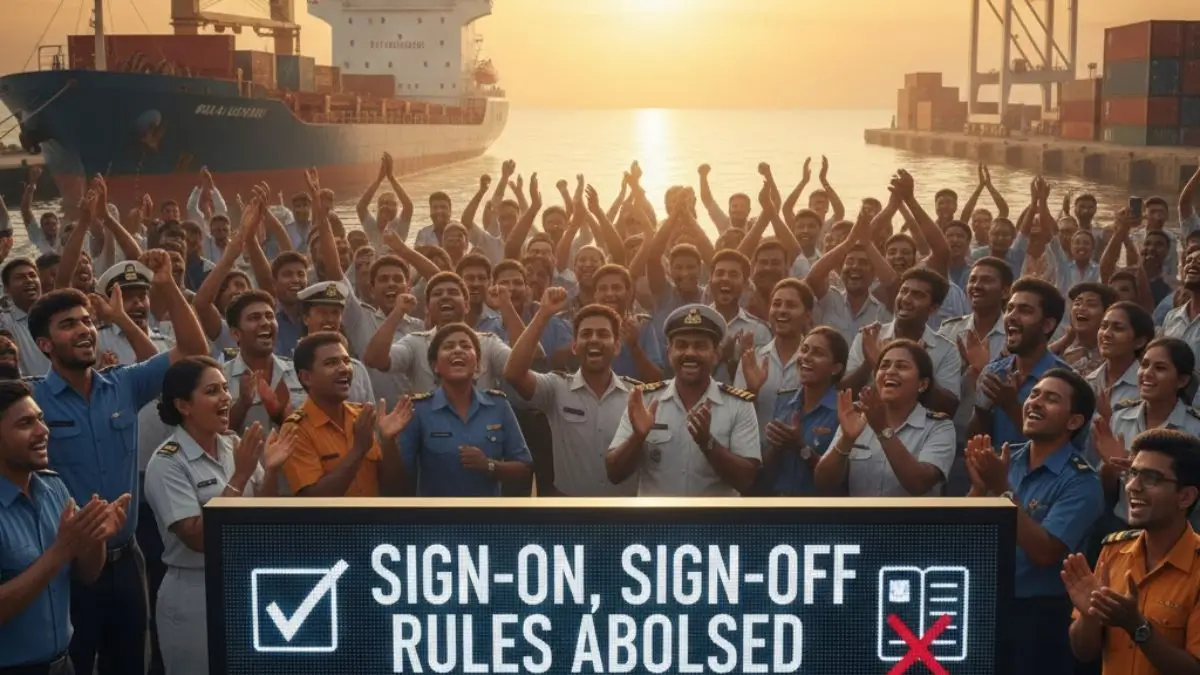
In a landmark move to simplify maritime operations, the Government of India has abolished the long-standing procedures of sign-on, sign-off, and Shore Leave Pass (SLP) for Indian vessels operating solely within Indian waters. This reform, spearheaded by the Ministry of Home Affairs (MHA), aims to ease the operational burden on Indian seafarers and enhance the efficiency of coastal shipping operations.
What Was the Rule?
Until now, crew members of Indian-flagged vessels were required to comply with immigration-like procedures every time they joined or left a ship. This included,
- Signing on before boarding a vessel
- Signing off upon leaving a vessel
- Obtaining and regularly renewing Shore Leave Passes (SLPs) every 10 days for shore access
These procedures applied even when the vessel operated entirely within Indian territorial waters. The frequent physical presence required at immigration offices was a logistical burden for the seafarers and ship operators alike.
What Has Changed?
The Ministry of Home Affairs has officially abolished the requirement for sign-on, sign-off, and SLP for,
- Indian flag vessels involved in coastal runs
- Dredgers and barges
- Research vessels operating within port limits
Now, crew members on these vessels will no longer need to report to immigration authorities for procedural approvals. Instead, responsibility for managing crew records and shore leave now rests with port authorities, with the Bureau of Immigration (BOI) tasked to conduct surprise inspections and maintain oversight.
Why This Matters for Indian Maritime Sector
This decision represents a significant deregulation effort aimed at reducing red tape in India’s maritime sector. It directly benefits Indian seafarers by,
- Eliminating unnecessary formalities
- Reducing delays caused by administrative hurdles
- Enhancing operational efficiency onboard ships
- Encouraging the use of Indian-flagged vessels for domestic transport
It also supports India’s push to become a major maritime power under the Sagarmala initiative, which aims to modernize ports and boost coastal shipping.
Statement from the Government
Union Minister of Ports, Shipping and Waterways Sarbananda Sonowal welcomed the move, emphasizing that the Narendra Modi government remains committed to empowering Indian seafarers. He described the removal of outdated regulations as a step toward streamlining maritime governance and supporting the ease of doing business in the sector.
Challenges and Cautions
While this is a welcome relief, effective implementation remains crucial.
- Port authorities must be equipped to maintain and verify accurate crew records.
- Surprise inspections by the Bureau of Immigration must be regular and unbiased.
Clear guidelines will be needed to distinguish vessels engaged purely in coastal operations from those that may occasionally cross international boundaries.
Static Information: Indian Maritime Sector
- India has over 7,500 km of coastline, with 12 major ports and over 200 non-major ports.
- The Sagarmala Programme, launched in 2015, aims to reduce logistics costs through port-led development.
- Coastal shipping accounts for only about 6% of India’s total cargo movement, showing large untapped potential.
- The Directorate General of Shipping under the Ministry of Ports, Shipping and Waterways regulates maritime affairs in India.
- India is the second-largest supplier of seafarers globally, after the Philippines.
Key Takeaways
- Sign-on, sign-off, and Shore Leave Pass procedures have been abolished for Indian-flagged vessels operating within Indian waters.
- The change was announced by the Ministry of Home Affairs in November 2025.
- Applies to coastal run vessels, dredgers, barges, and research vessels operating within port limits.
- Oversight responsibility is transferred to port authorities, with inspections by the Bureau of Immigration.
- The reform was welcomed by Union Minister Sarbananda Sonowal
- The Shore Leave Pass (SLP) previously needed to be renewed every 10 days.


 Wildlife Safeguards Key as NGT Reviews Q...
 Montana Unveils Its First Mahatma Gandhi...
 Ashmolean Museum Returns 16th Century Sa...