
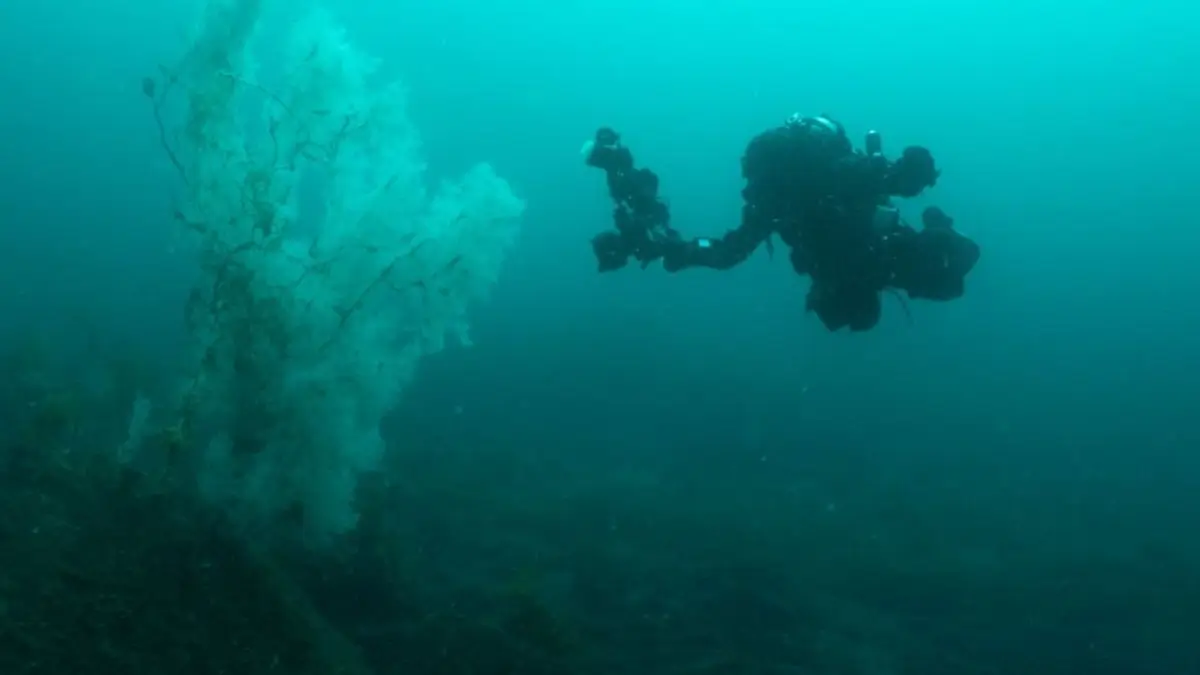
Marine scientists have made a rare and remarkable discovery in the deep waters off New Zealand. A giant black coral, estimated to be 300–400 years old, has been found during a scientific exploration near Fiordland. The find sheds new light on long-lived deep-sea ecosystems and reinforces the importance of protecting fragile marine habitats from human disturbance.
Why in News?
Scientists have discovered the largest and one of the oldest black corals ever recorded in New Zealand, measuring over 13 feet tall and nearly 15 feet wide, during a deep-sea expedition in Fiordland. The coral’s age and size make it a globally significant marine discovery.
Discovery in Fiordland’s Deep Waters
- The coral was identified during a deep-sea dive led by researchers from Victoria University of Wellington in the waters of Fiordland, one of the most pristine marine regions of New Zealand.
- Its sheer dimensions make it exceptional when compared to other known black corals, which are generally much smaller even after centuries of growth.
- Scientists believe that such size indicates stable ocean conditions maintained over hundreds of years, making Fiordland a key natural laboratory for studying deep-sea resilience.
Scientific Significance of the Ancient Coral
- Marine biologists have described the coral as extraordinarily large and rare.
- According to researchers, black corals grow extremely slowly, often just a few millimetres per year.
- Reaching such dimensions implies centuries of uninterrupted growth.
- These ancient corals act as living archives of ocean history, recording changes in water temperature, chemistry, and currents over long periods.
- They also serve as breeding reservoirs and shelter for many slow-growing deep-sea species, making them crucial to the stability of marine ecosystems.
Ecological Role of Black Corals
- Black corals are typically found in deep, cold waters and form complex structures that support diverse marine life.
- Many small organisms, fish, and invertebrates depend on them for habitat, protection, and reproduction.
- Despite their name, black corals often appear white or pale when alive because of their living tissue; only their internal skeleton is black.
- Their slow growth and longevity make them highly vulnerable to disturbance, whether from fishing gear, anchoring, or seabed activities.
Conservation and Legal Protection
- The discovery has renewed focus on marine conservation in deep-sea environments.
- The coral is protected under New Zealand’s Wildlife Act, making it illegal to collect, damage, or disturb.
- Scientists stress that mapping such coral colonies is essential to prevent accidental destruction from human activities.
- Protecting these ecosystems not only conserves biodiversity but also ensures that valuable scientific information about long-term ocean health is preserved for future research.
Black Corals and Human Use
- Historically, black corals have been used in jewellery and traditional medicine in various cultures.
- However, overexploitation, combined with their slow growth, has caused severe population declines worldwide.
- Today, they are recognised as keystone species in deep-sea ecosystems and are increasingly brought under conservation frameworks.
Key Summary at a Glance
| Aspect | Details |
| Why in News? | Discovery of a giant 300-400-year-old black coral |
| Location | Fiordland, New Zealand |
| Size | 13 feet tall, 15 feet wide |
| Scientific Value | Indicator of long-term ocean stability |
| Legal Status | Protected under New Zealand’s Wildlife Act |
| Ecological Role | Habitat and breeding ground for deep-sea species |
Question
Q. The recently discovered 300-year-old giant black coral was found in which region?
A. Great Barrier Reef
B. Southern Ocean
C. Fiordland, New Zealand
D. Tasman Sea


 UAE Introduces World's First 10G Interne...
 Meet MAI-Transcribe-1: Microsoft’s Fast,...
 What is Outer Space Treaty 1967? Princip...











