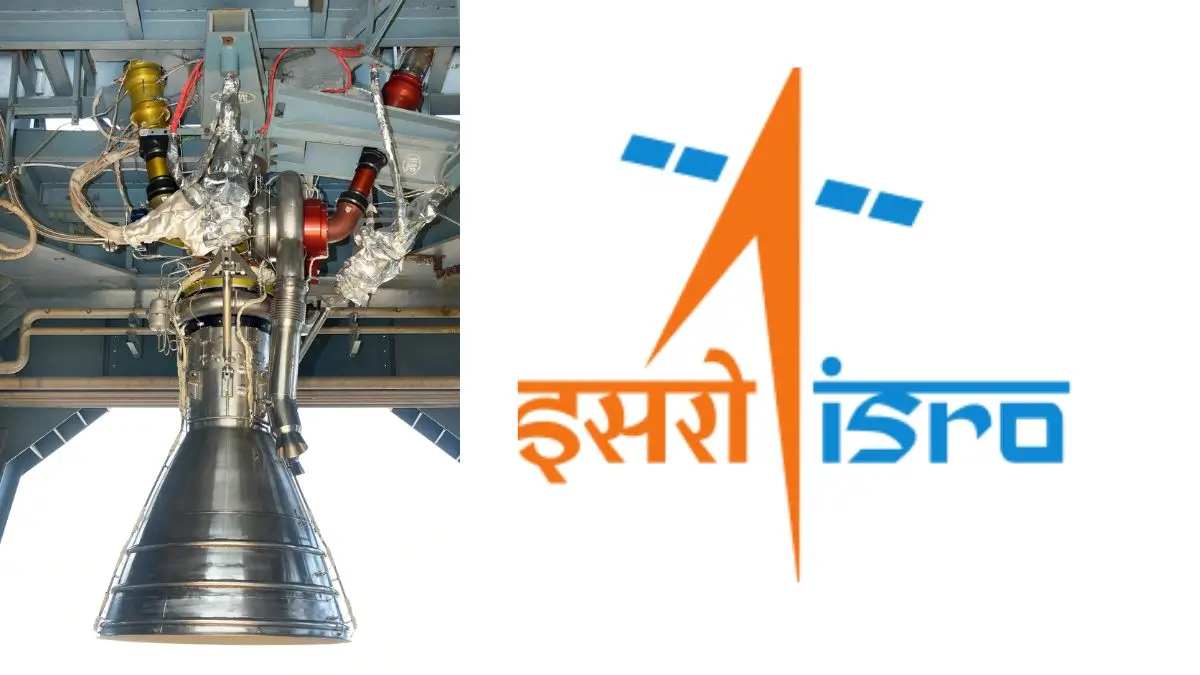
India’s aspirations for human spaceflight received a major push as Godrej Aerospace delivered the first human-rated Vikas engine to the Indian Space Research Organisation (ISRO). This engine will power the L110 stage of the LVM-3 rocket, which is the designated launch vehicle for Gaganyaan, India’s first manned space mission. This delivery is not only a technological milestone but also a symbol of India’s growing self-reliance in space capabilities, paving the way for crewed space missions in the coming years.
Why the Human-Rated Vikas Engine Matters
The L110 Vikas engine, now human-rated, has been specially engineered to meet enhanced safety, reliability, and performance standards required for launching astronauts. Positioned in the core stage of the LVM-3, the engine ensures stable propulsion during the rocket’s ascent, making it crucial for crew safety.
Human-rating an engine involves rigorous validation, including multiple redundancy systems, fault tolerance mechanisms, and extensive ground testing. This delivery brings ISRO one step closer to conducting uncrewed and later, crewed test flights for Gaganyaan.
Gaganyaan Mission: India’s Leap into Human Spaceflight
The Gaganyaan programme is India’s most ambitious space mission to date. Planned to carry a three-member Indian crew into low Earth orbit for up to three days, Gaganyaan will position India as the fourth nation globally to demonstrate independent human spaceflight capabilities—after the USA, Russia, and China.
Key milestones include,
- First uncrewed test flight: Scheduled for early 2026, focused on validating systems like crew escape, flight stability, and module recovery
- Crewed mission: Targeted for 2027, involving an entirely indigenous launch system and orbital module
- Astronaut training: Already underway with support from international and domestic facilities
Godrej Aerospace: A Pillar of India’s Space Programme
With over 40 years of contribution to India’s space journey, Godrej Aerospace has played a critical role in manufacturing,
- Engines for PSLV, GSLV, and LVM-3
- Components for Chandrayaan and Mangalyaan missions
- Equipment for NASA-ISRO NISAR Earth observation satellite
Their delivery of the human-rated Vikas engine marks another chapter in their longstanding collaboration with ISRO’s Liquid Propulsion Systems Centre (LPSC). The company views this achievement as a national pride and reaffirmation of Indian engineering capabilities.
Static Facts for Exam Preparation
- Launch Vehicle: LVM-3 (India’s heaviest rocket)
- Engine Delivered: Human-rated Vikas engine (L110 stage)
- Developed by: Godrej Aerospace
- Fuel Type: Liquid propulsion system
- Original Development: Based on French Viking engine (1970s)
- Gaganyaan Crew Size: 3 astronauts
- Mission Duration: Up to 3 days in low Earth orbit

 NASA’s Artemis 2 Set for April 2026 Laun...
 Akasha300 3D Printer Explained: How It W...
 IVRI Produces Sahiwal Calves Using Advan...