
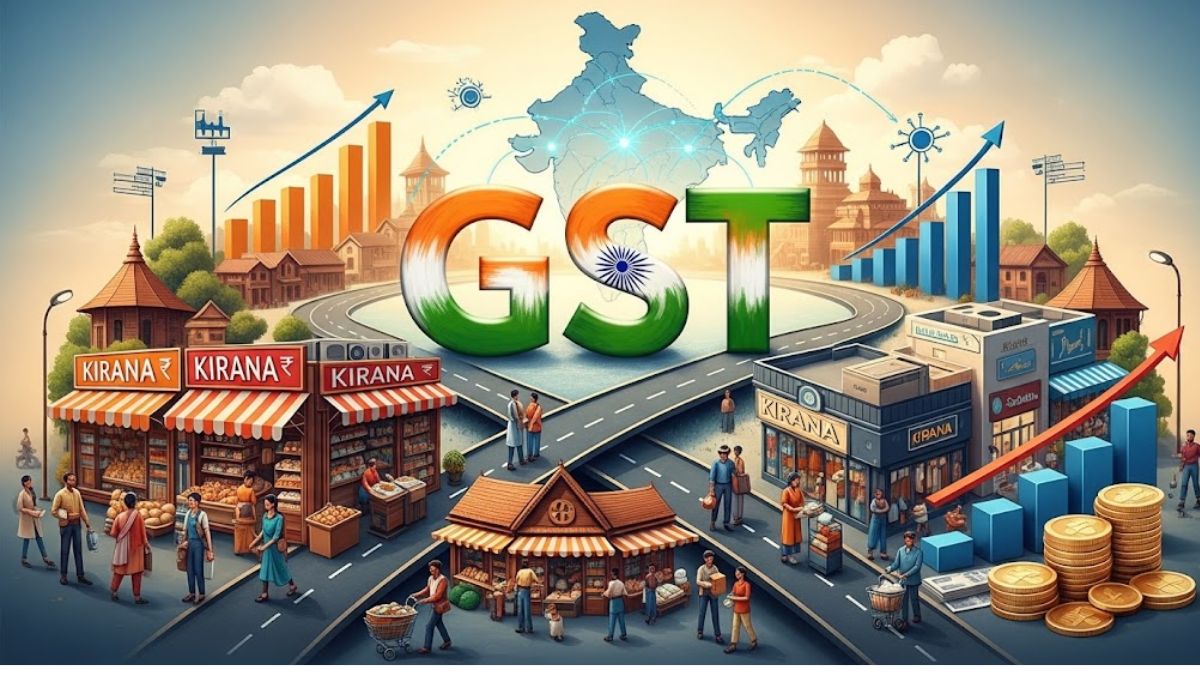
India’s GST collections for July 2025 reached a strong ₹1.96 lakh crore, recording a 7.5% year-on-year increase. However, the net growth slowed to just 1.7%, mainly because of a sharp 117% rise in refunds, raising concerns about the pace of domestic consumption.
Domestic Net GST Shows Rare Decline
The gross domestic GST collection stood at ₹1.43 lakh crore, with a 6.7% growth compared to last year. Yet, after accounting for refunds, the net domestic GST revenue turned negative for the first time since the Covid-19 pandemic.
In contrast, import GST collections saw a 9.7% growth, while export refunds grew 20%, resulting in a 7.5% increase in net import GST.
Possible Reasons Behind Slowdown
- Economists suggest that the slowdown in domestic collections could be linked to weaker urban consumption.
- A key factor was the lower sales of automobiles, which form a major component of GST revenue.
- Data from FADA revealed a 4.84% rise in June retail sales year-on-year, but a 9.44% sequential decline, signaling uneven demand.
The Issue of Inverted Duty Structure
One of the main causes for the surge in refunds is the inverted duty structure—where the GST rate on inputs is higher than that on finished goods.
For instance,
- Lithium-ion batteries attract 18% GST,
- but their parts are taxed at 28%,
leading to higher refunds and reduced efficiency. - Experts argue that GST rate rationalisation is necessary to correct such imbalances and prevent excessive refund claims.


 India's Major Ports Handle Record 915.17...
 Moody's Cuts India's FY27 Growth Forecas...
 A Smarter Tax System: AI-Powered 'Kar Sa...











