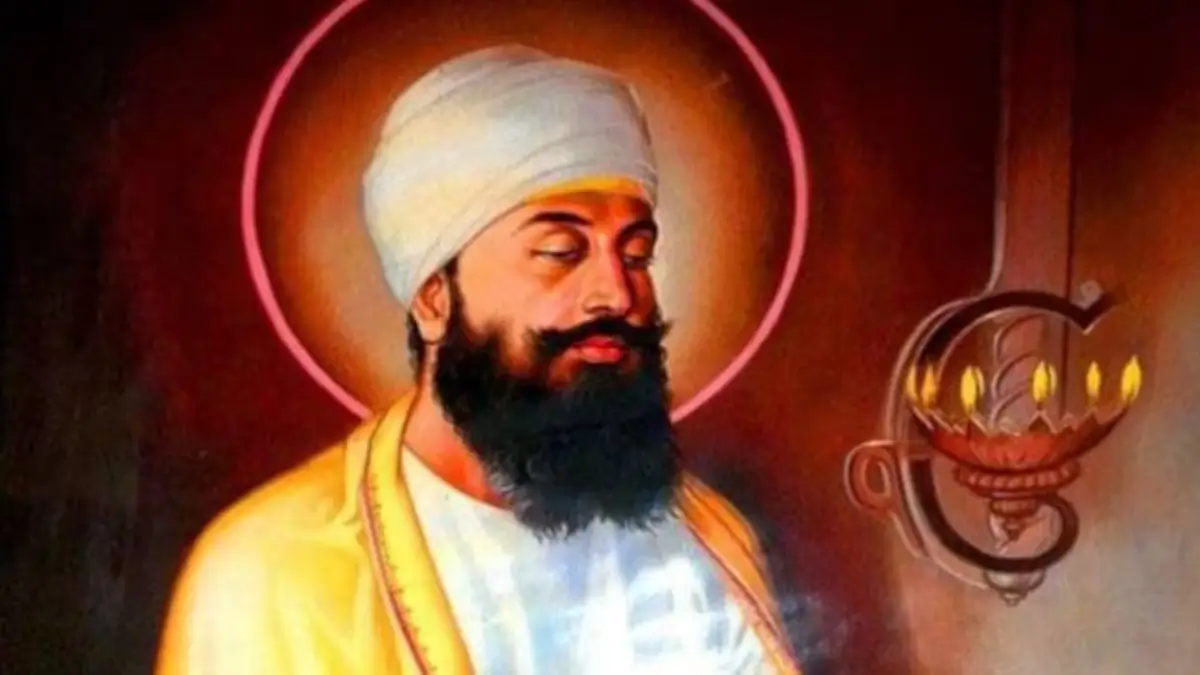
Guru Tegh Bahadur, born on 1 April 1621 in Amritsar, was the ninth Guru of Sikhism. Known for his courage, wisdom and deep spirituality, he led the Sikh community from 1665 until 1675. His sacrifice for protecting religious freedom is remembered across India, especially on 24 November, observed as his Martyrdom Day.
Early Life and Family of Guru Tegh Bahadur
Guru Tegh Bahadur was born as Tyag Mal, the youngest son of Guru Hargobind, the sixth Sikh Guru. He belonged to the Sodhi family. Even as a child, he was trained in horse riding, archery and Sikh teachings. His bravery in the Battle of Kartarpur earned him the name “Tegh Bahadur,” meaning “Brave of the Sword.”
Becoming the Ninth Guru
After the passing of Guru Har Krishan, Sikhs searched for the next Guru in the village of Bakala. A trader named Makhan Shah Labana finally recognized Tegh Bahadur as the true Guru, fulfilling his earlier promise of offering 500 gold coins. In 1664, the Sikh community formally accepted him as the ninth Guru.
Travels and Teachings of Guru Tegh Bahadur Ji
Guru Tegh Bahadur travelled widely across India, preaching the message of peace, equality and devotion taught by Guru Nanak. He visited regions like Assam, Bengal, Bihar, Agra and Varanasi. Wherever he went, he encouraged community service, opened wells, and promoted langars so that the poor could eat freely. He also founded the holy city of Anandpur Sahib.
Defense of Religious Freedom
During Aurangzeb’s rule, reports of religious pressure on Kashmiri Pandits reached the Guru. They sought his protection, and Guru Tegh Bahadur decided to stand for their right to follow their faith. This act of bravery made him a symbol of courage and justice.
Arrest and Martyrdom of Guru Tegh Bahadur Ji
Guru Tegh Bahadur was arrested by Mughal officials while travelling and was brought to Delhi. He was asked to perform miracles or accept Islam. When he refused, he was executed on 11 November 1675 at Chandni Chowk. His companions — Bhai Mati Das, Bhai Sati Das and Bhai Dayal Das — were also tortured and killed.
Two important Sikh shrines mark this event:
- Gurdwara Sis Ganj Sahib – built where the Guru was beheaded
- Gurdwara Rakab Ganj Sahib – built where his body was cremated by a devotee
Contribution to Sikh Scripture
Guru Tegh Bahadur wrote about 115 hymns, which were later added to the Guru Granth Sahib by Guru Gobind Singh. His writings talk about human values, suffering, peace, service and the search for freedom from worldly attachments.
Inspiration for the Khalsa
His sacrifice deeply influenced his young son, Gobind Rai (later Guru Gobind Singh). It strengthened the Sikh resolve to stand against injustice and later played a major role in shaping the Khalsa tradition.
Legacy and Remembrance of Guru Tegh Bahadur Ji
Guru Tegh Bahadur is honored as the “Hind di Chadar” — the Shield of India — because he gave his life to protect others. Every year, 24 November is observed as Shaheedi Diwas, and various gurdwaras across the country hold prayers and processions. His teachings inspire millions to uphold truth, freedom and humanity.


 Best Airlines in the World 2026: Best Fu...
 Who Invented the QR Code? Check Here
 Who is known as the Father of Microbiolo...