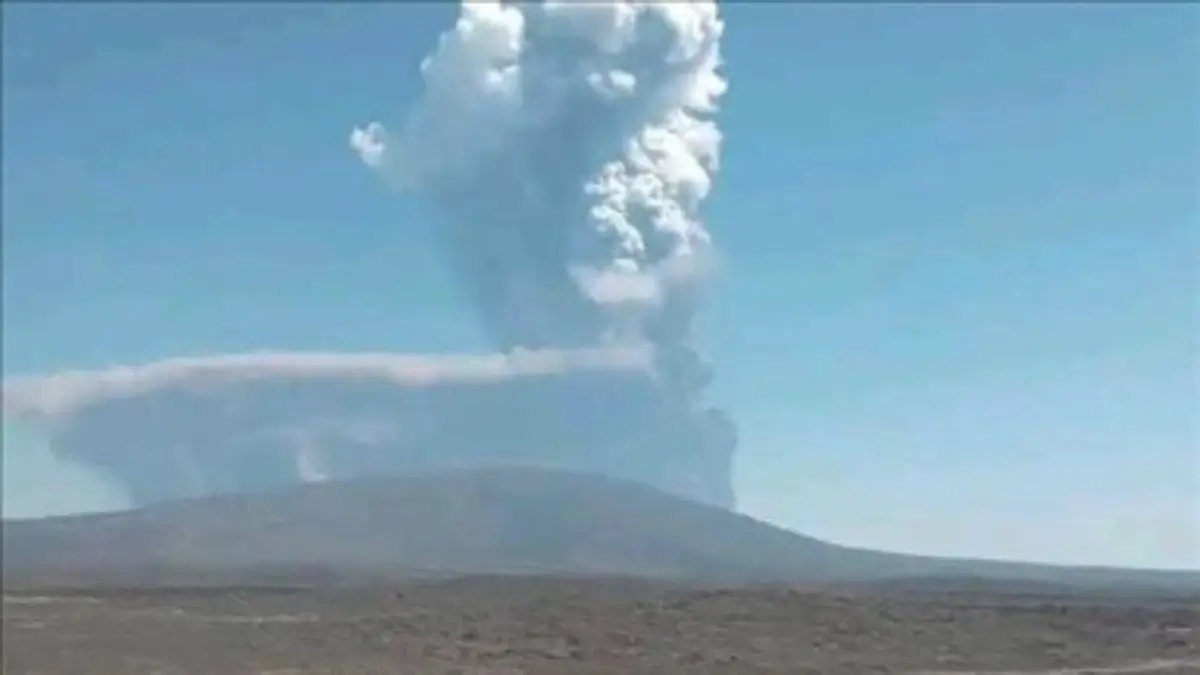
The Hayli Gubbi volcano in Ethiopia became the center of global attention when it erupted for the first time in almost 12,000 years. The powerful eruption sent huge clouds of ash high into the sky and across nearby countries, surprising both scientists and local residents.
Location of Hayli Gubbi
Hayli Gubbi is located in the Afar Region of north-eastern Ethiopia, about 500 miles (800 km) from Addis Ababa and close to the Eritrean border. It rises around 500 metres in height and sits inside the Rift Valley, a major geological zone where two tectonic plates slowly move apart. This area is known for frequent earthquakes and volcanic activity.
A Long History of Silence
For thousands of years, Hayli Gubbi was believed to be inactive. According to the Smithsonian Global Volcanism Program and other experts, there was no known record of any eruption during the Holocene, the period covering the last 12,000 years. Because of this, the sudden eruption in 2025 came as a major surprise to scientists.
The 2025 Eruption
On a Sunday in November 2025, the volcano erupted for several hours. Huge clouds of ash rose up to 9 miles (14 km) into the air.
The Toulouse Volcanic Ash Advisory Centre reported that the ash travelled across the Red Sea, spreading over Yemen, Oman, India, and northern Pakistan.
Impact on Local Communities
Thankfully, there were no deaths or injuries, as confirmed by local officials. However, several villages were covered in ash. Since most people in the area are livestock herders, the ash-covered land meant less food for their animals, raising concerns about future income and survival.
Voices from the Region
Some residents reported hearing a loud explosion-like sound and feeling a shock wave. One resident said it felt “like a sudden bomb had been thrown,” followed by thick smoke and ash rising into the air. Videos shared online showed a strong white plume rising from the volcano, though some could not be independently verified.
Scientific Confirmation
Volcanologists confirmed that Hayli Gubbi had no previous documented eruptions in thousands of years. Experts like Simon Carn of Michigan Technological University supported this finding, noting that the volcano had no Holocene activity on record.


 Top-10 Largest Oil Consuming Countries i...
 What is the National Fruit of Malaysia? ...
 What is the Difference Between LPG and P...