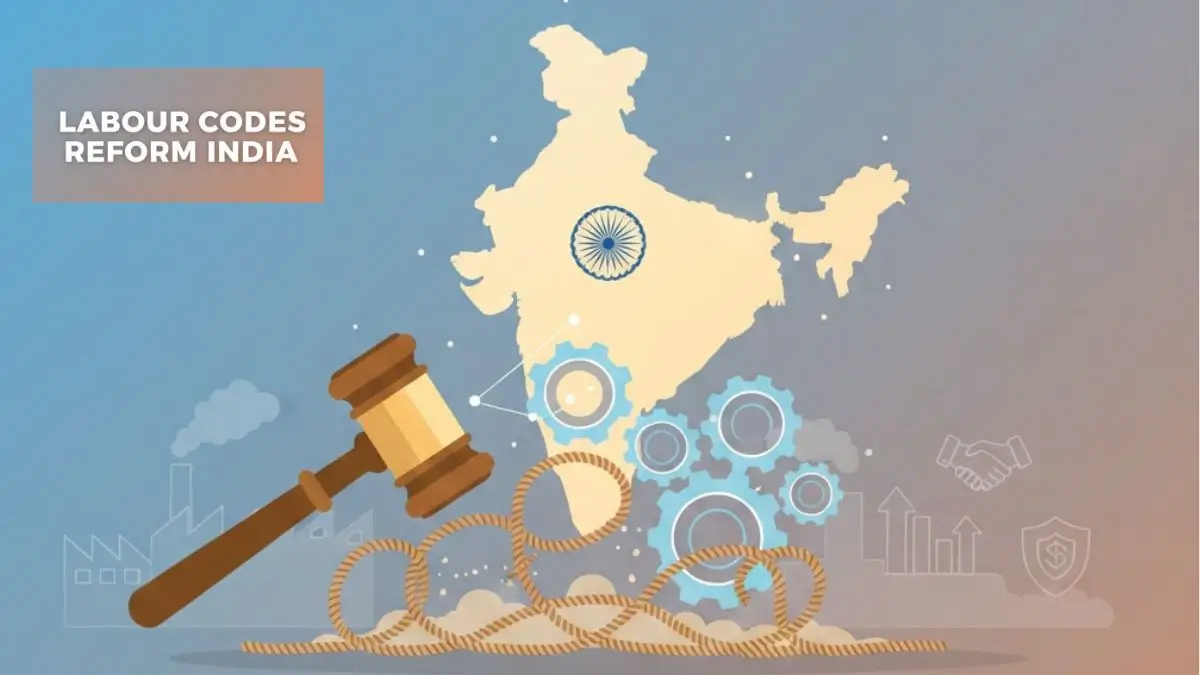
On 21 November 2025, the Government of India officially made all four Labour Codes effective—marking one of the biggest labour reforms in independent India. These Codes consolidate 29 earlier labour laws into four simplified, modern, and worker-centric frameworks. With this step, India strengthens worker protection, expands social security, and creates a transparent, business-friendly environment aligned with global standards.
This reform is positioned as a key milestone for building a future-ready workforce, improving ease of compliance, and empowering workers across organized, unorganized, gig, platform, migratory, MSME, export, and hazardous sectors.
Understanding the News Four Labour Codes
1. Code on Wages, 2019
- Ensures minimum wages for all workers, not just scheduled industries.
- Mandates timely payment of wages.
- Establishes a National Floor Wage for uniformity across states.
2. Industrial Relations Code, 2020
- Introduces faster dispute resolution through tribunals.
- Promotes smoother employer–worker relations.
- Encourages investment and industry stability.
3. Code on Social Security, 2020
Extends social security to all workers, including,
- Gig workers
- Platform workers
- Self-employed
- Migrant workers
Ensures portability of PF, ESIC, insurance, and pensions.
4. Occupational Safety, Health & Working Conditions Code, 2020
- Sets national safety standards across industries.
- Mandates annual health checkups for many categories of workers.
- Improves workplace safety, hygiene, and working conditions.
Before vs After: Labour Reforms at a Glance
Before Reforms
- No mandatory appointment letters
- Minimum wages limited to select industries
- Limited ESIC coverage
- Women restricted from night shifts
- Multiple licenses and registrations
- No mandatory health checkups
- Fragmented and outdated laws
After Reforms
- Appointment letters compulsory for all workers
- Minimum wages guaranteed for every worker
- ESIC available pan-India, including for small/hazardous unit
- Women allowed in all sectors & night shifts (with safety measures)
- Single registration, single return, single license
- Free annual health checkups for workers above 40
- Modern, simplified, globally aligned labour framework
Key Benefits Across Worker Categories
1. Fixed-Term Employees (FTE)
- Equal benefits as permanent workers
- Gratuity eligibility after one year
- Higher income stability and protection
- Reduces excessive use of long-term contract labour
2. Gig & Platform Workers
- First-time legal recognition of gig/platform work
- Aggregators must contribute to workers’ social security
- Aadhaar-linked Universal Account Number ensures portability
3. Contract Workers
- Guaranteed health and social security benefits
- Free annual health checkups
- Gratuity after one year if hired as FTE
4. Women Workers
- No gender discrimination — equal pay for equal work
- Permission for night shifts and all types of work
- Mandatory representation in grievance committees
- Family definition includes parents-in-law
5. Youth Workers
- Guaranteed minimum wage
- Mandatory appointment letters
- Wages during leave ensured
- Protection against exploitation
6. MSME Workers
- Full social security coverage
- Double wages for overtime
- Standard working hours & paid leave
- Access to basic workplace facilities
7. Beedi & Cigar Workers
- Minimum wages guaranteed
- Work hours capped at 48 per week
- Double wages for overtime
- Bonus eligibility after 30 days of work
8. Plantation Workers
- Included under OSH & Social Security Codes
- Mandatory safety training and protective gear
- ESI medical facilities for families
- Education support for dependent children
9. Audio-Visual & Digital Media Workers
- Mandatory appointment letters
- Timely wage payment
- Double wages for overtime
- Better protection for stunt artists, media workers
10. Mine Workers
- Commuting accidents recognized under social security (conditions apply)
- Standardized national safety norms
- Free annual health checkups
- Capped working hours
11. Hazardous Industry Workers
- Mandatory safety committees
- National safety standards
- Equal opportunities for women
- Strong chemical-handling protocols
12. Textile Workers
- Migrant workers get equal wages and PDS portability
- Double wages for overtime
- Claim window extended to 3 years
13. IT & ITES Workers
- Mandatory salary by the 7th of every month
- Equal pay for equal work
- Women allowed night shifts with safety
- Faster resolution of disputes
14. Dock Workers
- Formal recognition and legal protection
- Provident fund, insurance, and pension
- Annual health checkups
- Safe sanitation and medical facilities
15. Export Sector Workers
- FTE workers get PF, gratuity & social security
- Annual leave after 180 days
- No unauthorized wage deductions
- Safety protocols for women night workers
Additional Systemic Reforms
- Gender neutrality in pay and job roles (includes transgender workers)
- Inspector-cum-Facilitator model for guidance-focused compliance
- Single registration, single license, single return
- National OSH Board to harmonize safety norms
- Improved dispute resolution through Industrial Tribunals
National Impact & Significance
- Social security coverage increased from 19% (2015) to 64% (2025)
- A stronger and more protected workforce
- Boost to employment and productivity
- Better global image for India’s labour governance
- Alignment with the vision of Aatmanirbhar Bharat

 WHO Foundation and Novo Nordisk Launch I...
 NITI Aayog Releases Fiscal Health Index ...
 UIDAI Launches Bug Bounty Program to Str...