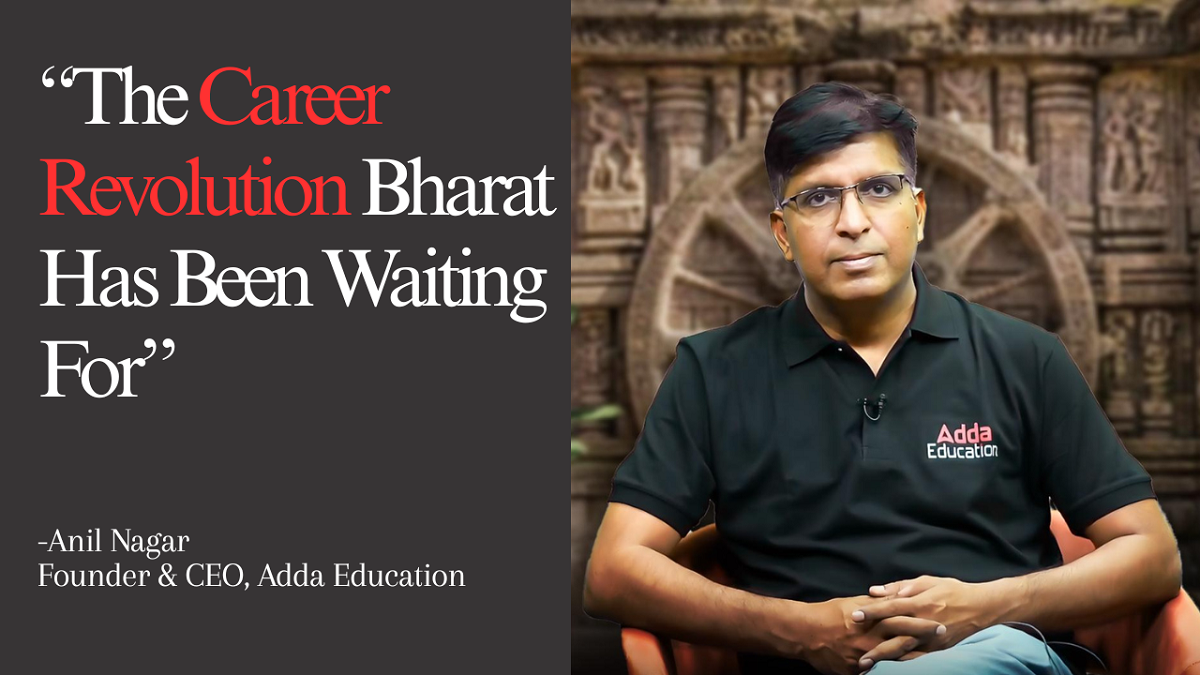
We often hear that India’s biggest strength is its young population. And that’s true — more than 65% of our population is under 35. But just having a young population is not enough. We need to guide them properly from education to employment. Right now, that journey is broken.
I have seen this closely. I come from a small town myself. I’ve felt the same confusion that many students from Tier-2 and Tier-3 cities feel today. They want to do something big in life. They are full of dreams. But they don’t know what jobs are out there, what steps they need to take, or how to prepare.
An employment report recently said that 83% of India’s unemployed youth are educated. That number is even worse in smaller towns. This tells us that just getting a degree is not enough.
Many students still choose courses without knowing where they will take them. They don’t get internships. They don’t get career guidance. And they have no idea about the new career options in fields like AI, coding, fintech, or digital banking.
I remember the time when the BPO industry gave jobs to millions of Indians. What made that work was simple: clear and easy steps from training to getting a job.
Now, we are entering a similar moment, especially in the tech and finance sectors. Jobs are growing fast in these areas. But we need to ask ourselves: How can we help Bharat’s youth reach these jobs?
Let’s Focus on Jobs, Not Just Degrees
We need to stop thinking only about how many students are enrolled or have graduated. A degree is just the start — the real goal is getting a job. Today, many colleges don’t teach the skills that companies want. One report said only 45% of graduates are ready for jobs. And in smaller towns, this number is even lower.
This needs to change. We must make career planning a part of education right from the beginning, not leave it for the end.
What Bharat Needs: A Simple, Clear Career Path
I believe we need to build a “career ladder” that students from small towns can use. Here’s how we can do that:
- Start with awareness:
Students need to understand what different careers look like — what they do, how much they pay, what skills they need, and how to get there. This should be available in Hindi and other local languages, and explained in simple words. They should hear stories of people like them — from small towns — who have succeeded.
- Teach useful skills early:
Don’t wait for a degree to be completed. From day one, students should start learning job-related skills. These can be short, mobile-friendly courses — in local languages — that teach both technical and soft skills, like communication and teamwork.
- Provide mentors:
First-generation learners often don’t have anyone to guide them. Mentors — whether they are alumni, working professionals, or online coaches — can make a big difference. They help students see what’s possible and how to get there.
- Build local job connections:
Most job portals today are focused on big cities. We need strong employer networks in smaller cities and towns, too. According to a McKinsey report, sectors like healthcare, logistics, and tech will create the most new jobs by 2030. But unless we connect students to these jobs, the opportunity will be lost.
Why This Matters
This isn’t just about giving jobs. It’s about helping young people from Bharat achieve their full potential. India has the talent — we just need better systems to guide and support that talent.
At Adda Education, that’s exactly what we’re working on — not just teaching students, but preparing them for real careers. If we get this right, India’s youth will not just be a number in the population — they will be the force that drives our country forward.
Let’s make sure we don’t miss this chance.


 Who is known as the Father of Mobile Pho...
 Which is the Highest Airport in the Worl...
 Which Country is the Largest Exporter of...