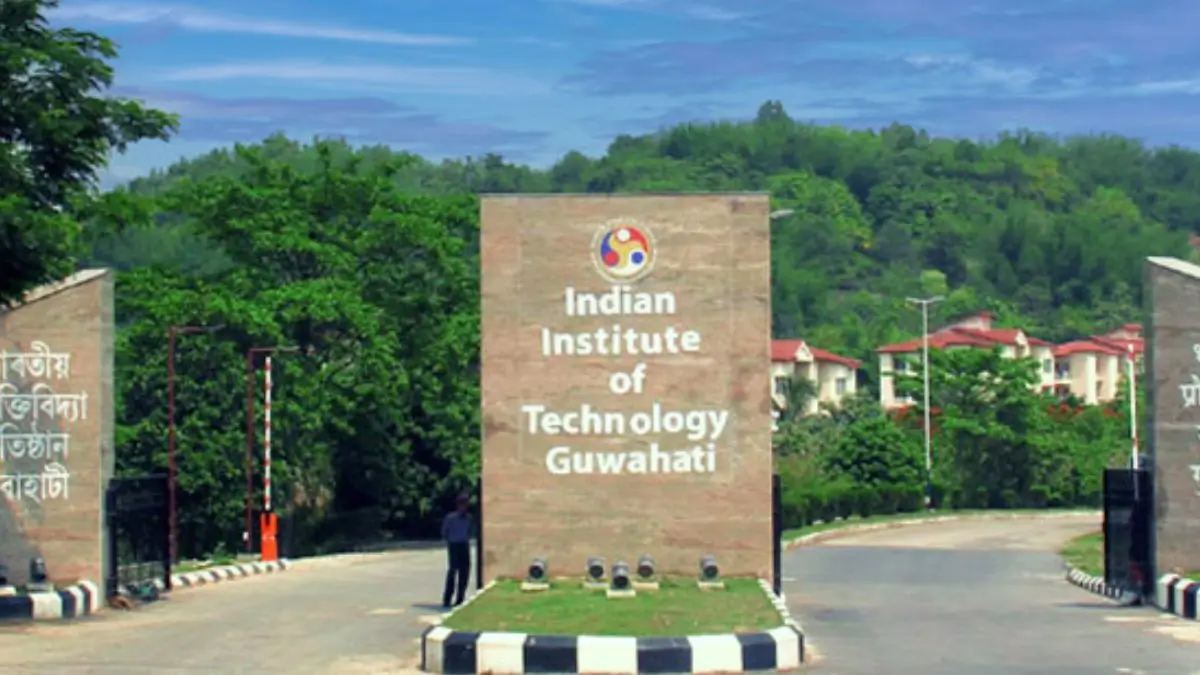
IIT Guwahati researchers have developed the unique material that can produce the hydrogen fuel and also purify seawater. This dual purpose innovation used a special MXene based catalyst to address two global challenges. This two challenges are the clean energy and safe drinking water. This material enables efficient hydrogen production through electrolysis while supporting solar powered desalination.
IIT Guwahati MXene Innovation
The IIT Guwahati MXene innovation introduces a two dimensional material which are the capable of performing dual functions efficiently.
MXenes are known for their high electrical conductivity and advanced material properties.
Researchers enhanced the material by creating ultra thin ribbon like structures and adding ruthenium atoms.
This improved charge will be movement and increased active sites.
And this will be making the catalyst highly efficient for hydrogen generation and desalination processes.
Hydrogen Fuel India: Clean Energy Through Electrolysis
Hydrogen fuel is considered as the clean and sustainable energy source because it produces only water when used.
The IIT Guwahati MXene material enables efficient hydrogen production through water electrolysis.
This catalyst achieved an extremely low hydrogen evolution reaction overpotential of 12 mV and the outperforming traditional platinum based catalysts.
This makes hydrogen production more energy efficient and cost-effective and will be supporting India’s clean energy goals.
Desalination Technology India: Solar Powered Clean Water
The same MXene based material is also used for desalination and it making seawater safe for drinking using solar energy.
This addresses the growing issue of water scarcity.
The system used a Janus evaporator a floating structure that heats only the water surface.
It achieved an evaporation rate of about 3.2 kg per square metre per hour and operated continuously for five days without salt buildup.
How the MXene Catalyst Improves Efficiency
The MXene catalyst’s performance is enhance through the advanced material engineering techniques.
Researchers have introduced oxygen deficient regions and embedded ruthenium atoms.
These modifications tries to improved catalytic activity and stability.
The material also showed strong photothermal conversion under sunlight and this meaning it can efficiently convert solar energy into heat for desalination and hydrogen production.
Question
Q. The IIT Guwahati innovation is based on which material?
A) Graphene
B) MXene
C) Silicon
D) Carbon fiber


 Meet MAI-Transcribe-1: Microsoft’s Fast,...
 What is Outer Space Treaty 1967? Princip...
 What Is Mission Mitra? ISRO’s New Experi...