India marked the 164th birth anniversary of Rabindranath Tagore, popularly known as the Bard of Bengal, on May 7, 2025. Celebrated with cultural events, poetry readings, and musical tributes across the country — particularly in West Bengal — this day commemorates the extraordinary legacy of a poet, philosopher, musician, and visionary who reshaped modern Indian identity through art and education.
Why in News?
Rabindranath Tagore Jayanti 2025 was observed on May 7 (Gregorian calendar) and on May 9 as Poncheeshe Boishakh in Bengal (based on the Bengali calendar). This year marks 164 years since Tagore’s birth in 1861. Cultural institutions, schools, and government bodies organized widespread events to honour his literary, musical, and philosophical contributions.
Tagore’s Life and Contributions
- Born: May 7, 1861 in Jorasanko Thakurbari, Kolkata.
- Father: Debendranath Tagore, Mother: Sarada Devi.
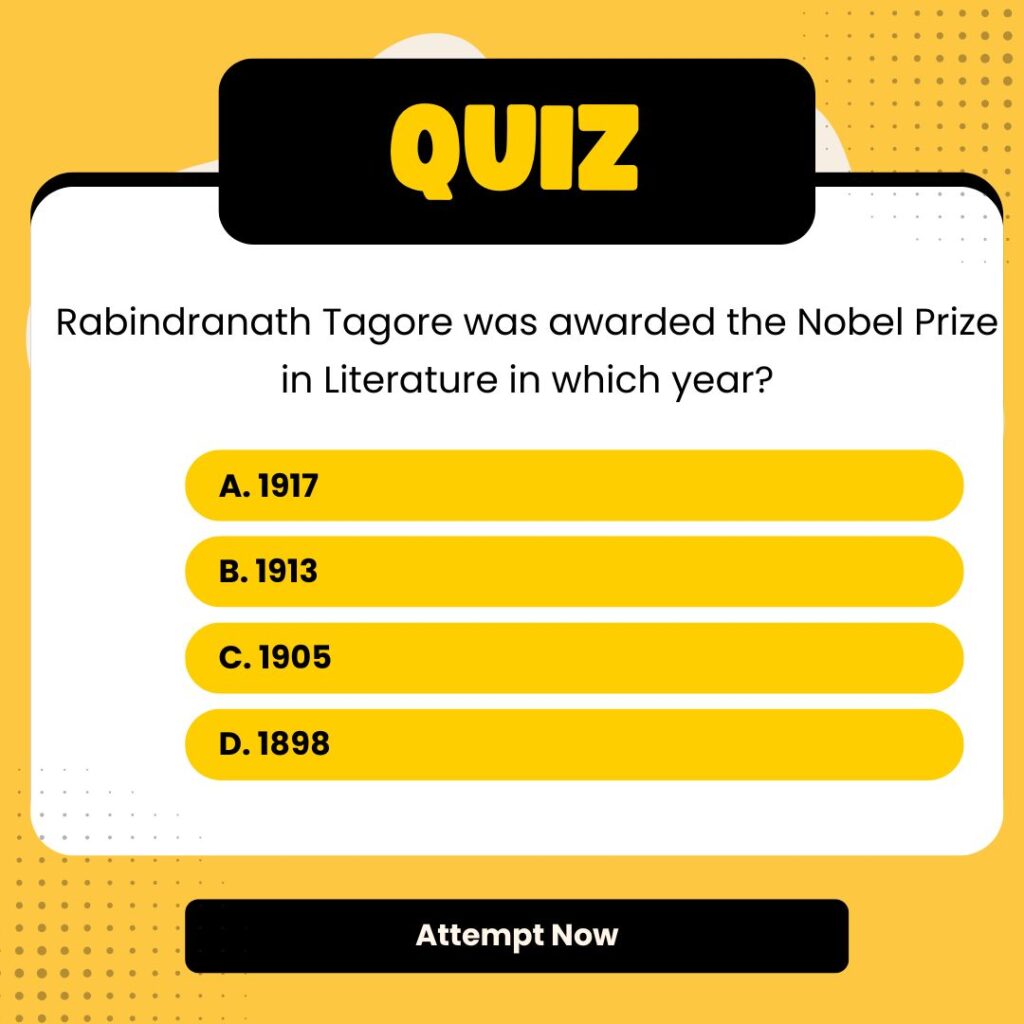
- First Indian to win the Nobel Prize in Literature (1913) for Gitanjali.
- Composed national anthems of India (Jana Gana Mana) and Bangladesh (Amar Shonar Bangla).
Key Facts and Achievements
- Born: May 7, 1861, in Jorasanko Thakurbari, Kolkata.
- Parents: Debendranath Tagore and Sarada Devi.
- Titles: Gurudev, Kabiguru, Biswakabi, Bard of Bengal.
- First non-European to win the Nobel Prize in Literature (1913) for Gitanjali.
Composer of
- India’s National Anthem – Jana Gana Mana
- Bangladesh’s National Anthem – Amar Shonar Bangla
- Influenced Sri Lanka’s anthem (based on his music style).
Major Works
- Gitanjali, Gora, Ghare Baire, Rakta Karabi, Kabuliwala, Shesher Kobita.
- Founder of Visva-Bharati University, Santiniketan (1921).
Background and Contributions
- Rabindranath Tagore was not only a literary genius but also a visionary who redefined art, education, and nationalism.
- Literary Legacy: Tagore authored more than 2,000 songs, numerous poems, plays, essays, short stories, and novels. His writing style merged traditional Indian themes with modern humanist ideas.
- Philosophy and Reforms: A proponent of universal humanism, Tagore advocated for freedom, peace, empathy, and global unity. He strongly opposed colonial rule but also critiqued narrow nationalism.
- Educational Vision: Disenchanted with conventional rote learning, he established Visva-Bharati, an open-air university blending Indian and Western philosophies, promoting creative learning.
- Cultural Impact: Tagore’s Rabindra Sangeet is still performed widely. His work influenced Indian classical and modern arts, and he corresponded with international thinkers like Einstein and Gandhi.
Celebrations and Observance
- Observed as Rabindra Jayanti or Poncheeshe Boishakh in West Bengal.
Celebrations include
- Cultural performances of Rabindra Sangeet
- Recitation of his poetry
- Stage enactments of his plays and dance dramas
- Events in schools, universities, and literary institutions.
Particularly prominent in
- Kolkata, Santiniketan, and other Bengali diaspora regions globally.


 RBI Foundation Day 2026: History, Functi...
 List of Important Days in April 2026, Na...
 Utkal Divas 2026 Odisha: Formation Day H...