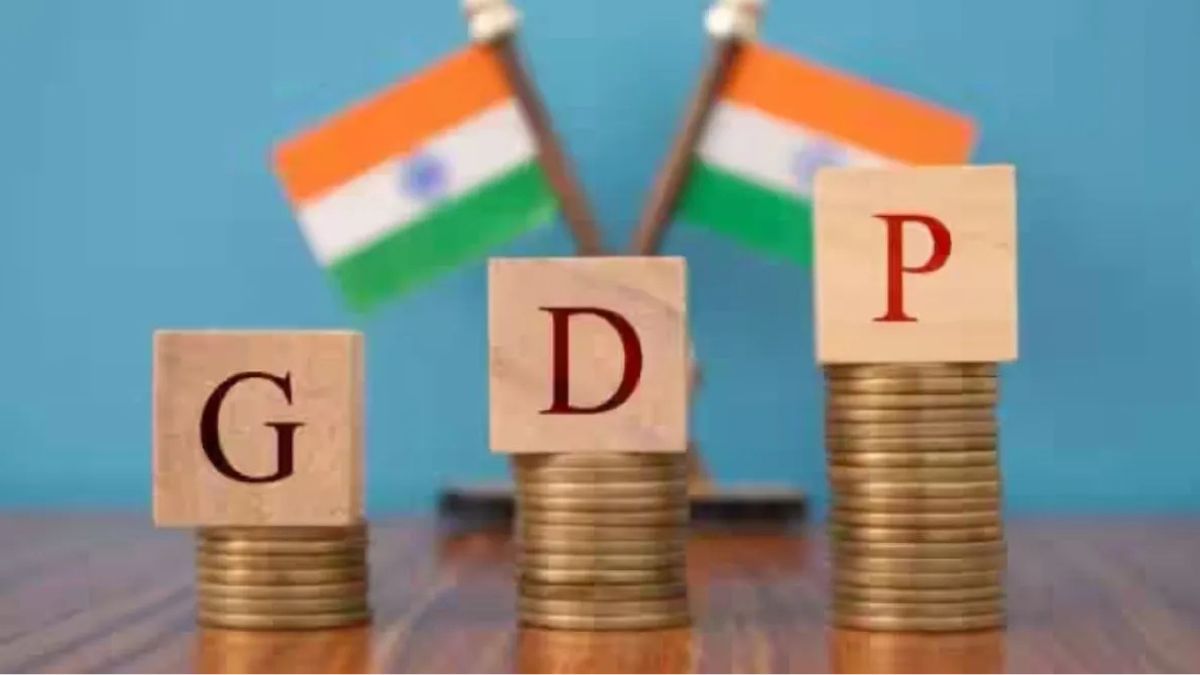
India Ratings and Research (Ind-Ra), a leading credit rating agency, has revised India’s GDP growth forecast for FY26 to 6.3%, down from its earlier estimate. This adjustment reflects a complex interplay of global uncertainties, weak investment sentiment, and some supportive domestic factors like low inflation and monetary easing. The revision comes amidst broader concerns regarding global trade slowdown and cautious investor behavior, making this update significant for India’s macroeconomic outlook.
Background
The Indian economy has experienced mixed signals in recent quarters. Ind-Ra’s previous projection was more optimistic, but the economic landscape has changed, both domestically and globally. One of the main catalysts for the revision is the unilateral tariff hikes by the US, which have intensified global trade tensions. Alongside, a weaker-than-expected investment climate has prompted the agency to lower its forecast by 30 basis points, bringing it in line with the lower end of RBI’s projected range of 6.3%–6.8%.
Significance of the Forecast
This downgrade is crucial because it indicates the fragile nature of India’s recovery amid global and domestic challenges. While the Reserve Bank of India remains moderately optimistic with a 6.5% estimate, Ind-Ra’s cautious stance underscores growing external vulnerabilities. The gap between projected and real investment activity, especially in sectors like manufacturing and exports, has raised red flags.
Key Headwinds
Ind-Ra highlights multiple headwinds,
- Tariff hikes by the US, causing global economic uncertainty.
- Investor hesitation in committing to new capital expenditure (capex) due to sluggish global demand.
- Weakness in manufacturing and limited greenfield expansion activity.
- Even major global bodies like the IMF and World Bank have revised down their global GDP growth estimates for 2025 to 2.8% and 2.3%, respectively.
Tailwinds and Domestic Support
Despite the headwinds, several domestic factors offer support,
- Monetary easing that can reduce loan burdens.
- Low inflation, with CPI at a 77-month low of 2.1% in June 2025.
- Above-normal monsoon predictions, which may boost rural demand and agriculture.
- These factors are expected to minimize the impact of global slowdown and support a gradual economic recovery in FY26.
Sectoral Impact and Capex Trends
Ind-Ra forecasts that gross fixed capital formation (GFCF) will grow at 6.7% in FY26, lower than earlier expectations. Sectors like telecom, garments, and chemicals may witness slower capex, while power, logistics, warehousing, and commercial real estate are expected to sustain their growth momentum. Public sector investment continues to be the key driver of capital formation.
Inflation Outlook
Retail inflation is expected to average 3% in FY26, well below the RBI’s target of 4%. This marks a continuation of a disinflationary trend, which began months earlier. Falling inflation is expected to support consumer demand and ease pressure on the Monetary Policy Committee (MPC).


 India's Major Ports Handle Record 915.17...
 Moody's Cuts India's FY27 Growth Forecas...
 A Smarter Tax System: AI-Powered 'Kar Sa...