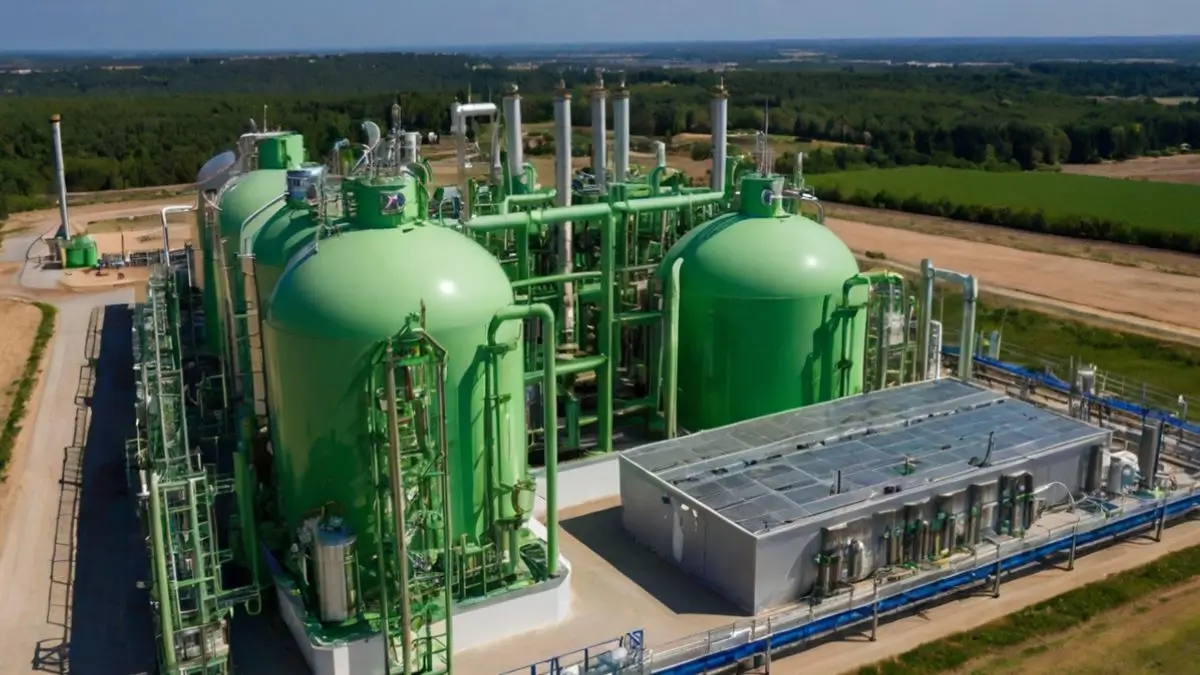
India has officially notified the standards for green ammonia and green methanol under the National Green Hydrogen Mission. This move of aimed at accelerating the adoption of hydrogen based fuels. And this will supporting the country’s transition to cleaner energy systems. This new standards define how green ammonia and green methanol must be produced using renewable energy sources. This is ensuring that these fuels meet strict environmental sustainability criteria.
Role of the National Green Hydrogen Mission
The National Green Hydrogen Mission is the flagship initiative of the Government of India. Which is the designed to make the India as a global hub for green hydrogen production, utilization and export.
This mission focuses on reducing dependence on fossil fuels while encouraging renewable energy use.
By notifying green ammonia and green methanol standards, the government aims to strengthen India’s hydrogen ecosystem.
These fuels are expected to play an important role in sectors such as shipping, fertilisers, heavy industries, and long-distance transport.
About Green Ammonia and Green Methanol
Green ammonia is produced using green hydrogen generated from renewable energy sources such as solar or wind power.
It is considered the important fuel for industries and can also be used as a hydrogen carrier for energy storage and transport.
Green methanol is produced using green hydrogen combined with captured carbon dioxide.
It is widely saw as a promising low carbon fuel for shipping, chemicals and power generation.
And this helping industries reduce greenhouse gas emissions.
Importance of Green Fuel Standards in India
The introduction of green ammonia and green methanol standards is crucial for establishing transparency and credibility in the green hydrogen market.
Also the Standardized guidelines help industries adopt sustainable production methods and prevent misleading environmental claims.
These standards will also help attract investment in clean fuel technologies and enable Indian companies to compete in the global hydrogen market.
Clear certification rules ensure that products labelled as “green” truly meet environmental sustainability requirements.
Benefits for India’s Energy Transition
The National Green Hydrogen Mission and its new standards will support India’s efforts to achieve long term climate goals.
This Green fuels such as ammonia and methanol can significantly reduce carbon emissions compared to conventional fossil fuels.
These initiatives are expected to strength India’s energy security, industrial competitiveness and renewable energy sector.
They will also help develop new green industries, create employment opportunities, and promote technological innovation.
National Green Hydrogen Mission
The National Green Hydrogen Mission was launched by the Government of India.
This is to accelerate the production and use of green hydrogen across different sectors.
The mission aims to position India as a global leader in green hydrogen technologies.
The programme focuses on developing hydrogen production capacity, reducing costs through innovation.
It also supports research, infrastructure development, and international partnerships for hydrogen-based energy solutions.
Question
Q. India recently notified standards for which fuels under the National Green Hydrogen Mission?
A. Bioethanol and biodiesel
B. Hydrogen and LPG
C. Green ammonia and green methanol
D. Compressed natural gas and LNG


 After 10 Years, Great Indian Bustard Chi...
 Jewar Airport Opens: 10 Key Facts About ...
 India’s Unemployment Rate Falls to 6.5% ...