
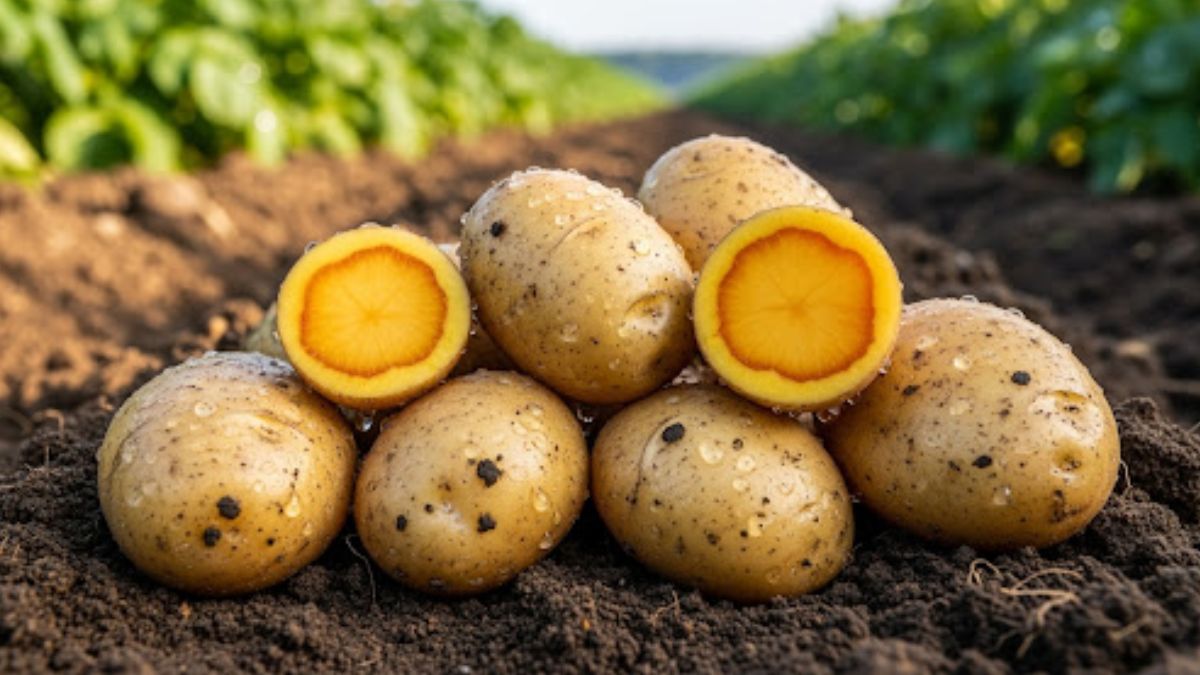
In a groundbreaking step towards tackling micronutrient deficiencies and promoting agricultural sustainability, India is set to introduce bio-fortified potatoes enriched with iron, developed by the International Potato Center (CIP), Peru. This initiative is expected to combat iron deficiency—a major contributor to hidden hunger in India—while ensuring stable yields and taste for consumers.
What Are Bio-Fortified Potatoes?
Bio-fortified potatoes are a new variety enriched with higher iron content, developed through conventional breeding and biotechnology methods. They are designed to address iron deficiency, especially in women and children, without compromising on taste or yield. This initiative is being led by the International Potato Center (CIP), a global leader in tuber crop research.
Expansion of Bio-Fortified Crops in India
Bio-Fortified Sweet Potatoes
- Vitamin A-rich sweet potatoes are already grown in Karnataka, Assam, West Bengal, and Odisha.
- Efforts are underway to expand their availability across more Indian states.
Iron-Fortified Potato Varieties
- Germplasm for iron-rich potatoes has been shared with ICAR-Central Potato Research Institute (CPRI), Shimla.
- A variety already released in Peru is now under evaluation for Indian agro-climatic conditions.
- To strengthen this mission, the CIP South Asia Regional Centre is being set up in Agra, Uttar Pradesh, as the Indo-Gangetic plains are the world’s largest potato-producing region.
Other Biofortified Crops Released by ICAR
India’s ICAR has released biofortified seed varieties across 61 crops, including,
- 34 field crops such as cereals, pulses, millets, and oilseeds
- 27 horticultural crops including tubers, vegetables, and medicinal plants
Examples
- CR Dhan 416: A salinity-resistant rice variety with multiple pest resistances
- Durum Wheat: Adapted to irrigated regions; enriched with zinc (41.1 ppm), iron (38.5 ppm), and 12% protein
About Biofortification
Biofortification is the process of increasing vitamin and mineral content in staple crops using,
- Conventional breeding
- Agronomic techniques
- Modern biotechnology
It is a proven strategy to reduce hidden hunger and improve nutritional security for millions.


 Meet MAI-Transcribe-1: Microsoft’s Fast,...
 What is Outer Space Treaty 1967? Princip...
 What Is Mission Mitra? ISRO’s New Experi...











