
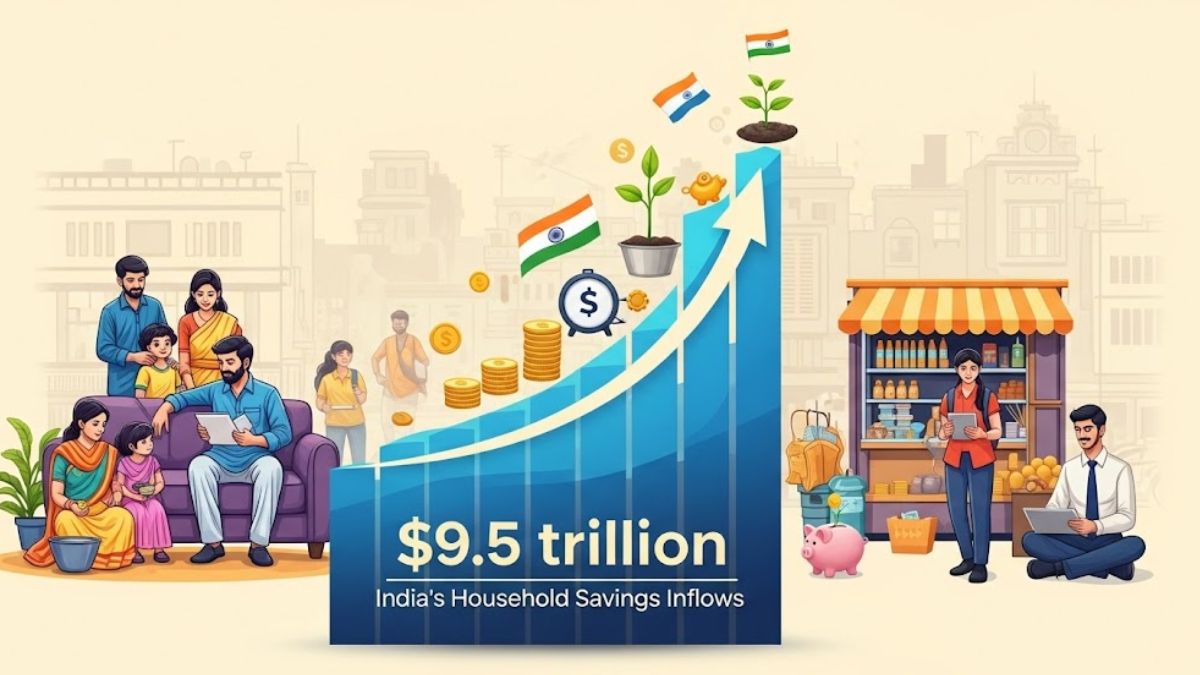
In a significant projection, Goldman Sachs has estimated that India’s household financial savings will generate $9.5 trillion in cumulative inflows into financial assets over the next ten years, reflecting a continued shift from physical assets to financial instruments. This transformation marks a critical phase in India’s economic trajectory as it moves toward greater financialization and capital market deepening.
Key Findings from Goldman Sachs Report
Rise in Financial Savings as Share of GDP
- Goldman Sachs forecasts that household financial savings in India will average 13% of GDP over the next decade (2025–2035), a marked improvement from the 11.6% average over the past 10 years.
- This upward trend is attributed to rising incomes, better financial literacy, and improved access to financial markets.
Breakdown of Projected Inflows
- Long-Term Savings Products: Over $4 trillion to go into insurance, pensions, and retirement funds
- Bank Deposits: Estimated inflows of $3.5 trillion
- Equities and Mutual Funds: Likely to receive $0.8 trillion
This redistribution shows a growing confidence in financial markets and structured investment products, away from traditional physical assets like gold and real estate.
Implications for the Indian Economy
1. Stronger Capital for Corporate Growth
With this significant savings pool, Indian companies are expected to gain access to stable domestic funding for their capital expenditure (capex) cycle, without relying excessively on foreign debt or widening the current account deficit.
2. Development of Long-Term Bond Market
Higher household financial inflows can,
- Support long-duration sovereign and corporate bond markets
- Lower borrowing costs over time
- Facilitate infrastructure development through long-tenure bonds
3. Boost to Retail Investment and Wealth Management
The increase in financial savings will lead to,
- Expanded retail participation in capital markets
- Increased demand for wealth management services and financial advisors
- Enhanced financial inclusion and sophistication in investment patterns
The Shift from Physical to Financial Assets
Goldman Sachs emphasized that as seen in other maturing economies, household preferences are gradually moving away from physical savings like real estate and gold. Factors influencing this shift include,
- Higher financial market access
- Declining inflation rates
- Improved digital infrastructure
- More transparent investment options
India’s path mirrors global trends where pension funds, insurance, and equity markets dominate household portfolios in advanced economies.


 India's Major Ports Handle Record 915.17...
 Moody's Cuts India's FY27 Growth Forecas...
 A Smarter Tax System: AI-Powered 'Kar Sa...











