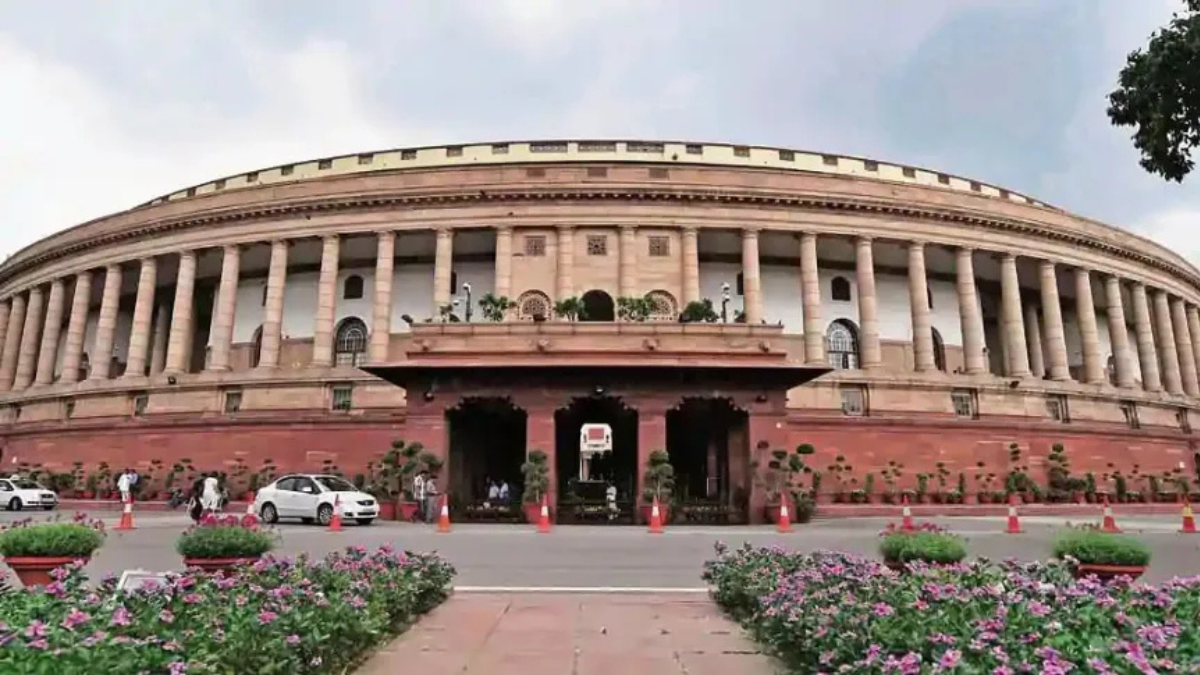
The Vice President of India is the second-highest constitutional authority in the country, after the President. The position is important for maintaining the smooth functioning of the Parliament, especially the Rajya Sabha. The Indian Constitution clearly explains the powers, duties and election process of the Vice President in Articles 63 to 71, ensuring stability and proper governance in times when the President is unavailable.
Articles of the Indian Constitutional Related to the Vice-President of India
The Vice President of India is the second-highest constitutional office in the country. The Indian Constitution explains the role, election and powers of the Vice President in detail. These rules are mainly given in Articles 63 to 71.
| Article | Related to |
| Article 63 | There shall be a Vice President of India |
| Article 64 | Vice President as Chairman of Rajya Sabha |
| Article 65 | Powers in absence of the President |
| Article 66 | Election process |
| Article 67 | Term and re-election |
| Article 68 | Vacancy and re-election |
| Article 69 | Oath of Office |
| Article 70 | Parliament can assign extra duties |
| Article 71 | Election disputes |
Article 63 – The Vice President of India
This article simply says that there shall be a Vice President of India. It means the Constitution makes it compulsory to have this post.
Article 64 – Vice President as Chairman of Rajya Sabha
The Vice President is also the ex-officio Chairman of the Rajya Sabha (Council of States).
- This means he/ she is the parliament head of the Rajya Sabha.
- He/ She presides over its meetings and ensures they are conducted smoothly.
Article 65 – Role in the Absence of the President
If the President:
- Resigns
- Dies
- Or is unable to perform duties,
the Vice President acts as the President of India until a new President is elected.
Article 66 – Election of the Vice President
- Elected by an Electoral College consisting of members of both Houses of Parliament (Lok Sabha and Rajya Sabha).
- Election is done through a single transferable vote system by secret ballot.
Article 67 – Term of Office
- The Vice President holds office for 5 years from the date of taking charge.
- Can be re-elected for any number of terms.
- Can resign by writing to the President.
Article 68 – Filling of Vacancy
- If the offline becomes vacant due to resignation, removal or death, an election must be held within 6 months.
- The new Vice President serves for a full term of 5 years.
Article 69 – Oath of Office
The Vice President takes an oath before the President of India for:
- Faithfully discharge duties.
- Protect and uphold the Constitution.
Article 70 – Duties in Other Situations
Parliament can make laws for the Vice President to perform other duties if required.
Article 71 – Disputes Regarding Election
Any dispute about the election of the Vice President is decided by the Supreme Court of India.


 What is National Investigation Agency? C...
 Which State is the Largest Petroleum Pro...
 Largest Crude Oil Supplier Countries to ...