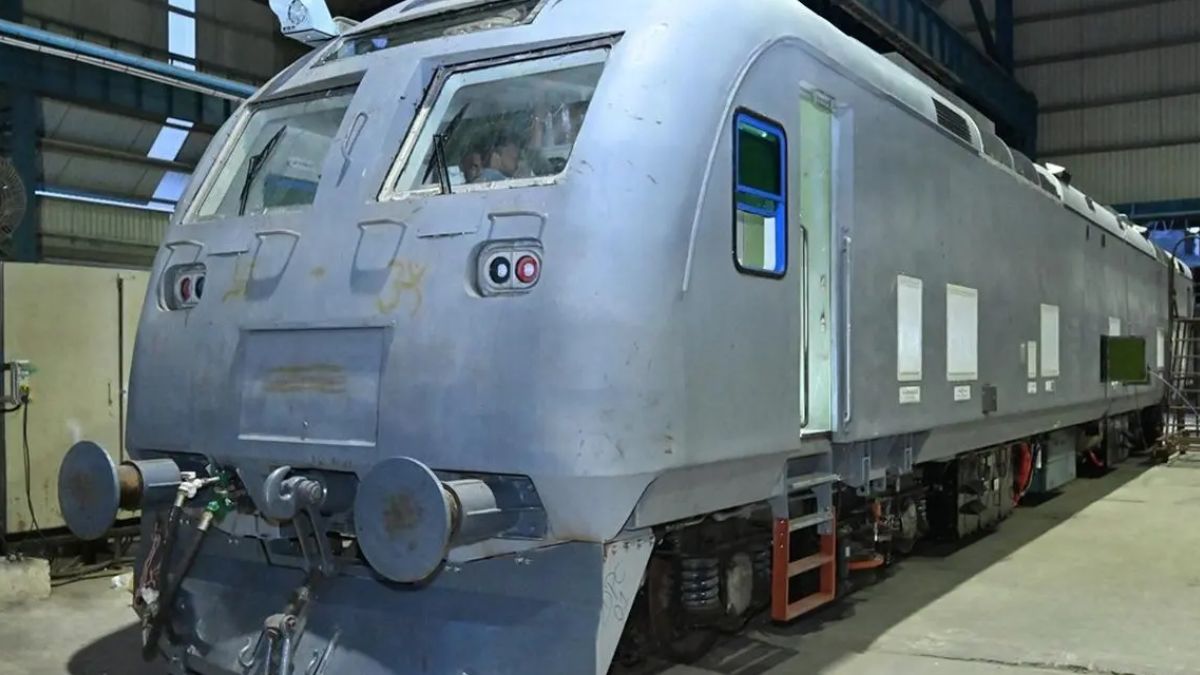
India has entered a new era of green transportation with the successful testing of its first hydrogen-powered train coach at the Integral Coach Factory (ICF), Chennai, on July 25, 2025. This breakthrough marks a critical step toward sustainable mobility in railways and places India among a handful of countries adopting hydrogen-based rail technology. The initiative is part of a broader push to meet India’s net-zero emissions targets and modernize its railway infrastructure with clean energy alternatives.
Background
The concept of hydrogen trains emerged globally as an alternative to diesel-powered locomotives, especially on non-electrified tracks. Countries like Germany, France, and Japan have already deployed hydrogen trains in limited routes. India began exploring hydrogen-based rail technology under its “Hydrogen for Heritage” initiative in 2023. The Railway Ministry proposed retrofitting DEMUs (Diesel Electric Multiple Units) and developing new hydrogen-powered trains to support clean transport in heritage and hill routes.
Significance of the Hydrogen Coach Test
- First-of-its-kind in India: The Driving Power Car tested at ICF is the first hydrogen train coach ever built and tested domestically.
- Clean & Green Innovation: Hydrogen trains produce zero tailpipe emissions, emitting only water vapour, making them ideal for India’s green goals.
- Global Leadership: Developing a 1,200 HP hydrogen-powered train elevates India into the league of technologically advanced railway nations.
- Strategic for Energy Security: Promotes energy diversification, reducing dependence on imported fossil fuels.
Objectives of Hydrogen-Powered Trains in India
- Promote Green Transportation: Reduce carbon emissions from railways.
- Modernize Hill & Heritage Routes: Cleaner transport on scenic routes for tourism and sustainability.
- Develop Indigenous Technology: Strengthen Make in India with domestic hydrogen innovation.
- Fulfill Climate Commitments: Contribute to India’s goal of achieving net-zero carbon emissions by 2070.
Features and Cost Structure
- The project includes plans to operate 35 hydrogen-powered trains under the Hydrogen for Heritage program.
- Cost per train: Estimated at ₹80 crore.
- Infrastructure cost per route: Estimated at ₹70 crore.
- Pilot project: ₹111.83 crore allocated for retrofitting a DEMU with hydrogen fuel cells to run on the Jind–Sonipat section (Northern Railway).
- While initial operational costs are high, they are expected to decline with scale and innovation.
Future Prospects
- Hydrogen trains are expected to replace diesel engines on non-electrified routes.
- They can serve remote, hilly, and ecologically sensitive areas with minimal environmental impact.
- Over time, India may become a global hub for hydrogen-based rail technology with export potential.
- Supports the government’s broader National Green Hydrogen Mission.


 Western Dedicated Freight Corridor Compl...
 ECINet KYC Feature Explained: How Voters...
 BIRAC-BioNEST Incubation Centre Inaugura...