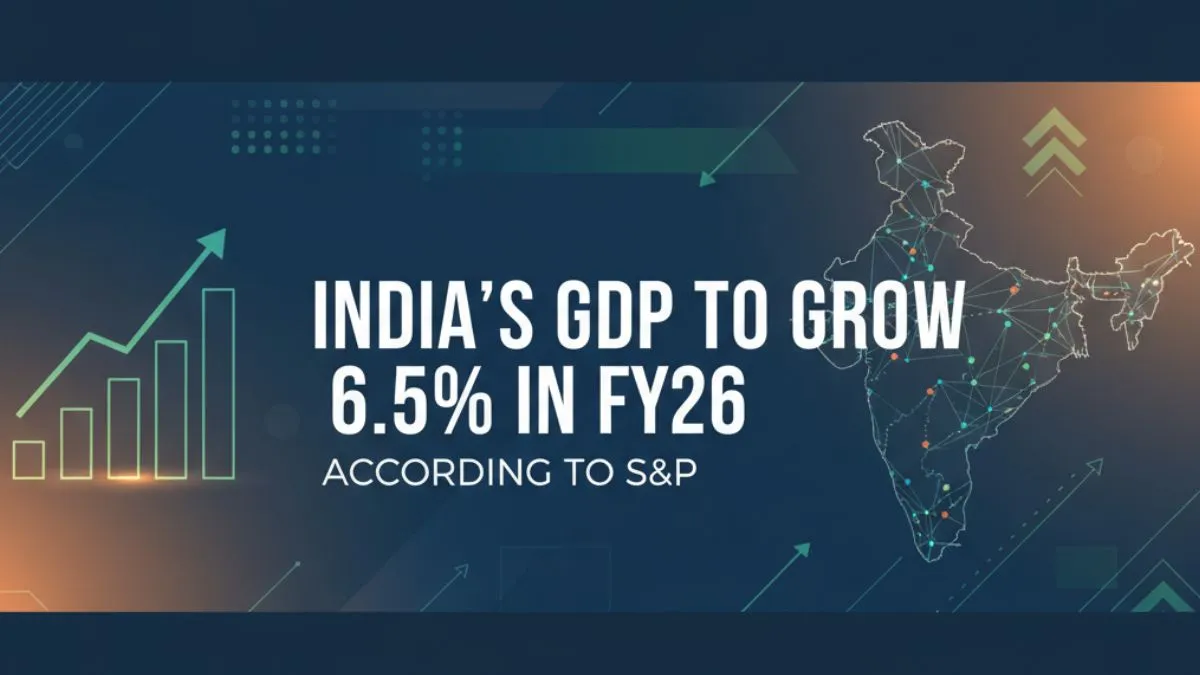
In a recent update that reflects cautious optimism, S&P Global Ratings has retained India’s GDP growth forecast at 6.5% for the current financial year ending March 31, 2026 (FY26). This projection comes despite intensifying global economic pressures, reaffirming the growing importance of domestic demand as India’s main engine of growth. Backed by robust consumption, a supportive monsoon, and continued government spending, the Indian economy is expected to maintain its momentum even as the broader Asia-Pacific region faces turbulence.
What’s Driving India’s Steady Growth?
S&P’s positive outlook is grounded in several key domestic factors that continue to support economic expansion,
- A benign monsoon season has helped stabilise rural incomes and agricultural output.
- Recent tax cuts—both on income and goods and services—have improved consumer spending capacity.
- A sustained rise in public investment, particularly in infrastructure, is propelling capital formation and job creation.
These factors have enabled India to weather global headwinds better than many of its peers. The country posted a robust 7.8% GDP growth in the April–June 2025 quarter, showcasing the strength of internal demand and policy support.
Inflation Eases, Opening Doors for Rate Cut
- In a major revision, S&P lowered its inflation forecast for India to 3.2% for the fiscal year. This drop is largely due to a sharper-than-expected fall in food inflation, easing the burden on household budgets and giving the Reserve Bank of India (RBI) room to manoeuvre.
- With inflation now well within the RBI’s comfort zone, S&P anticipates a 25 basis point (bps) rate cut in the remaining months of FY26. Such a cut would make borrowing cheaper, stimulate investment, and further strengthen domestic consumption—a key driver of growth.
Global Challenges: India Not Fully Immune
While India’s internal dynamics remain strong, the country is not entirely shielded from international developments. S&P’s latest Asia-Pacific Economic Outlook notes that,
- Higher U.S. tariffs are disrupting export flows and reshaping supply chains across Asia.
- While China has adapted relatively well, and Southeast Asian economies are struggling, India has been hit harder than expected by these changes.
- This signals potential stress in India’s export sectors and trade-linked industries, although the country’s lower export-to-GDP ratio cushions the overall impact.


 RBI MPC Meeting 2026, Kept Repo Rates Un...
 India's Major Ports Handle Record 915.17...
 Moody's Cuts India's FY27 Growth Forecas...