
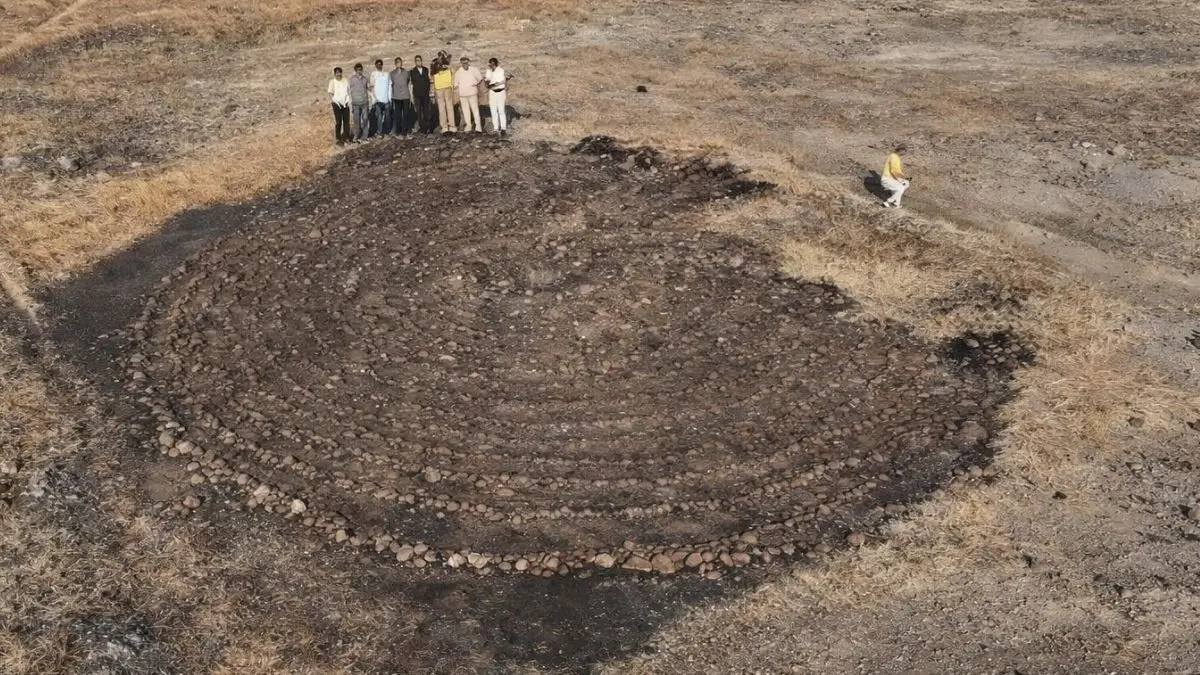
Indian Archaeologists have uncovered the largest circular stone labyrinth ever found in the country, shedding new light on ancient trade routes and cultural links. The discovery was made in the Boramani grasslands of Solapur district, Maharashtra, and dates back nearly 2,000 years.
Background of the Discovery
- Location: Boramani grasslands, Solapur district, Maharashtra
- Age: Around 2,000 years old
- Period: Early Common Era (1st–3rd century CE)
This region was historically important as it lay along inland routes connecting the Deccan Plateau to western coastal ports.
Structure and Design
- Size: Approximately 50 feet × 50 feet
- Shape: Circular stone labyrinth
- Circuits: 15 concentric stone rings (highest ever recorded in India)
Earlier labyrinth discoveries in India had a maximum of 11 circuits, making this find unique.
Link to the Satavahana dynasty
Archaeologists have linked the structure to the Satavahana dynasty, which ruled large parts of the Deccan between the 1st and 3rd centuries CE.
During this period,
- Maharashtra played a key role in long-distance trade
- The region connected inland settlements with coastal ports
- Trade flourished between India and the Roman world
Evidence of Indo-Roman Contact
Researchers believe the labyrinth design shows strong Indo-Roman cultural influence,
- The circular pattern closely resembles labyrinth symbols found on ancient coins from Crete
- Such coins were commonly used in the Roman world
- Roman coins have been discovered in Indian port cities and trading centres from the same era
- This suggests regular interaction between Indian traders and Roman merchants.
Possible Purpose of the Labyrinth
Experts propose several uses,
- Navigational marker for traders
- Symbolic signpost along trade routes
- Guide for merchants trading spices, textiles, and precious stones
- The placement of the structure in open grasslands, rather than settlements or temples, suggests it was meant to be visible from a distance.
Wider Network of Trade Structures
Similar, smaller stone labyrinths have been found in nearby districts,
- Sangli
- Satara
- Kolhapur
Together, these discoveries indicate a network of stone markers across western Maharashtra, possibly outlining ancient inland trade routes connecting ports to the Deccan interior.
Key Takeaways
- India’s largest circular stone labyrinth found in Solapur, Maharashtra
- Dates back nearly 2,000 years
- Has 15 concentric stone circuits, the highest in India
- Linked to the Satavahana dynasty
- Suggests strong Indo-Roman trade and cultural contact
- Likely used as a trade route marker or navigation aid
Question
Q. India’s largest circular stone labyrinth was recently discovered in which state?
A. Karnataka
B. Maharashtra
C. Gujarat
D. Madhya Pradesh


 Maharashtra CM Devendra Fadnavis unveils...
 Centre Issues Gazette Naming Amaravati a...
 Shree Jagannath International Airport in...











