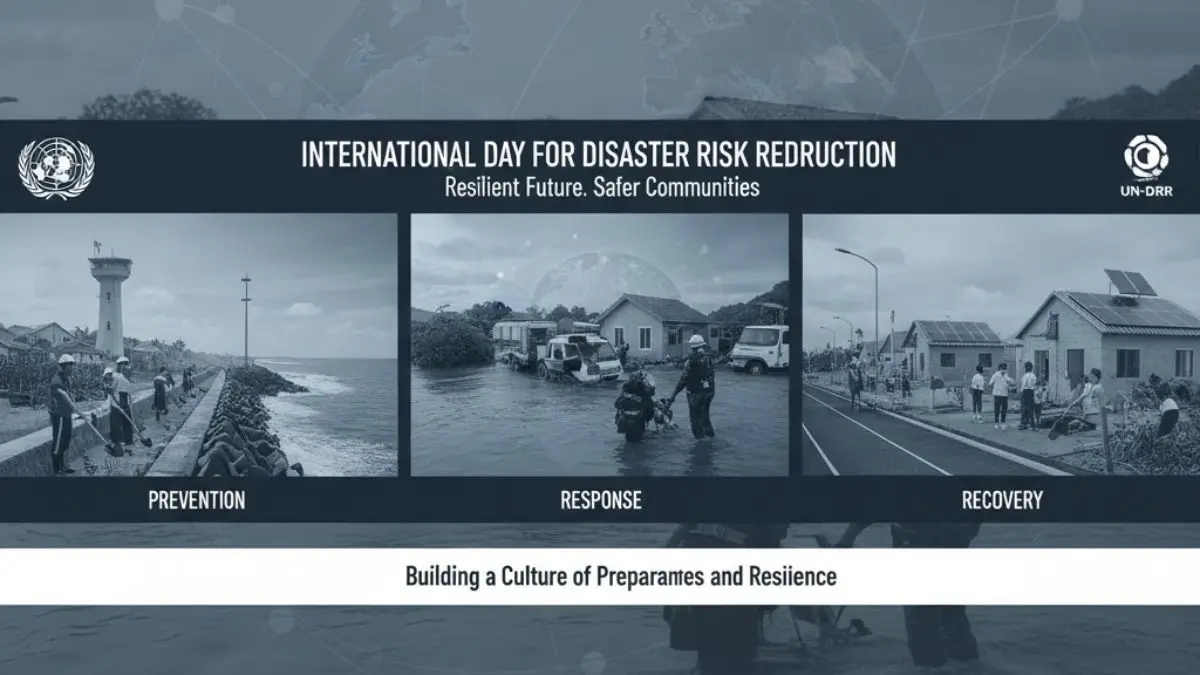
Natural disasters such as earthquakes, tsunamis, floods, and volcanic eruptions cause widespread destruction and affect millions of lives globally each year. However, with adequate preparedness and risk reduction strategies, their impact can be significantly minimized. To emphasize this, the International Day for Disaster Risk Reduction (IDDRR) is observed annually on 13 October. The day recognizes the ongoing efforts by governments, communities, and international organizations to reduce the risks and consequences of natural hazards.
Purpose and Significance
Proclaimed by the United Nations General Assembly, the IDDRR is a platform to,
- Celebrate achievements in reducing disaster risk
- Raise awareness about the importance of disaster prevention
- Encourage a shift from reactive to proactive strategies
- Promote the resilience of communities to natural and man-made hazards
The day also reinforces global commitment to the Sendai Framework for Disaster Risk Reduction (2015–2030), which aims to reduce disaster losses in lives, livelihoods, and health.
Understanding Disaster Risk
Disasters are not solely caused by natural hazards; rather, they occur when these hazards interact with vulnerable conditions, such as,
- Poor urban planning
- Inadequate infrastructure
- Environmental degradation
- Lack of early warning systems
By addressing these underlying risk factors, societies can break the cycle of disaster and poverty, especially in developing nations.
UNESCO’s Role
UNESCO plays a leading role in global disaster risk reduction efforts. It supports countries through,
- Technical assistance in setting up early warning systems
- Education and training on disaster preparedness
- Promoting science-based risk analysis and mapping
- Building capacities to manage climate and disaster-related risks
UNESCO also encourages a culture of prevention, promoting investments in,
- Disaster-resilient infrastructure
- Community-led risk reduction initiatives
- Integration of disaster education in school curricula
The Need for Pre-Disaster Action
While post-disaster relief is necessary, the focus must shift toward prevention. Some essential steps include,
- Risk assessments for all infrastructure projects
- Community-based early warning systems
- Disaster simulations and drills
- Inclusive policies ensuring participation of vulnerable groups
Resilience begins with informed and empowered communities that understand their risks and have the capacity to respond effectively.
Static Facts for Revision
- Observed On: 13 October every year
- First Declared By: United Nations General Assembly
- Key Goal: Promote disaster prevention and community resilience
- Global Framework: Sendai Framework for Disaster Risk Reduction (2015–2030)
- UNESCO’s Role: Supports early warning, education, and risk mapping


 List of Important Days in April 2026, Na...
 Utkal Divas 2026 Odisha: Formation Day H...
 Mahavir Jayanti 2026: Why Lord Mahavir’s...