
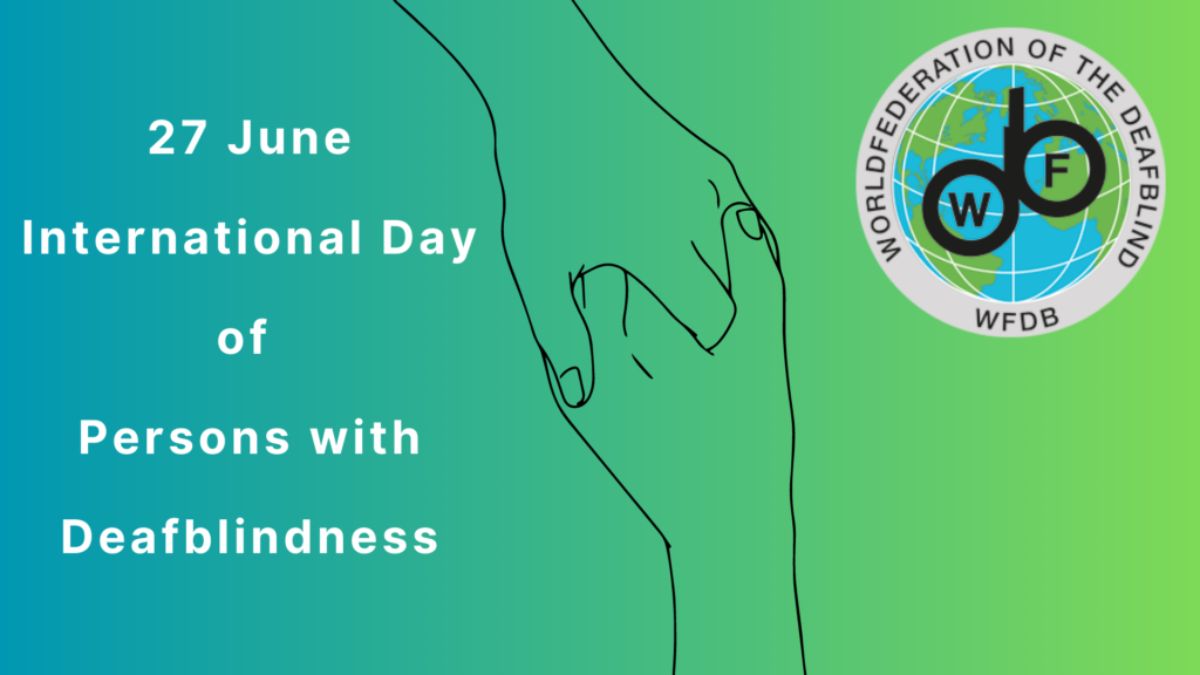
The International Day of Deafblindness is observed globally on June 27 every year to recognize and advocate for the rights of individuals living with deafblindness—a unique and severe combination of hearing and visual impairments. This day brings much-needed attention to the distinct challenges faced by deafblind individuals and promotes the inclusion, support, and visibility of this often-overlooked community in global policies and development agendas.
Background and Proclamation by the United Nations
- The United Nations General Assembly, through Resolution A/RES/79/294, officially designated June 27 as the International Day of Deafblindness in 2024.
- The date was chosen to commemorate the birth anniversary of Helen Keller, one of the most iconic and inspirational figures in the deafblind community. Keller, born in 1880, was the first deafblind person to obtain a college degree and went on to become a renowned author, political activist, and advocate for disability rights.
- Her life is a testament to the power of communication, education, and social inclusion.
Understanding Deafblindness as a Distinct Disability
- Deafblindness is not merely the sum of deafness and blindness—it is a distinct disability that presents unique challenges. Individuals who are deafblind face dual sensory loss, making it extremely difficult to access information, communicate, and navigate the world independently.
- Standard services for people who are only blind or only deaf are often insufficient for the deafblind population.
- Therefore, it is crucial to recognize their needs as separate and specific, requiring customized support systems, assistive technologies, and professional interpreter-guides.
Challenges Faced by the Deafblind Community
- One of the primary issues facing the deafblind community is invisibility in data and policies.
- In many countries, deafblind individuals are not counted in national statistics, resulting in limited access to healthcare, education, employment, and public services.
- There is also a severe shortage of trained interpreter-guides, who are essential for facilitating communication, ensuring mobility, and providing access to information.
- Additionally, the general public and policymakers often lack awareness about deafblindness, further compounding the marginalization of this group.
The Legacy of Helen Keller
- Helen Keller’s life is a powerful reminder of what can be achieved when people with disabilities are given the right support and opportunities.
- Born in Tuscumbia, Alabama, on June 27, 1880, Keller lost both her sight and hearing after an illness in infancy.
- With the guidance of her teacher Anne Sullivan, she learned to communicate through tactile sign language and eventually graduated from Radcliffe College.
- Keller became a symbol of courage and advocacy, meeting world leaders and even visiting the UN Headquarters in 1949 to promote the rights of disabled individuals. Her famous quote—“One can never creep when one feels an impulse to soar”—continues to inspire generations.
Objectives of the Day
The observance of this international day focuses on multiple objectives,
- Recognizing deafblindness as a separate and complex disability.
- Raising awareness among governments, institutions, and the public.
- Promoting the training and deployment of interpreter-guides.
- Ensuring inclusive access to healthcare, education, communication tools, and social participation.
- Encouraging the collection of accurate data to inform policymaking and resource allocation.
Global Significance and Call to Action
- Globally, the number of people living with deafblindness is growing, particularly with the aging population. For example, over 400,000 people in the UK alone are estimated to be deafblind.
- Despite this, very few countries have legal recognition or targeted programmes for them. This international day calls on governments, civil society, and global institutions to build an inclusive world where no one is left behind due to communication barriers.


 List of Important Days in April 2026, Na...
 World Health Day 2026: Date, Theme, Sign...
 International Day of Sport for Developme...











