
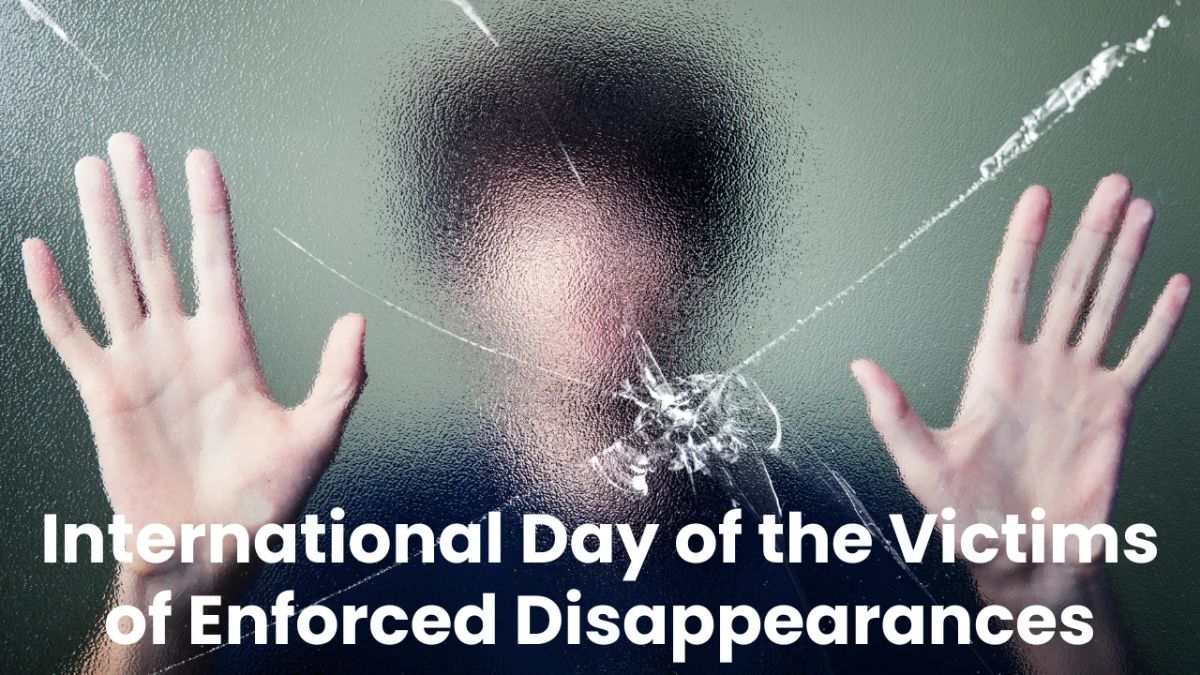
Every year on 30 August, the world observes the International Day of the Victims of Enforced Disappearances, a grim reminder of one of the gravest violations of human rights and human dignity. Enforced disappearances, often used as a tool of repression and political control, create not only unimaginable suffering for victims but also deep trauma for families, communities, and societies.
Understanding Enforced Disappearance
The UN Declaration on the Protection of All Persons from Enforced Disappearance (1992) defines enforced disappearance as,
- “The arrest, detention or abduction of persons against their will by state authorities or groups acting with their support, followed by a refusal to acknowledge the deprivation of liberty or concealment of the person’s fate or whereabouts, placing them outside the protection of the law.”
- This means that the victim is essentially erased from legal existence, making it one of the most severe violations of international law.
Origins of the Day
In 2010, the UN General Assembly expressed concern over the rising trend of disappearances worldwide and adopted Resolution 65/209, designating 30 August as the International Day of the Victims of Enforced Disappearances, observed annually since 2011.
Global Impact
- Scale of the problem: Hundreds of thousands of people have disappeared during conflicts or periods of repression in over 85 countries.
- Changing nature: Once associated mainly with military dictatorships, disappearances are now linked to internal conflicts, counter-terrorism measures, and political repression.
- Victim groups: Particularly vulnerable groups include human rights defenders, children, people with disabilities, and women, who often face sexual violence during captivity.
Who Is Affected?
Victims Themselves
- Subjected to torture, inhuman treatment, and constant fear of death.
- Denied basic rights including liberty, identity, and fair trial.
- Survivors live with deep physical and psychological scars.
Families and Friends
- Endure mental anguish and uncertainty, unsure if loved ones are alive.
- Often face economic hardship, especially if the disappeared was the breadwinner.
- Women frequently bear the double burden of loss and economic survival, while also facing intimidation in their search for justice.
- Children lose parents and identity, violating their rights under the Convention on the Rights of the Child.
Communities and Society
- Creates fear and insecurity beyond the family, silencing dissent and eroding trust in state institutions.
- Leads to social marginalization and economic disruption in affected areas.


 World Health Day 2026 - Theme, Date, Sig...
 List of Important Days in April 2026, Na...
 International Day of Sport for Developme...











