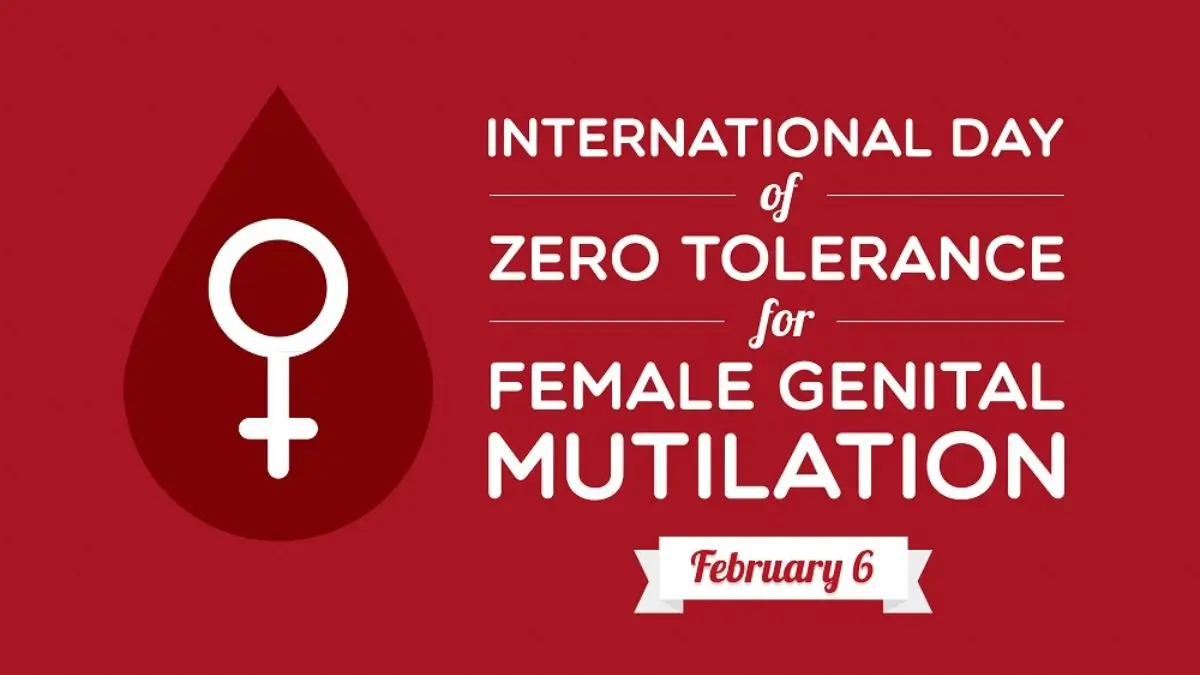
On 6 February 2026, the world observes the International Day of Zero Tolerance for Female Genital Mutilation (FGM), renewing the global pledge to end one of the most harmful practices against women and girls. Despite progress, FGM still affects millions every year. With the 2030 Sustainable Development Goals approaching, the United Nations has warned that without sustained political commitment and funding, decades of gains could be reversed. The day calls for urgent, collective action to protect girls’ rights and dignity.
What Is Female Genital Mutilation (FGM)?
- Female Genital Mutilation refers to procedures that intentionally alter or injure female genital organs for non-medical reasons.
- It is internationally recognised as a serious human rights violation affecting girls and women.
- FGM has no health benefits and can cause lifelong physical, psychological and social harm.
- It reflects deep-rooted gender inequality and continues largely due to harmful social norms, misinformation and pressure within communities.
Scale of the Problem: Why FGM Still Matters
- Globally, an estimated 230 million women and girls are living with the consequences of FGM, and nearly 4 million girls are at risk every year.
- While some regions have seen progress, population growth, conflict, migration and shrinking resources threaten to slow or reverse gains.
- Without intensified action, millions more girls could be affected by 2030, undermining global gender equality goals.
Theme of International Day of Zero Tolerance for FGM 2026
- The 2026 theme “Towards 2030: No End To FGM Without Sustained Commitment and Investment” highlights a clear message.
- Ending FGM is not automatic.
- It requires long-term political will, funding, strong laws, data-driven policies and community-led solutions.
- Short-term projects or symbolic commitments are not enough to dismantle practices rooted in generations of social norms.
Role of UN and Global Partnerships
- The UNFPA–UNICEF Joint Programme on the Elimination of FGM leads global efforts by supporting laws, community dialogues, survivor services and youth-led movements.
- Local women’s and youth organisations play a critical role in changing attitudes, yet they face increasing funding uncertainty. Global cooperation is essential to sustain progress.
Challenges Slowing Progress
- Efforts to end FGM face multiple challenges.
- These include shrinking financial resources, backlash against gender equality, humanitarian crises and weak enforcement of laws.
- In some regions, FGM is moving underground or being medicalised, making detection harder. Without addressing these realities, progress risks stagnation.
Key Summary at a Glance
| Aspect | Details |
| Why in News? | International Day of Zero Tolerance for FGM |
| Date | 6 February 2026 |
| Theme | Towards 2030: No End To FGM Without Sustained Commitment and Investment |
| Affected Worldwide | Nearly 230 million women and girls |
| Lead Agencies | UNFPA & UNICEF |
Question
Q. International Day of Zero Tolerance for Female Genital Mutilation is observed on:
A. 8 February
B. 7 February
C. 6 February
D. 5 February


 World Health Day 2026 - Theme, Date, Sig...
 List of Important Days in April 2026, Na...
 International Day of Sport for Developme...