
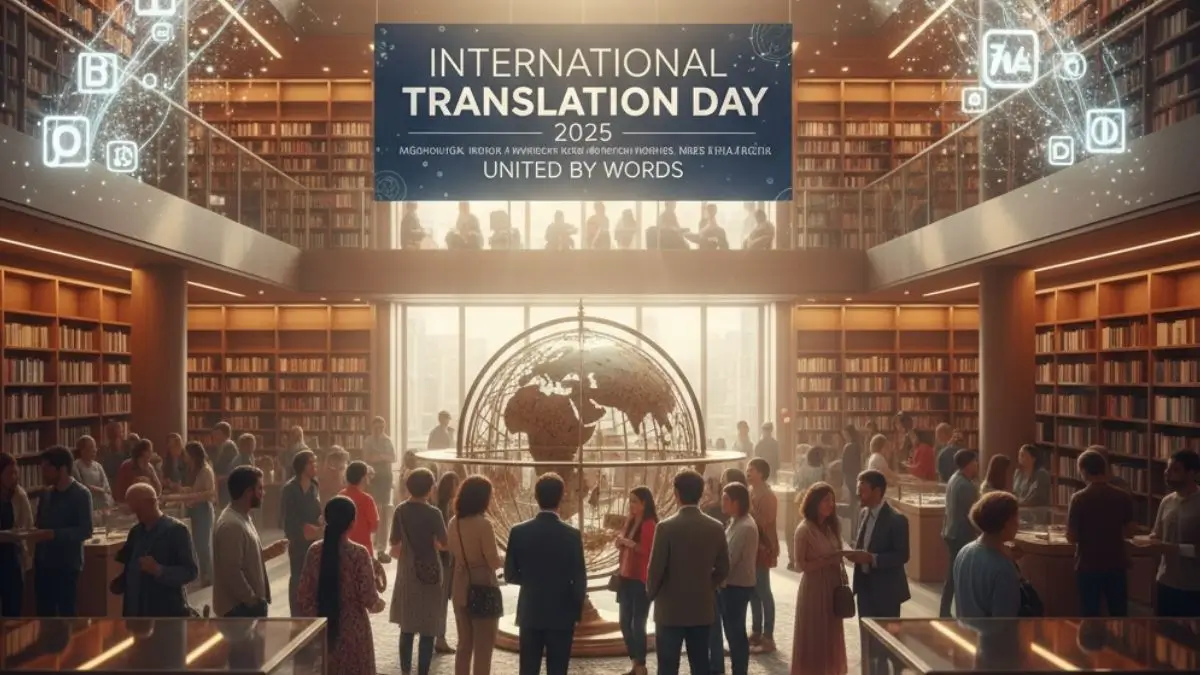
Every year on September 30, the world observes International Translation Day to honour the invaluable contributions of translators, interpreters, and language professionals. These unsung champions of communication make it possible to bridge linguistic divides, promote cross-cultural dialogue, and foster global cooperation. The 2025 celebration highlighted the vital role of translation in bringing out the richness of human diversity.
Historical Background
Origins in FIT
- The International Federation of Translators (FIT) established International Translation Day in 1991. FIT, founded in 1953, is a global organisation dedicated to promoting excellence and cooperation in translation, interpretation, and terminology.
Why September 30?
- The date was chosen to coincide with the feast day of St. Jerome, the patron saint of translators.
- St. Jerome (c. 347–420 CE) was a Christian scholar best known for translating most of the Bible into Latin (the Vulgate), making it accessible to wider audiences.
- He was fluent in Latin, Greek, and Hebrew, reflecting his passion for languages and knowledge-sharing.
- His dedication to translation laid the foundation for linguistic accessibility in religious and scholarly works.
Significance of the Day
In today’s interconnected world, the contributions of translators are more crucial than ever. Their work,
- Promotes Multilingualism: By translating across languages, they ensure inclusivity in diplomacy, trade, and global dialogue.
- Facilitates International Cooperation: Translators help in drafting treaties, agreements, and international communications, enabling smoother diplomatic relations.
- Advances Knowledge: Scientific research, literature, and technical content become universally accessible through translation.
- Strengthens Cultural Understanding: They help societies appreciate global diversity and reduce cultural misunderstandings.
Role of Translators in the United Nations
The United Nations (UN) is among the largest employers of translators and interpreters. Their role is indispensable in making official information available in the UN’s six official languages.
- Arabic
- Chinese
- English
- French
- Russian
- Spanish
From member state speeches to technical reports, translators ensure accuracy and accessibility, reinforcing the UN’s commitment to transparency and inclusivity.


 World Health Day 2026 - Theme, Date, Sig...
 List of Important Days in April 2026, Na...
 International Day of Sport for Developme...











